
For much of the year, the air in Dubai is humid and air conditioners run continuously throughout the city to keep homes comfortable. Yet many residents notice that their ac is cooling but not removing humidity, leaving rooms feeling cold and sticky at the same time. The thermostat might say a low number but the air still feels damp and heavy. In this guide we’ll explore why cooling and dehumidifying don’t always go together, what mechanical issues cause this gap, and what you can do to restore dry, comfortable air.
Understanding Why Your AC Cools Without Dehumidifying
Air conditioners have two jobs at the same time. One is reducing the air temperature, the other is pulling excess moisture out of that air. The two functions do not always run at the same speed, which is why some systems bring the temperature down fast but leave the humidity level high.
As long as warm, humid air is moving over the cold evaporator coil, it will condense into water and remove moisture. If the air blows past the coil too fast or the cooling cycle stops too soon there just isn’t enough contact time for that moisture to collect. This is the fundamental reason why people complain about humidity and air conditioning in homes that otherwise feel cold enough.
This problem becomes more serious in Dubai where outdoor humidity is already high most of the year. A system that would work just fine in a drier climate can have a hard time here unless sized and set up right for local conditions.
Technical Causes Behind AC Humidity Problems
There can be a number of mechanical and setting related problems that can cause air conditioner humidity problems even in a unit that seems to be cooling properly. Knowing each of these makes it easier to diagnose what’s really wrong in your home. Here are the most common technical reasons why people complain about ac humidity and ac increasing humidity instead of decreasing it.
Oversized AC Units Causing Rapid Short Cycling
An AC that is too powerful for the room will cool the space so quickly that it turns off before much moisture has been removed. Proper AC installation and sizing can help prevent this problem. This rapid on and off pattern is called short cycling, and is one of the most common causes of moist indoor air.
The short cycling doesn’t allow the evaporator coil to stay cold enough to collect the condensation. The temperature in the room drops fast, but the humidity barely moves. This is exactly the reason why the room still feels clammy.
Signs your system may be short cycling include:
- The unit turns on and off multiple times at short intervals
- They feel cold on the skin, but the air still feels sticky
- Cooling cycles are only a few minutes long before they turn off
- Higher than expected energy bills for amount of cooling achieved
Thermostat Fan Setting Running on ON Instead of AUTO
Your thermostat’s fan setting has more to do with humidity control than most people realize. If the fan switch is set to ON, the fan will run after the cooling cycle is over. It blows air over a coil that is not cold enough to pull the moisture out, and it can force the condensation it has collected back into the room.
The fan on AUTO means the fan will only run when the compressor is on and cooling. This keeps the coil cold during air flow and prevents moisture from re-evaporating back into air.
Quick checklist to verify your fan setting:
- Make sure the thermostat is set to AUTO or ON
- Change it to AUTO if it is set to ON
- Listen for fan to be running when compressor is off
- Verify that cooling cycles start and stop with fan
Frozen Evaporator Coils and Low Refrigerant Levels
When ice builds up on the evaporator coil, it blocks the airflow and stops the coil from working right. Once you have ice buildup the system will not pull moisture out of the air no matter how long it runs. This is a common but often overlooked cause of an ac is cooling but not removing humidity complaint.
The freezing problem is usually caused by low refrigerant levels, which may require professional AC repair. If there is not enough refrigerant the coil gets too cold and the moisture in the air freezes on the coil instead of draining away as condensation.
Watch for these symptoms of a frozen coil:
- Weak or diminished airflow from the vents
- Ice visible on the refrigerant lines or coil itself
- Air that gets warm after the unit has been running for some time
- A hissing noise from the outdoor unit, this can indicate a leak
Dirty Air Filters Restricting Airflow Across Coils
A dirty air filter reduces the air flow over the evaporator coil. Less airflow means less contact of warm, moist air with cold coil surface, which directly cuts down on moisture removal.
This causes the coil to run colder than it should, and this can result in the same freezing problem mentioned above. Regular AC cleaning and filter checks can help prevent this chain reaction from ever starting.
Filter maintenance checkpoints to follow:
- Check filters every two to four weeks in humid environments
- Clean or replace filters that show visible dust buildup
- Be alert to reduced air flow at vents as an early warning sign
- Keep spare filters on hand during the high summer months
Condensate Drain Line Blocks Holding Moisture Indoors
Even if an AC unit works to pull moisture out of the air, that water needs a place to go. This moisture is carried to the outside on the condensate drain line. If the line is clogged with dust, algae or debris, the water backs up inside the system instead of draining away.
If the drain is clogged it may cause leaks around the indoor unit or return humid air to the room instead of removing it. It’s a mechanical glitch, not a capacity for cooling issue, but it creates the same sticky damp feeling indoors.
Signs of drain blockage include:
- Water pooling around the indoor unit or on the floor
- A musty or moldy smell that comes from the vents
- Display of error codes on newer thermostat models
- Moisture stains visible on the ceiling below indoor units
Key Differences Between Temperature Drops and Moisture Removal
Two different physical processes, technically called sensible cooling and latent cooling, are used to cool and dehumidify the air. Sensible cooling reduces the temperature of the air you feel on your skin. Latent cooling is cooling by removing moisture through condensation of water vapor on the coil.
A thermostat only measures temperature, so it can show 22°C while the relative humidity in air conditioned room remains too high. That’s why a room can feel damp, sticky or heavy to breathe in even if it is cold.
Knowing this difference, homeowners can stop assuming that a lower thermostat number always means drier air. The two readings are measuring 2 totally different things. A system that is only concerned with rapid cooling often neglects proper moisture removal in the process.
Step-by-Step Action Plan to Fix AC Humidity
Before calling in professional help it is always best to do a few simple checks when fixing aircon room humidity problems. Following these steps in order helps you zero in what exactly the problem is in your home.
Step 1: Check your fan setting first. If the thermostat is in the ON position, switch it to the AUTO position. This one change often contributes to the immediate humidity control.
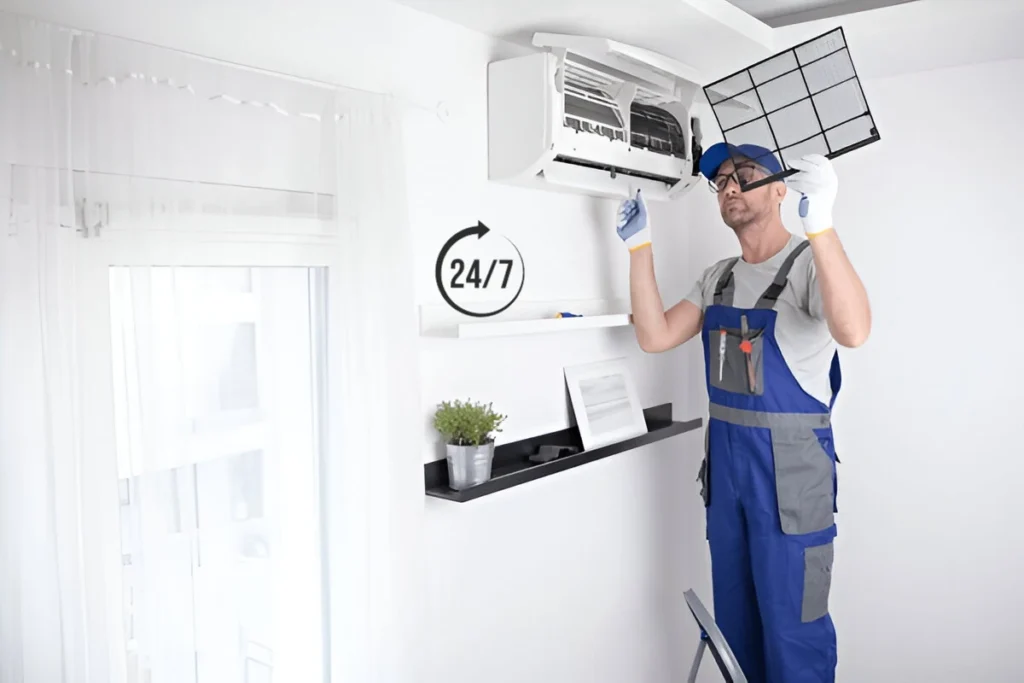
Step 2: Inspect and clean your air filters. Remove the filter and hold it up to a light. Replace if air flow is restricted or if dust has built up heavily.
Step 3: Check the condensate drain line for blockages. Check for water pooling or strange smells around the indoor unit, which are often signs of a clogged drain.
Step 4: Verify your unit is correctly sized for the room. The problems of short cycling described above can be the result of an oversized unit being installed during a quick renovation or upgrade.
Step 5: Schedule a coil inspection if problems continue. Diagnosing ice buildup or refrigerant issues requires a trained technician with the right tools and gauges to diagnose safely.
Step 6: Track indoor humidity with a simple hygrometer. This gives you a tangible number to pay attention to, instead of the day-to-day feel of the air.
How Extreme Dubai Heat and Coastal Humidity Overwhelm AC Units
Dubai’s climate has specific cooling demands for residential and commercial buildings. The city’s proximity to the coast means humidity levels outside are consistently high and every time a door is opened or fresh air is pulled in by a system, that moisture makes its way inside.
In the summer months, AC runs all the time and coils, filters and drain lines are under more strain than in drier areas. The salt-laden air of the coast can also accelerate corrosion on outdoor components over time, which together slowly reduces cooling and dehumidification performance. Technicians at AC Maintenance UAE often find that units running non-stop during peak summer require filter and coil checks much more often than the manufacturer recommendations for milder climates.
This is why the regional pressure makes routine maintenance more important here than almost anywhere. A system that goes a full year without being inspected is much more prone to the short cycling, freezing, or drainage issues covered in this guide.
When Should You Call a Professional Technician in Dubai?
Some humidity problems are more than just changing filters or adjusting the thermostat and need a trained eye. Catching these early warning signs can save you the headache of minor problems becoming costly repairs or a complete system replacement.
Call a professional when you notice:
- The coil keeps accumulating ice even after the filters have been cleaned
- Drain line keeps clogging repeatedly even after routine cleaning
- There is hissing or warm air indicating refrigerant leak
- Humidity still high even after trying all the DIY steps above
A qualified technician can accurately measure the refrigerant charge and inspect components that are not safe for homeowners to access.
Key Takeaways
Almost always, an ac is cooling but not removing humidity situation boils down to a handful of root causes. Oversized units short cycle before moisture removal can happen, wrong fan settings push collected water back into the air and dirty filters restrict airflow, keeping the coil from working efficiently. These everyday problems are made worse by frozen coils and plugged drain lines.
Early detection of these issues saves you from dealing with all day sticking and cooling bills. A quick check of the fan setting, regular cleaning of the filters and occasional checks of the drain go a long way in helping to control both the temperature and humidity, especially in a demanding climate such as Dubai’s.
FAQs
Q: Does AC increase humidity?
An AC unit itself does not add moisture but a bad setting, such as using the fan on ON instead of AUTO can put collected condensation back into the room making indoor air feel more humid than before.
Q: Does AC remove humidity?
Yes, air conditioners remove humidity as air passes over the cold evaporator coil, where moisture condenses and drains away. This only works properly when airflow, refrigerant levels, and cycle length are all correct.
Q: Does air conditioning reduce humidity?
If the air conditioning system runs long enough to bring air into good contact with the evaporator coil, humidity is reduced. This reduction may not occur efficiently if the unit is short cycled or airflow is restricted.
Q: Does aircon reduce humidity?
Yes, a properly working aircon reduces humidity as well as temperature. Issues like dirty filters, blocked drains or incorrect fan settings can prevent this process from working as intended.
Q: How to increase humidity in an air conditioned room?
Constantly running the AC fan, an oversized unit or blocked condensate drain can all mistakenly raise indoor humidity. If you want to actually increase the humidity level, it’s better to use a separate humidifier than trying to change the settings on the AC.
Q: How does humidity affect air conditioning performance?
High outdoor humidity means the air conditioner has to work harder to pull more moisture out of incoming air. This extra strain can be stressful to coils and refrigerant systems, especially during the hot and humid months in Dubai.
Q: How does air conditioning affect humidity levels?
In proper cooling cycles, the evaporator coil condenses moisture. This is how air conditioning reduces humidity. If the settings are incorrect or there is a mechanical problem, the effect can be reversed. The air inside can feel humid, even if it is cold.
Q: How to control humidity in an AC room?
Set thermostat fan in AUTO Keep filters clean Check condensate drain regularly Make sure your unit is the appropriate size for the room to help keep humidity levels are consistent year round.
Q: How to reduce humidity in an air conditioned room?
Reduce Humidity Correct airflow restrictions Remove blocked drain lines Verify refrigerant levels are correct with these fixes and correct fan settings, moisture removal is effective once again.
Q: Why does my room feel humid even at 22°C?
Temperature and humidity are measured separately and a thermostat reading 22 degrees C says nothing about moisture levels. High relative humidity can occur even if the temperature is cold because of short cycling, low airflow or drainage problems.
Q: Should I run my AC fan on AUTO or ON to control humidity?
AUTO is better for controlling humidity. In the AUTO mode, the fan shuts off when the compressor is not cooling. Running the fan in the ON position can blow moisture back into the room from a collected coil.

AC Maintenance UAE Team
Welcome to AC Maintenance UAE, your reliable partner for complete air conditioning repair and maintenance services in Dubai, Sharjah, and Abu Dhabi. We are strongly dedicated to excellence and deliver efficient and reliable services to keep your cooling systems performing at their best.