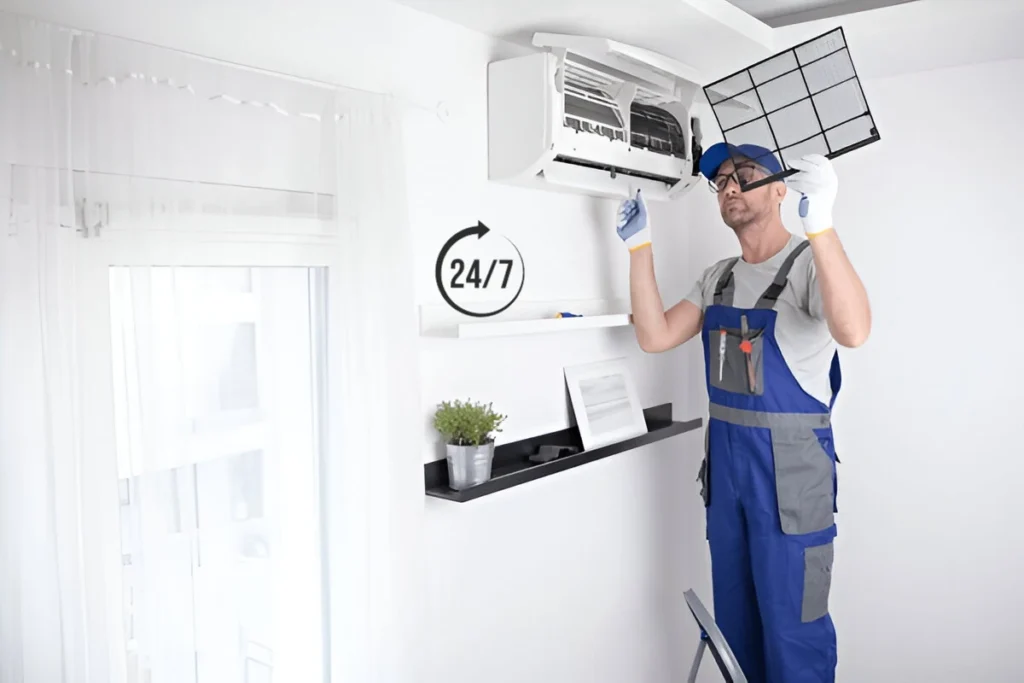

In the intense heat of Dubai, the long hours you run your indoor cooling system produce gallons of condensation that needs to find its way out of your home in a safe manner. Algae, dust, or bacterial sludge can block your air conditioner drain line. Often, you’ll notice standing water in the drip pan, water dripping from your ceiling, or a musty smell in the room. This guide takes you through the warning signs, cleaning methods and prevention steps that keep your drain line working properly all year long.
Understanding the Role of the AC Condensate Drain Line in System Cooling
Your air conditioner does more than just chill the air. As the warm air inside your home travels over the evaporator coil, it causes moisture in the air to condense into water droplets. This is a normal part of your cooling cycle and happens every time your system runs.
That water has got to go someplace. It drips into a drain pan located directly below the evaporator coil, then flows through the ac drain line to a point outside your home. Without this system, water would build up inside the unit and eventually spill out.
To make the line work, it needs to be slightly inclined downwards so that gravity can pull the water along without any resistance. Any obstruction in the path, dust, algae, a kink in the pipe, slows the process. That slowdown is what causes the clogs and leaks covered in the next sections, if left unchecked.
Locating the Air Conditioner Drain Line Location in Split and Central Units
Where your air conditioner drain line is located will depend on what kind of system you have in your home. The line is close to the indoor air handler on split units and usually exits through a small hole in an exterior wall, usually near where the outdoor unit is located.
In central AC systems, the drain line is run from the drain pan under the air handler, typically in an attic, closet or utility room. The pipe then runs down through the building structure to a drain point outside or a floor drain.
Window units are easier; the drain line is shorter and often drips outside directly through a small built-in outlet. Knowing where your line is helps you find leaks early, before water damage spreads to walls or ceilings.
Clear Signs Your Air Conditioner Drain Line Is Clogged or Leaking
A blocked drain line rarely goes unnoticed for long. Watch for these common warning signs:
- Water standing in puddles around the indoor unit or in the drip pan
- Water stains/leaking dripping from the ceiling of the AC unit
- A musty or moldy smell coming from the vents when the system is running
- Decreased airflow or unexpected shutdown of the unit
- Moisture visible around air conditioner drain line outside house
- Gurgling or bubbling sound in the drain pipe when operating
Such symptoms are usually a sign of a blockage, not a mechanical fault, as the system can be working fine, it’s just that the water has nowhere to go. Recognizing these warning signs of AC drain problems early can help prevent water damage and more expensive repairs.
Critical Reasons Why Your AC Drain Line Keeps Clogging
If you’ve asked yourself, “Why does my ac drain line keep clogging?” After cleaning it once, there are a few common causes that generally repeat. Continuous moisture extraction keeps the inside of the pipe damp pretty much all the time and that constant moisture creates the perfect environment for algae to grow.
This is made worse by Dubai’s dusty climate. The particles in the air get sucked into the system along with the moisture. Over time this dust gets mixed with the condensation to create a heavy sludge that sticks to the sides of the pipe. Throw in bacterial biofilm that builds up over time, reducing the inner diameter of the pipe, and you have a recipe for repeated blockages.
Another factor is poor installation. If the line isn’t sloped correctly, the water sits instead of flowing away smoothly, giving the algae and sludge more time to settle. Sometimes the flow from the outside can be blocked by insects or other debris that get into the opening from the outside.
How Mold, Algae, and Biofilm Block the Central AC Drain Line
Algae grows in stages inside a pvc drain pipe. It begins as a thin film stuck to the wet inside walls and turns into a slimy layer as more moisture and organic material flows through. If untreated, this buildup may eventually lead to near-total blockage.
The central ac drain line is especially susceptible to clogs because it’s wet almost all the time during the peak cooling months. The biofilm layers grow slowly, so the flow decreases slowly, not suddenly. This is why clogged pipes seem to suddenly appear, when they have been building up for weeks.
Another related problem is trap airlock, when an air pocket becomes trapped in a curved section of pipe and prevents water from passing even when the rest of the line is clear. This is a frequent source of drainage problems, but often goes unrecognized.
Step-by-Step Guide to Cleaning a Clogged Air Conditioner Drain Line
To begin first, turn off the AC unit entirely. There is a risk of injury and further water damage working on a live system.
- Locate the T-trap or access point on the indoor unit. It is usually a short vertical tube with a removable cap.
- Remove cap and add distilled white vinegar or warm water into the opening. This can help break down minor algae buildup without damaging the pipe.
- At the point where it exits outdoors , use a wet-dry vacuum and suck the blockages out from the other direction.
- Flush and flush until water runs clean.
- Check the ac drain line clogged area again after 24 hours to confirm the blockage has fully cleared.
If water still isn’t flowing correctly after these steps, the clog may be further down the line or too thick to be cleared with basic flushing.
Inspecting the Air Conditioner Drain Line Outside House for Proper Flow
When your AC has been running for a while, look for a slow drip at the outdoor drain exit. This confirms that the system is removing condensation as expected.
Signs of a problem at the exterior opening include no dripping at all, water backing up near the pipe or visible debris blocking the exit. Outdoor openings, especially on windy or dusty days, may collect spiders, leaves, and dust.
Check this area every few weeks or so, especially in summer, and you’ll find blockages before they cause indoor water damage.
Flushing the Aircon Drain Line vs Professional Vacuum Cleaning
DIY flushing with vinegar or warm water can work on small early blockages. It’s fast, inexpensive and something most homeowners can do without special tools.
But if you have a lot of sludge or biofilm build-up, a simple flush usually won’t do it. In these cases, professional AC cleaning can help remove buildup from the drain system and other components that may be contributing to recurring blockages. This is when a wet-dry vacuum or a professional nitrogen flush is needed to clear the aircon drain line completely.
Repeated (or re-occurring within days of a cleaning) ac drain line clogged problems usually point to a more serious clog that needs professional-grade equipment. Technicians have tools that go deeper into the line and clear buildup home methods can’t touch.
Impact of Dubai Ambient Heat and Dust Loads on Drain Line Maintenance
The intense heat in Dubai means that air conditioning systems are running for greater lengths of time, meaning that more condensation is produced on any given day than in milder climates. That extra moisture adds more stress on the drain line during the cooling season.
The problem is compounded by frequent dust storms. Fine particulates get sucked into the system and settle inside the drain line where they absorb moisture and contribute to rapid sludge formation. One reason why algae and mold are able to grow faster here compared to places where there is less dust.
Because of these local conditions, many homeowners opt for seasonal servicing with a company like AC Maintenance UAE, rather than just relying on occasional DIY flushing. Regular professional servicing during those peak summer months can catch buildup before it becomes a full blockage.
Preventive Maintenance Schedules to Extend Drain Line Operational Life
Flushing the drain line monthly or twice per month during peak summer avoids major clogs from forming. Depending on how dusty your area is, you can change this schedule a little bit.
A simple seasonal checklist includes checking the outdoor drip point, inspecting the drain pan for standing water and listening for any unusual gurgling sounds. Fixing small issues early keeps bigger repairs off your priority list.
Other homeowners use algae-preventing tablets that are placed directly in the drain pan. Slow release tablets help to cut down on buildup in between cleanings, and are a low effort way to stretch out the time between deep cleans.
When Should You Call a Technician for Immediate Inspection?
If you still experience water leaks after performing DIY flushes, it’s time to call in a professional. Repeated leaks generally mean the blockage is beyond the reach of home cleaning tools.
Another obvious clue is float switch shutdowns repeated. If your system continues to turn itself off, it’s probably because the safety switch is sensing standing water that’s not draining properly.
If you notice any visible pipe damage, disconnected fittings, or a line that looks like it has come out of place, also call a professional. These situations often involve specialized tools and expertise that are beyond the scope of basic home maintenance.
Key Takeaways
A blocked or leaking air conditioner drain line can quickly lead to standing water, ceiling stains and unexpected system shutdowns caused by safety switches. Most of these issues begin on a small scale which is a little algae or dust build up that slowly narrows the pipe over time.
Flushing the system every one to two months during the height of summer often helps a lot to prevent major blockages. If water backs up over and over or leaks persist despite your efforts to fix them, it’s safer to call in professional clearing to protect your system and your home from further damage.
FAQs
Q: What is the AC drain line called?
It’s officially called the condensate drain line. This pipe carries moisture taken from indoor air during cooling out of the house so water does not build up inside the unit or the surrounding structure.
Q: Do all AC units have a drain line?
Yes. All central, window, and split systems have a drain pipe or pan to collect and remove condensation. Moisture would build up inside the unit without it and eventually cause damage.
Q: How do I know if my AC drain line is clogged?
Check for standing water in the drip pan, drips from the ceiling near the unit, musty smells from the vents, or sudden shutoffs. These signs usually indicate blocked flow, not a mechanical problem.
Q: Will the AC shut off if the drain is clogged?
Yes. Most systems have a condensate float switch that trips if the water level gets too high. This automatically switches off the compressor, so there is no danger of overflow and no water damage to the unit.
Q: Can I run my AC with a clogged drain line?
Not advised. Water can lead to immediate water damage and mold growth once it enters the system, and if the water comes into contact with nearby wiring or components, it can even cause electrical problems. Remove the obstruction and resume normal operation.
Q: How do I flush out my AC drain line?
Pour distilled white vinegar or warm water into the T-trap access point close to the indoor unit. It breaks down small build ups of algae and helps to restore normal flow of water through the pipe.
Q: How to clean AC drain line when blockages are severe?
For stubborn sludge, use a wet-dry vacuum at the outdoor exit or go for a professional nitrogen flush. Drain snakes also clean out debris that simple flushing methods can’t.
Q: Where is the air conditioner drain line location on a central AC unit?
It connects to the drain pan directly below the indoor air handler, usually in an attic or utility closet. From there it runs to an exit in an outer building wall.
Q: Why does my AC drain line keep clogging in high-humidity environments?
Moisture, with dust floating in the air, is a perfect environment for algae and biofilm to develop quickly. As this builds up, it will slowly clog the pipe, causing recurring blockages if not dealt with.
Q: How often should central AC drain line maintenance be done in Dubai?
In peak summer when the dust is really bad in Dubai and cooling is a constant need, it helps when clearing the line every 1-2 months. And regular inspection can catch buildup early before it becomes a full clog.

AC Maintenance UAE Team
Welcome to AC Maintenance UAE, your reliable partner for complete air conditioning repair and maintenance services in Dubai, Sharjah, and Abu Dhabi. We are strongly dedicated to excellence and deliver efficient and reliable services to keep your cooling systems performing at their best.