In hot and dusty climates, heavy use of indoor air conditioners results in a high level of dust, airborne debris and humidity inside cooling components. Ignoring routine AC maintenance causes restricted airflow, foul odors, frozen coils and much higher energy bills over time. This ac cleaning checklist breaks down exactly what parts of your system need attention and how often you should clean them. If you own an apartment or multiple rental properties, following a schedule helps keep your cooling system running efficiently during the hottest months.
Why Routine AC Cleaning Is Vital in Desert Climates
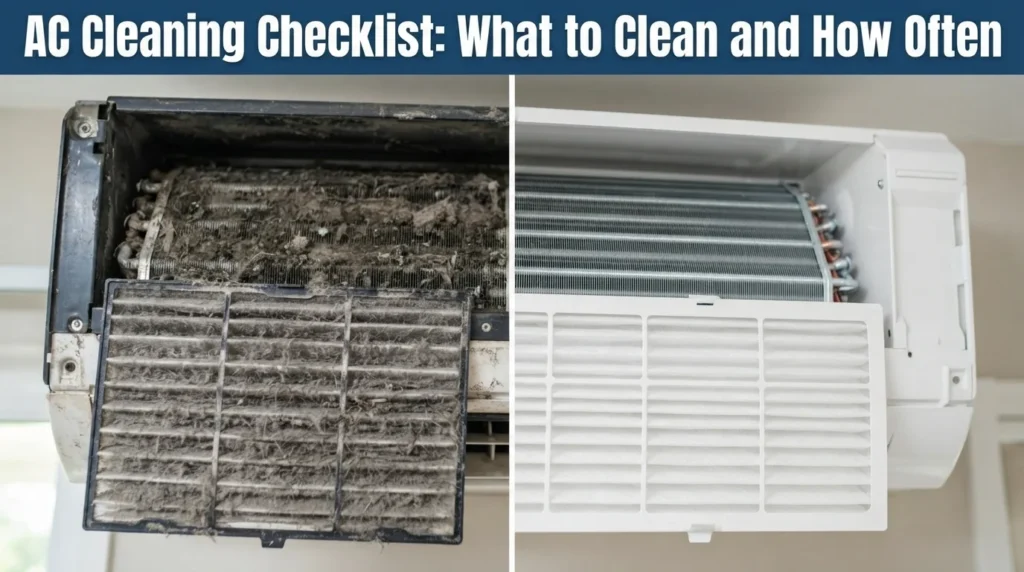
Sand, dust and high humidity levels cause dirt to build up on filters, coils and drain lines much faster in the Gulf area than in milder climates. Fine desert dust gets into all parts of the system coating surfaces that are meant to stay clean for proper heat transfer. A few weeks of neglect can result in a visible film on the filter and coil surfaces.
Bad cleaning habits will cut down on airflow, raise the electricity usage and shorten the life of the unit overall. A system fighting clogged filters and dirty coils has to work harder to get the same temperature, which shows up clearly on monthly utility bills. The sections below cover each component that needs regular attention.
How Often Should You Clean Central AC Filters in Dubai?
In homes where the ac is running almost all the time, filters used in cleaning central ac unit setups should be checked every two weeks, and cleaned or replaced at least once a month. In Dubai, the dust makes you wait over a month for the air to clear and the energy bill to go down. For a more complete approach, central AC cleaning should also include the coils, drain line, blower and other accessible components.
Complete AC Cleaning Checklist: Component Breakdown
Different parts of an AC system collect dirt in different ways, so cleaning procedures must be specific to the function of each component. Here’s a full list of what you need to pay attention to, from indoor filters to the outdoor condenser.
Air Filters
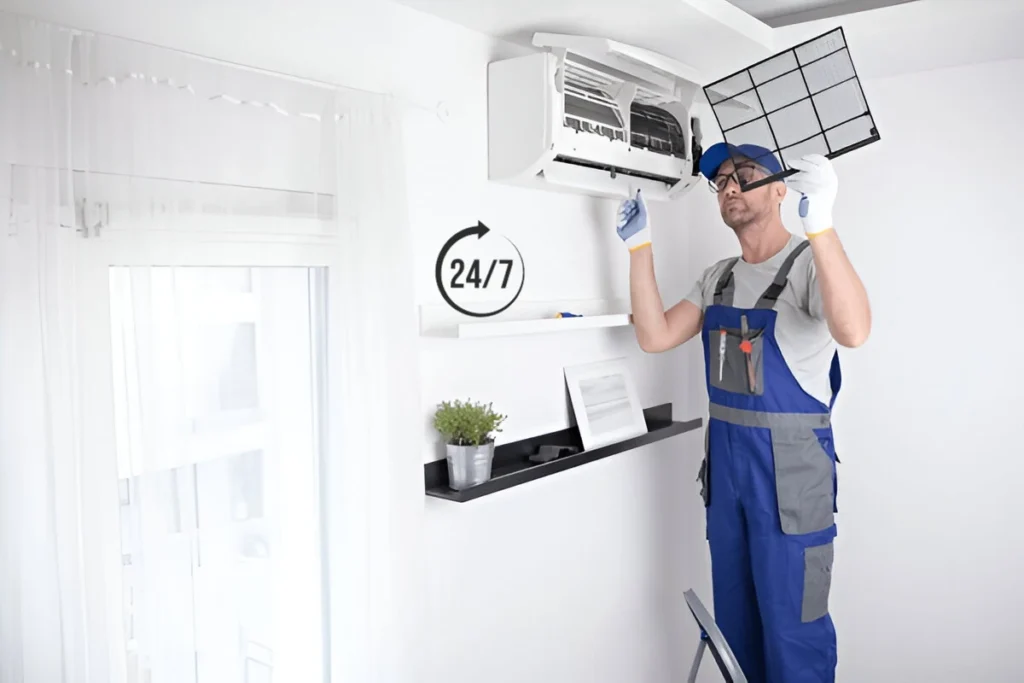
Dust and pet dander clog filters quickly, restricting airflow and forcing the compressor to work harder than it should be. Washable filters can be rinsed and reused, while disposable filters need to be completely replaced when they turn gray or become clogged. This is often neglected, but is one of the easiest parts of any indoor ac cleaning routine.
To clean filters properly, follow these steps:
- Remove the filter from its housing carefully without bending the frame
- Washable filters can be rinsed in lukewarm water or vacuumed gently for disposable types
- Make sure washable filters are completely dry before putting them back in
- Change filter and make sure it sits flush in its slot
- Check for tears, thin material or areas of mold prior to reuse
Evaporator Coils
The evaporator coils become coated in dust and mold as time goes by. This coating acts as an insulator and prevents the coil from absorbing heat effectively. When this occurs, the cooling capacity decreases, yet the compressor still operates at full capacity. The first indicator of a dirty coil is usually a musty smell coming from the vents.
Heavier buildup requires a periodic ac cleaning chemical treatment by a trained technician to clean out grime that brushing can not reach. This advanced method brings the coil surface back to a condition where it is able to transfer heat again. Generally, this only needs to happen once or twice a year depending on usage.
Condensate Drain Line
Over time, algae and fine debris grow within the drain line and this growth will eventually cause water leakage or noticeable indoor humidity. A blocked line often causes water to pool around the indoor unit, or a musty smell in the room.
A basic drain line check includes:
- Visual observation of the line for water standing or slow drainage
- Cleaning the line out with a mixture of water and a mild solution of vinegar
- Clearing any visible blockages around the drain pan connection point
- Float switch testing to ensure the system shuts off in case of water backup
Outdoor Condenser Unit
Directly on the condenser fins, leaves, dust, and general debris will fall and restrict the airflow required for proper heat release. Technicians clean the outdoor unit by using a fin comb to straighten any bent fins and removing anything that is blocking the area around it.
If the debris is too close to the unit it will restrict airflow even if the fins look clean. You should also have at least two feet of clear space around the outdoor unit so it can breathe properly and cool down faster in the peak heat of the afternoon.
Blower Fan Wheel
Over months of regular use, dust builds up on the blades of the blower fan wheel so it can’t push as much air through the ducts. A dirty fan wheel makes the motor run longer to move the same amount of air, and that increases energy costs.
During routine maintenance, a light dusting on the fan wheel can sometimes be wiped away with a soft brush. The heavier buildup that has hardened on the blades is usually in need of professional-level cleaning, because it is necessary to remove the wheel carefully without disturbing its balance.
What Cleaning Chemicals Are Safe for AC Coils?
Foaming coil cleaners designed specifically for cleaning ac unit coils are generally safe, if used properly and rinsed off within the recommended time. Avoid using harsh household chemicals as they may corrode the aluminum fins and shorten the life of the coil.
Recommended AC Maintenance Schedule for UAE Homes
Different areas need attention at different times and a set schedule prevents small dust build-up’s becoming larger performance issues. Here’s a general breakdown based on typical UAE usage patterns:
- Air filters: clean or change every 2-4 weeks
- Evaporator coils: chemical cleaning 1-2 times per year
- Condensate drain line: check and flush every 2 to 3 months
- Outdoor condenser unit: Clean fins and remove debris monthly in summer
- Blower fan wheel: inspect every 3 to 6 months
Most homeowners working with AC Maintenance UAE technicians will switch to a tighter schedule during peak summer months when units run nearly nonstop, as both dust exposure and cooling demand are much high. If the system is cleaned more frequently during the winter months and less frequently during the summer months, the system will run much more consistently.
Essential Tools Needed for Safe AC Maintenance
A basic ac cleaning kit provides most of what a homeowner needs for light, routine maintenance between professional visits. The right tools can also help reduce the risk of damage to delicate components such as coil fins.
A practical kit should include:
- Soft-bristle brush for dust removal from coils and fan blades
- Brush attachment for vacuum cleaner (for filters and vents)
- A coil cleaning spray that is safe on aluminum
- Fan comb to straighten bent condenser fins
- Microfiber cloths for cleaning indoor unit panels
- Washable filters Mild detergent solution for cleaning
Always turn off power at the breaker before starting any cleaning task. Never spray excess water near electrical connections or control boards. These two safety measures prevent most common DIY maintenance accidents.
When to Call Experts for Deep Chemical AC Cleaning
DIY cleaning might be replacing filters, light dusting and basic drain checks, but the limits are obvious when the problems are deeper. At this stage, professional AC cleaning is a better option than trying to remove heavy buildup yourself. Heavy clogging of the coils, persistent musty odors, visible mold growth, and recurring water leaks from the drain line all point to a system that needs more than a surface wipe. These are situations where AC deep cleaning may be more appropriate than routine homeowner cleaning.
Watch for these signs that professional cleaning is overdue:
- The cooling output feels weak even with a replaced filter
- There is a constant musty or sour smell near the vents
- Water keeps building up around the indoor unit despite flushing the drain
- Black spots or mold are present on coil surfaces
AC Maintenance UAE technicians tackle these difficult problems by using the correct chemical treatment and specialized equipment that can access parts of the system that a home kit cannot safely clean. Schedule a professional visit once or twice a year, in addition to your own routine cleaning your ac habits, to keep the system balanced between DIY upkeep and expert-level care.
Key Takeaways
The blower fan wheel, the outdoor unit, filters, drain lines, and coils all require scheduled maintenance. The most common care is filters, and the coils and fan wheel need a full cleaning a few times a year. A reliable ac cleaning checklist helps stay clear of major breakdowns, keeps the electricity consumption in check and protects the indoor air quality throughout the year. By keeping up with regular DIY maintenance and occasional professional deep cleaning, you have the best chance of keeping your system running efficiently through the punishing summer heat in the UAE, without the surprise expense of costly repairs catching you off guard later in the season.
Frequently Asked Questions
Q: How often to clean AC filters at home?
Check the filters every two weeks and clean or replace them at least once a month. In dusty conditions or during the height of summer use, cleaning every two weeks keeps airflow steady and prevents strain on the compressor.
Q: Is chemical coil cleaning necessary for every AC unit?
Not all units need it all the time, but most will benefit from chemical coil cleaning once or twice a year. This service is more often needed in dusty locations or in units with visible mold growth on coils.
Q: Why is my AC leaking water after cleaning?
Leaks after cleaning are usually due to a disturbed drain line or a float switch that was not properly reset. Debris removed during the cleaning can temporarily block the drain path until it clears.
Q: Should I wash or replace my AC filter?
Washable filters can be rinsed and re-used several times provided they are dry before reinsertion. Never wash a disposable filter. This can damage the fibers and decrease its filtering capacity. Replace disposable filters as necessary.
Q: How often should I clean my AC during summer peak?
Filters should be cleaned every two weeks in the summer, while outdoor units benefit from monthly fin cleaning. Intensive use during the hot months of the year results in increased dust buildup on every major component of the system.
Q: Can I clean the outdoor condenser unit myself?
Most homeowners can safely do basic cleaning such as debris removal and a gentle rinse of fins. Often a fin comb and professional guidance work better for dealing with heavy dirt buildup or straightening bent fins.
Q: What happens if I never clean my AC unit?
If you skip cleaning, you’ll be left with poor airflow, frozen coils, bad odors, and rising electric bills over time. The neglect, over time, causes serious breakdowns that are far more expensive to repair than routine maintenance would have been.
Q: How do I know if my evaporator coil is dirty?
Weak cooling even with the system running all the time, plus musty odors near vents, usually indicate a dirty coil. A visible layer of dust or grime on the coil surface confirms that it needs cleaning pretty soon.
Q: Is it safe to spray water directly on outdoor AC coils?
Outdoor coils are usually okay with a gentle rinse from a garden hose, but high-pressure washing can bend delicate fins. Always rinse top to bottom and never push water into nearby electrical components.
Q: How often should central AC units get a full inspection?
Coils, drain lines and the fan wheel should all be inspected at least twice a year. If your home has heavy dust exposure or is in use all summer long, you might want to have a third seasonal check.
Q: Does regular cleaning actually lower my electricity bill?
Yes, Clean filters and coils allow the system to reach set temperatures faster and with less strain on the compressor. Regular cleanings in homes will often lead to a major decrease in cooling bills during the hottest months of the year.

AC Maintenance UAE Team
Welcome to AC Maintenance UAE, your reliable partner for complete air conditioning repair and maintenance services in Dubai, Sharjah, and Abu Dhabi. We are strongly dedicated to excellence and deliver efficient and reliable services to keep your cooling systems performing at their best.