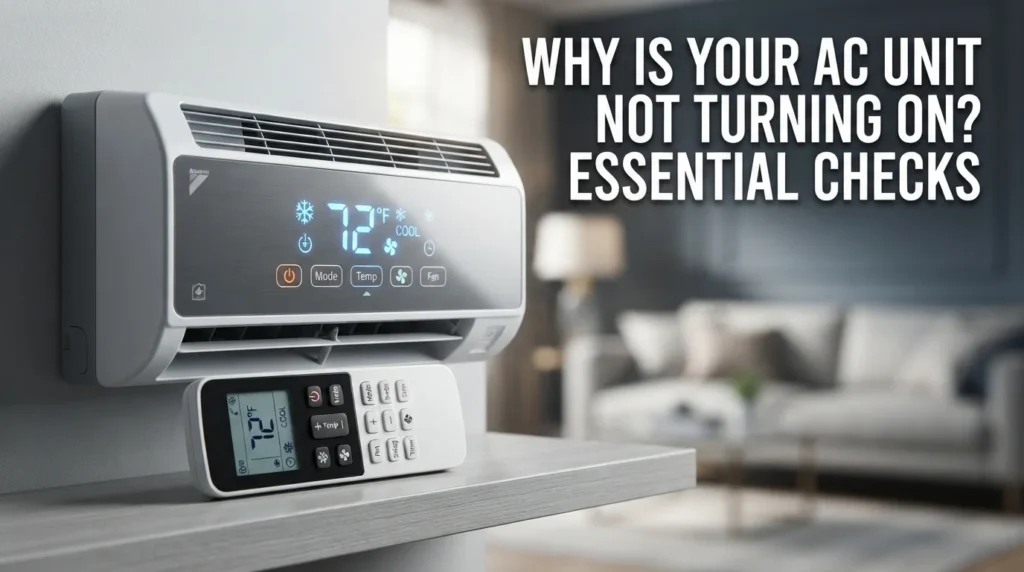
Your home loses cooling during a peak of the outdoor temperatures due to a sudden system failure. When your AC unit not turning on becomes a real problem, you might be tempted to keep flipping the switch or resetting the thermostat over and over again. But frequently attempting to restart a unit that is not responding without knowing the cause can cause serious electrical damage, or even permanently damage the compressor. In this guide we’ll cover 8 of the most common reasons your AC may not respond and how to safely check for each.
Why Does an AC Unit Fail to Turn On?
All air conditioning systems have a simple power chain that makes them work. The electricity goes from the main supply through the circuit breaker, to the thermostat. The thermostat goes to the contactor which then tells the compressor to start. If any one link in this chain is broken, the entire unit can lock up completely.
This is why an AC not turning on usually does not have a single cause. Sometimes it is something as trivial as dead thermostat batteries. Other times it’s an electrical fault further down. Knowing this chain allows you to narrow down the problem before you jump to the worst case scenario.
Why Is My Split AC Not Turning On At All?
In most cases when a split ac not turning on it’s a tripped breaker, a disconnected power switch, or a thermostat that lost its signal to the indoor unit. Try these three checks before you conclude that there is a larger mechanical problem at work.
8 Critical Reasons Your AC Unit Is Not Turning On
1: Tripped Circuit Breaker
The most common reason an air conditioner won’t come on is a tripped breaker. This usually occurs when the system draws more current than the circuit can safely handle, especially during peak usage.
This trip can be caused by overloaded circuits, short circuits or old electrical panels. If the breaker keeps tripping, learn more about AC circuit breaker tripping and what may be causing it. First, check out your breaker panel and see if there’s a switch that’s in the middle, instead of all the way on. One reset is usually ok, but tripping it a lot means something else is wrong.
2: No Power Supply to the Unit
Sometimes the problem is not as complicated as a breaker fault. The outdoor disconnect switch could be turned off, a fuse may have blown or the main power connection may have come loose over time.
This is all the more possible after storms or maintenance work on the outdoor unit. Usually a quick visual inspection of disconnect box and power cables will show the problem and prevent an unnecessary service call.
3: Faulty or Unresponsive Thermostat
Your thermostat is the control hub for your entire cooling system. If the unit does not send a start signal, it will not respond no matter how many times you adjust the settings.
Dead batteries are a common problem, as well as wrong mode settings or a blank screen. If the screen on your thermostat is blank or unresponsive, it’s worth replacing the batteries before doing anything else.
4: Blown or Weak Run/Start Capacitor
The capacitor provides the initial electrical boost to get your fan motor and compressor started. If this part weakens or fails completely, the unit may sound briefly and then not respond at all.
Capacitors degrade more rapidly in high temperatures, which is a common reason why an AC compressor not turning on during the peak months of the summer. A bad capacitor will usually require professional testing and replacement.
5: Tripped Condensate Float Switch
If the condensate drain line gets plugged up and water starts backing up, this little safety switch shuts the whole system down. It is designed to stop water damage but it also stops the AC from turning on.
If your unit has been running great and suddenly stops it is worth taking a look for a clogged drain line. Sometimes just a simple clearing of a drain can get the system back online without further repairs.
6: Faulty Contactor
The contactor relay then sends the power from the thermostat circuit directly to the compressor. Over time, it’s contacts can burn, corrode or get physically stuck, breaking that connection.
A Stuck or Burned Contactor is a common cause of a central ac not turning on, even with a good thermostat and breaker. This part typically needs a trained technician to safely inspect and replace.
7: Compressor Lockout or Internal Overload Protection
Compressors have a built-in safety switch that will turn off the motor if it gets too hot. This avoids permanent internal damage to the unit, but also means the system won’t start until it cools down.
If your AC stopped mid cycle and now will not respond, allow it to cool down before testing again. If the compressor continues to lock out after cooling down, professional AC compressor repair may be required. If you restart the lockout too early, it will trigger again and put more strain on the motor.
8: Wiring Faults or Loose Connections
Corroded, loose or damaged wiring can break the control circuit that tells your unit to start. This problem usually develops slowly, particularly in units exposed to heat, moisture, or pest activity.
It is one of the more difficult reasons behind an ac does not turn on situation as loose wiring is more difficult to identify without the right tools. If the basic checks do not solve the problem, the wiring should be checked by a professional.
Why Is My AC Compressor Not Turning On (Clicking but No Start)?
If you hear a clicking sound and the compressor does not start it usually means a bad contactor or a failing capacitor. The system is trying to send power but a weak component is not allowing the compressor to actually engage and run.
Safety Hazards of Forcing an Unresponsive AC Unit
Flipping the breaker back on or forcing a reset on an air conditioner that won’t turn on can do more harm than good. Every forced attempt stresses the wiring, capacitors, and the compressor motor itself.
Repeated cycling like this can result in overheating, melted wiring or a burned out compressor altogether. In some instances, it even increases the chance of electrical fire, especially for older systems with worn parts.
Here are warning signs that it is time to stop and call a technician immediately:
- Indoor or outdoor unit has a burning smell
- Breakers that trip again soon after being reset
- No cooling response and loud buzzing or humming noise
- Scorch marks around the power connectors or the panel
- Sparks or smoke from the outdoor disconnect box
If you notice any of these signs, turn the power off completely and do not attempt to reset it yourself.
High Operational Demands and AC Power Supply Stress
Extreme outdoor heat puts a strain on every part of your AC system. Longer runtimes means the capacitor, contactor and wiring all carry more electrical load for longer periods and that accelerates general wear.
The voltage fluctuations that occur during peak demand hours add another layer of stress, especially in areas with high summer temperatures such as the UAE. Constant on and off cycling, often due to an undersized system or poor insulation, further compounds component fatigue.
This is a common pattern that AC Maintenance UAE sees in the peak months when components that were already weakening finally fail under sustained load. Regular AC maintenance and seasonal inspections can catch these issues early, often before they cause a full shutdown.
Initial Troubleshooting Checks Before Calling a Professional
Before you go to the extreme, there are some safe checks any homeowner can make with no special tools or training.
- Check the breaker panel for a tripped switch and reset it
- Replace the batteries in the thermostat and verify that the display is on
- Confirm the outdoor disconnect switch is in the on position
- Check visible power cables for obvious damage or loose wires
- If the unit is operated by remote control check the signal
Some problems are beyond basic troubleshooting and require a licensed technician, such as:
- Testing or replacing a weak run or start capacitor
- Checking a burned or stuck contactor
- Diagnose a compressor lockout or overload trip
- Repair of internal wiring
When working with a trusted provider, such as AC Maintenance UAE, you can be sure that these deeper electrical components are being tested properly, without the risk of DIY repairs on live electrical parts.
Key Takeaways
An ac unit not turning on is rarely random. It’s almost always a sign that something particular in the power chain needs attention, from a simple breaker reset to a failing capacitor.
Repeated attempts to force a restart only increase the chance of causing permanent damage to the compressor or wiring. By taking the time to check the basics first, calling a professional when the issue goes deeper, you protect your system and your budget.
Early inspection is nearly always less costly than a complete compressor replacement. Fixing small electrical issues today means your air conditioning remains stable and dependable through the hottest months ahead.
FAQs
Q: How do I force the AC to turn on?
Do not repeatedly try to restart an unresponsive AC. Instead, first check the breaker, thermostat batteries and power switch. If the unit still does not respond, call a technician instead of trying to reset the unit yourself.
Q: Why is my AC suddenly not turning on?
Sudden failures are typically a tripped breaker, a blown capacitor or a safety switch. Other reasons the system may stop responding without warning are power outages, voltage spikes, or a clogged condensate line.
Q: Do I have to wait 24 hours to turn on AC?
If the unit has just been installed, or has been moved over a long distance, wait a few hours for the refrigerant to settle down. After a breaker trip, a short cooldown period is usually enough to retry the system for routine resets.
Q: How do you reset the AC when it is not turning on?
Turn off the thermostat, turn off the breaker for a couple of minutes and turn it back on. This will clear minor electrical faults but if you have to reset the unit without success then it generally means a component needs to be looked at by a professional.
Q: How can I get my AC to start working again?
Back to basics. Breaker, thermostat batteries, power connections. If those checks don’t fix it, it’s probably a capacitor, contactor or wiring fault that a licensed tech needs to figure out.
Q: Why is my central AC not turning on?
If the central ac not turning on, it’s usually due to a faulty contactor, tripped breaker, or a communication problem with the thermostat. Central systems have more components in the power chain and so often professional diagnosis is necessary.
Q: Why does my AC unit make a clicking sound but not start?
That click usually means the contactor is closing but the capacitor or compressor can’t seal the deal. This is a classic symptom of failed electrical component that needs testing not repeated manual restarts.
Q: Can a dirty air filter stop my AC from turning on?
The unit still works with a dirty filter. But a long lasting severe airflow limitation can cause safety switches to fail over time, resulting in shutdowns that look like a complete power loss.
Q: Why is my AC not turning on after a power outage?
Outages can trip breakers, reset thermostat settings, or voltage surges can damage sensitive components. First check the breaker and make sure the thermostat display is working before assuming there’s a more serious electrical problem.
Q: Is it safe to keep resetting the breaker if my AC won’t turn on?
No, resetting without diagnosis repeatedly can stress the wiring and damage the compressor. If the breaker trips again right away after being reset, stop resetting the breaker and call a professional.

AC Maintenance UAE Team
Welcome to AC Maintenance UAE, your reliable partner for complete air conditioning repair and maintenance services in Dubai, Sharjah, and Abu Dhabi. We are strongly dedicated to excellence and deliver efficient and reliable services to keep your cooling systems performing at their best.