Running an air conditioner for long periods in the peak of summer puts a real strain on its internal cooling system. If the air flow is weaker than normal or the indoor air is still warm even if the compressor is running non-stop, it usually means there is an ac refrigerant leak somewhere in the line set. This gas leak prevents the system from pulling heat out of your rooms as it should. This guide discusses the physical causes of refrigerant loss, the warning signs of refrigerant loss, and the repair steps taken by technicians to return the system to normal cooling operation.
Understanding the Role of AC Refrigerant in System Cooling
The air conditioner refrigerant is the chemical compound the transfers the heat from inside your home to the outside air. The indoor air is pulled through the evaporator coil where it picks up the heat and then pushes the heat outside through the condenser. This is what causes the air blowing out of your vents to feel cool.
The entire process is a closed loop. The refrigerant moves through the evaporator, compressor, condenser and expansion valve. The pressure and temperature change and it becomes a liquid and then a gas. The copper lines are used in each part of the system. The cycle is not going to work properly if the refrigerant leaks out.
Because this is a closed system, refrigerant is not consumed during normal operation. Any decrease in gas volume means it is leaking somewhere, usually through a crack, loose joint or corroded section of pipe. Even a small ac refrigerant leak will reduce the amount of heat the system can take out of a room.
Comparing Suction and Liquid Line Pressure Dynamics
The ac refrigerant line set carries gas at two different pressures. The suction line brings back to the compressor the gas at a lower pressure and at a lower temperature. The liquid line brings refrigerant at a higher pressure and warmer toward the expansion valve. Such pressure variations are not uncommon but cause a constant mechanical load on the joints and fittings with the passage of time.
When the pressure between the two lines is not balanced the system is working harder than it needs to. Typically, the signs of this imbalance don’t occur all at once, but over time.
- Short cycling, the compressor is starting and stopping more than it should
- Inconsistent cooling from room to room in the same system
- Compressor is stressed (often louder running noise)
Common Physical and Environmental Causes Behind AC Refrigerant Leak Problems
Refrigerant leaks don’t often happen suddenly. Slowly, often over months or years, they form from a combination of wear, corrosion and vibration, all of which can weaken joints and the walls of copper. This combination of minor stresses can result in a leak in a system that looked fine last season.
This is likely to happen with older units, because the copper lines have had more time to age. Manufacturing defects, while less common, can also create weak points in a line that eventually give way under normal operating pressure. That’s why systems installed with poor quality fittings start to break down sooner than expected.
Chemical Corrosion and Formication in Copper Coils
One of the most common reasons for pinhole leaks is a process called formicary corrosion or simply formication. This is because the copper surface of the coil reacts with organic acids and moisture in the indoor air, slowly eating tiny holes into the metal.
Often invisible without the right tools, these holes are big enough to let the refrigerant gas escape at a normal rate. There are a number of everyday factors that can accelerate this chemical reaction.
- High humidity levels inside near the coil for extended periods of time
- VOCs released by furniture, carpets, paints or cleaning agents
- Not enough air flow that traps moisture and airborne chemicals near the unit
Breakdown of Refrigerant Types Used in Modern Split AC Units
Different ac refrigerant types react differently to pressure, which impacts how leaks form and how quickly a repair needs to be made. Knowing which gas your system uses helps a technician choose the right repair approach.
- R-22: An outdated refrigerant, now banned in most new installations but still found in aging split units
- R-410A: Used in newer systems, higher pressure, more efficient refrigerant
- R-32: A newer standard with a lower impact on the environment with efficient heat transfer
Split ac systems now use R-32 and R-410A as refrigerant mostly because of new environmental laws and better cooling performance compared to older gasses.
Mechanical Vibration, Loose Flare Nuts, and Service Valve Failures
Running compressors, they all vibrate all the time and that vibration goes through the copper lines that are attached. Repeated movement over time can loosen flare nut connections at joints. This can cause small gaps where refrigerant slowly seeps out.
Service valves are another frequent trouble spot, particularly if a system was installed with the wrong torque settings or bad fittings. A valve that was not sealed correctly during installation can hold pressure for a bit before it starts leaking.
- Flare nuts at line connections are loose or not tightened properly
- Schrader valve cores that are worn and don’t seal completely
- Cracked or poorly-brazed joints from previous repair
Direct Impacts of Gas Leaks on System Efficiency and Compressor Health
When refrigerant starts to leak out, there’s not enough gas in the system to complete the heat exchange cycle. This directly reduces the cooling output, so the unit must run longer to achieve the same indoor temperature.
Running low on refrigerant also puts the compressor in danger. The refrigerant usually takes away some of the heat generated by the compressor during operation. If there is not enough gas flowing through the system the compressor can overheat.
A common downstream symptom is the formation of ice on the evaporator coil. This is caused by the lower gas pressure which causes the coil surface to drop below freezing. Additional ice buildup restricts airflow and increases the problem.
- Higher electricity bills from running the compressor longer
- Increased risk of compressor burnout due to continuous operation with low charge
- Reduced overall system life from repeated strain
Step-by-Step Guide to Detecting and Locating Gas Leakage
If you catch a leak early it won’t turn into a full compressor failure. Technicians use a fairly standard diagnostic process to pinpoint the exact location of a gas leak.
- Visually inspect line sets, joints and coils for any visible cracks or damage
- Listen carefully for any hissing sounds near fittings and connections
- Look for oil residue, as the refrigerant contains oil that will leave a stain at the leak point
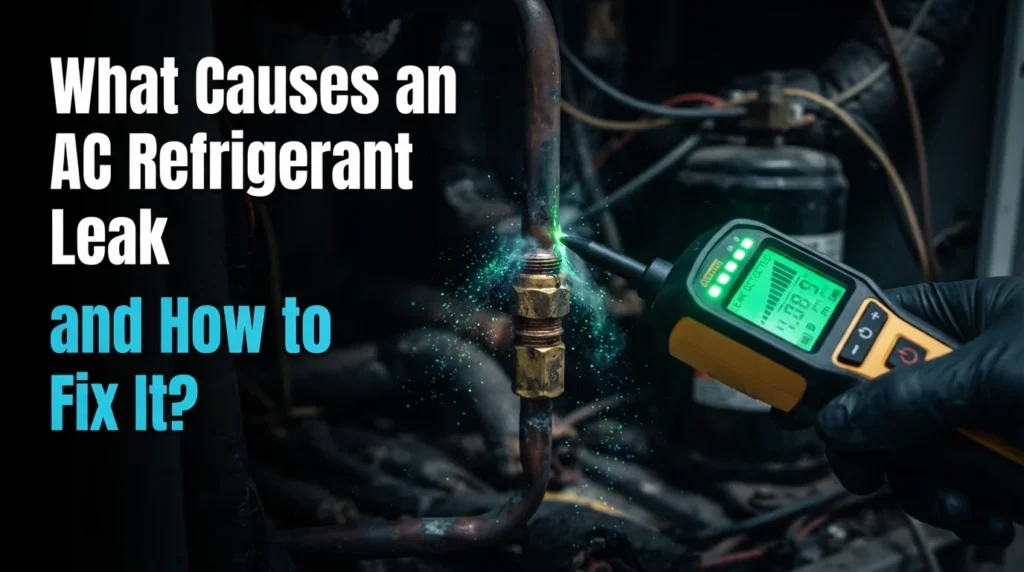
- Use a refrigerant leak detector to detect traces of gas
- Apply bubble solution to suspected joints and look for bubbles to form
- Monitor suction and liquid line pressure gauges for readings that are below the normal range
Professional Repair Methods: Nitrogen Pressure Testing, Brazing, and Gas Recharge
Technicians often use nitrogen pressure testing to confirm a suspected leak site. You can pinpoint the exact leak point by pressurizing the line set with nitrogen and watching the pressure drop. This way you do not waste refrigerant.
Then pinholes or cracked joints are permanently sealed through professional AC repair, typically using brazing or other appropriate repair methods. Heat is used to fuse the copper back together. Technicians will pull a vacuum on the lines before recharging the system to remove any moisture or air that may be trapped inside, as this can damage the compressor.
The technician will not add new refrigerant until the vacuum process is complete. The technician then adds new refrigerant, charging the system to the exact pressure level recommended by the manufacturer.
Checking AC Refrigerant Leak Repair Costs and Service Standards
The cost of the repair depends on the location of the leak, how accessible the line set is and what type of ac refrigerant gas the system uses. A leak in an exposed outdoor joint is usually less expensive to repair than a leak hidden in a wall cavity.
Services such as AC maintenance can cover the inspection and servicing needed to identify refrigerant leaks before they lead to more serious cooling problems. Proper service visit involves a number of steps done in order.
- Full leak check to find the source of the problem
- Repair the damaged joint, coil or fitting physically
- Vacuum process for moisture removal prior to recharging
- Correct pressure level of gas refueling
- Final verification to confirm the leak is fully sealed
How High Ambient Heat and Coastal Humidity Accelerate Refrigerant Leaks
The summer heat in Dubai is so extreme that it causes head pressure inside AC systems to go much higher than in milder climates. This additional load presses better on all joints and seals in the refrigerant circuit.
Thermal expansion adds further stress, as copper lines expand and contract repeatedly through daily heat cycles. This constant movement over time weakens flare connections and brazed joints making it easier to developing small cracks.
Then there’s the added risk of coastal humidity. The salty air typical of Dubai’s coastal regions speeds up external corrosion on outdoor units and exposed line sets, which damage copper surfaces faster than in arid inland areas.
- Repeated thermal cycles, daily heat exposure
- High ambient humidity leading to internal corrosion
- Salt exposure through outdoor coils and line connections
- Extended running during peak summer months adding mechanical stress
When Should You Schedule Immediate Line Inspection and Service?
There are several warning signs of an AC refrigerant leak that indicate a system needs immediate inspection rather than waiting for a scheduled service date.
- A sudden unexplained increase in your electricity bill
- Ice on the indoor unit or on visible refrigerant lines
- Unit making hissing or bubbling sounds
- Thermostat is set correctly but blowing warm air
- Repeated short cycling of the compressor
One of the best ways to catch a leak in development before it starts affecting your comfort or your electricity costs is to have an inspection scheduled before the peak summer season hits.
Key Takeaways
The AC refrigerant leak slowly reduces cooling efficiency well before most people realize there’s a problem. If it is not taken care of it can cause icing of the evaporator, overheat the compressor and eventually cause expensive component failure. Over time, corrosion, vibration, loose fittings and harsh climate of Dubai weaken refrigerant lines.
If you catch the early signs, whether that’s warm airflow, ice build-up or unusual noises, you have a better chance of a simple repair as opposed to replacing the whole system. If you have a leak, a quick, temporary fix cannot protect your system’s performance or extend the working life of your system to the level that proper leak detection, sealing and recharge with a professional service like AC Maintenance UAE can.
FAQs
Q: What is refrigerant in AC?
The refrigerant is a chemical that takes heat from the indoor air and dumps it outside. When it operates, it cycles through the compressor, coils and expansion valve to keep your house cool.
Q: Which refrigerant is used in AC systems?
Common varieties are R-32, R-410A and older R-22 units still in use in aging systems. Most new installations now use R-32 or R-410A for improved efficiency and lower environmental impact.
Q: What is the most common refrigerant used in air conditioning systems?
Right now, R-410A and R-32 are the industry standard for split AC units. Both provide better cooling performance than older refrigerants like R-22 that are being phased out.
Q: How do I know if my AC has an ac refrigerant leak?
Be alert for warm air flow even when the thermostat is set to normal, ice forming on indoor coils or hissing sounds near piping. These signs are generally a sign that there is gas somewhere in the line set that is leaking.
Q: Can an AC run safely with low refrigerant levels?
Low refrigerant will not cause the compressor to overheat and permanently damage it. Also lower gas amount reduces the cooling efficiency quite a lot, so the system has to work harder without getting the right results.
Q: How do technicians use a refrigerant leak detector?
Technicians use electronic sensors that can pick up traces of gas in the air to scan potential joints and lines. Bubble solutions are also used to visually verify leak points on some fittings.
Q: Can you top up AC gas without repairing the leak first?
Adding extra gas when the crack hasn’t been repaired is a stopgap. Otherwise, the refrigerant will leak out again quickly, making the repair a waste of time and money.
Q: How does extreme ambient heat in Dubai affect refrigerant line pressure?
High outdoor temperatures build head pressure throughout the system, putting stress on joints and fittings. This expansion of the flare causes stress on the flare connections, which results in more leaking over time.
Q: Why does ice form on copper coils during a gas leak?
The coil surface temperature falls below freezing because the refrigerant undergoes a pressure drop. Then the moisture in the air around the coil freezes on the coil, making the airflow even more restricted.
Q: Is leaking AC refrigerant harmful to health or the environment?
Depending on the gas, some refrigerants can be harmful to the environment and indoor air quality. Older refrigerants such as R-22 are more damaging to the environment than the newer replacements.

AC Maintenance UAE Team
Welcome to AC Maintenance UAE, your reliable partner for complete air conditioning repair and maintenance services in Dubai, Sharjah, and Abu Dhabi. We are strongly dedicated to excellence and deliver efficient and reliable services to keep your cooling systems performing at their best.