Continuously running your air conditioner in hot weather of summer put a lot of stress on the refrigerant circulating network. Weak airflow or the air blowing out of the vents feel warm than it should? This is typically caused by a damaged, restricted or incorrectly sized ac copper pipe line that is not allowing for proper heat removal. This guide will explain how problems with the copper pipe hinder the flow of refrigerant, how to identify physical and insulation problems yourself, and what corrective actions will restore the cooling capacity back to normal.
Understanding the Role of AC Copper Pipe in System Performance
Copper lines run between your indoor and outdoor AC units sending refrigerant back and forth in a never ending loop. This refrigerant takes heat from the inside of your home and gives off heat to the outside. This is the basic process by which cooling occurs. If the ac copper pipe does not have a clear no obstruction path this heat exchange is slowed down or stops working properly.
They use copper for this job because it is better at transferring heat than most other metals. The refrigerant needs to flow through the line at a certain rate and pressure, and copper’s thermal properties enable that flow without any added resistance. That’s why copper has been the standard choice for decades in residential and commercial AC installs.
Copper is also a practical choice for installers. It is flexible to fit tight spaces during installation, but it’s strong enough to withstand the pressure changes refrigerant goes through as it cycles between a liquid and gas. Other materials can either corrode faster or are unable to handle these shifts in pressure as well as reliable.
Understanding Suction vs Liquid Copper Line Dynamics
Each split AC system has two separate copper lines and each does a different job. The bigger line is the suction line and it goes back to the compressor with cool, low pressure refrigerant gas. It has insulation wrapped around it. The liquid line is smaller and carries warm high pressure refrigerant usually uncovered or lighter insulation.
If one of the lines is damaged or the two lines are mixed up in a repair, the entire pressure balance in the system gets thrown off. This reveals itself in a number of familiar signs:
- Frost or ice on the suction line can be an indicator of refrigerant restriction or overcharging.
- A hissing sound near either line is an indication that a refrigerant leak is under pressure.
- A liquid line that feels too warm may be too small or partially blocked.
- Reduced airflow and a normally sounding compressor usually indicates failure of suction line insulation.
Common Physical and Technical Causes Behind AC Copper Pipe Failure
Copper lines don’t just fail without warning, in most cases. Common problems include corrosion from long-term moisture exposure, tiny punctures from accidental contact during maintenance, leaks where sections were brazed together, and fatigue cracks from the constant vibration of the compressor.
Age is a big factor in this as well. Systems that are older and were installed using poor materials or rushed workmanship are likely to develop these problems years before a properly installed system. Dubai’s climate, with outdoor units exposed to extreme heat and humidity all year, speeds up this breakdown more than in normal conditions. The salt air can also accelerate corrosion on exposed copper sections in coastal areas.
How Improper Bending and Kinks Restrict Refrigerant Flow
A tight, sharp bend in a copper line looks as bad as it works. It physically narrows the internal diameter of the pipe at that point, forcing refrigerant through a small opening and slowing its velocity just when it needs to keep flowing smoothly.
This is exactly why installers use an ac copper pipe bender and not bend the tubing by hand. A good bender will keep the internal diameter, and spread the pressure even around the curve, not squeeze it. If a line does get kinked, if it happened at the time of installation or later from accidental damage, the symptoms are usually easy to spot:
- Noticeable decrease in cooling capacity even when the thermostat setting has not changed.
- The compressor is working harder and running longer cycles than usual.
- A light rattling or tapping noise coming from the line set, especially at start-up.
Direct Impacts of Poor Copper Line Sizing and Restriction on Cooling
Pipe diameter is not predicted by installers. If the ac copper pipe is too small for the tonnage of the system, the refrigerant is forced through too fast and the pressure goes up and the heat the system can actually move goes down. The opposite problem is an oversized pipe. This slows the refrigerant down and allows the oil to settle in the line instead of circulating properly.
Either mistake eventually shows itself at the evaporator coil. If the coil is not the right size, it will not be able to reach the temperature ranges it needs to, meaning less moisture and heat is being pulled from the indoor air. The result is a system that is always running, but never quite reaches the desired temperature.
Matching Tons to Specs: 1 Ton, 1.5 Ton, 2 Ton, and 3 Ton Split AC Copper Pipe Sizes
Each tonnage rating has a manufacturer recommended pipe size and getting this right when installing really makes a difference to the long term performance. For a 1 ton ac copper pipe size, the usual configuration is to have a smaller suction line, plus a thinner liquid line for the reduced refrigerant volume.
Moving up to 1.5 ton split ac copper pipe sizes, both lines go up a bit in diameter to allow for the increased refrigerant flow required by a bigger system. The same pattern is followed for 2 ton ac copper pipe sizes, with an additional step up in suction line width to prevent pressure buildup. The wider lines are needed for the 3 ton split ac copper pipe sizes at the high end of this range since these are larger systems that move a lot more refrigerant per cycle.
In all these tonnage ranges the suction line is usually larger than the liquid line. Usually that follow ac copper pipe size in mm. The exact figures vary a bit depending on the manufacturer. Using the wrong copper pipe size during AC installation is one of the most common causes of chronic cooling complaints. Always check the installation manual for the unit instead of assuming a size.
Step-by-Step Guide to Identifying AC Copper Pipe Insulation and Leak Issues
Homeowners and property managers can spot early warning signs without special tools. You can visually and physically check it every few months and problems can be caught before they become major repairs.
- Begin with a visual inspection of both lines where they are accessible, looking for cracks, discoloration, or greenish corrosion spots.
- Look for frost or heavy condensation on either line, usually a sign of airflow or refrigerant problems.
- Listen closely around joints and valves for any hissing sound, especially immediately after the system fires up.
- Check for gaps in the insulation wrap or for looseness or brittleness.
- Monitor your system’s cooling efficiency for a few days and look for any slow degradation.
Insulation Wear: Why Sweating and Line Condensation Drop Efficiency
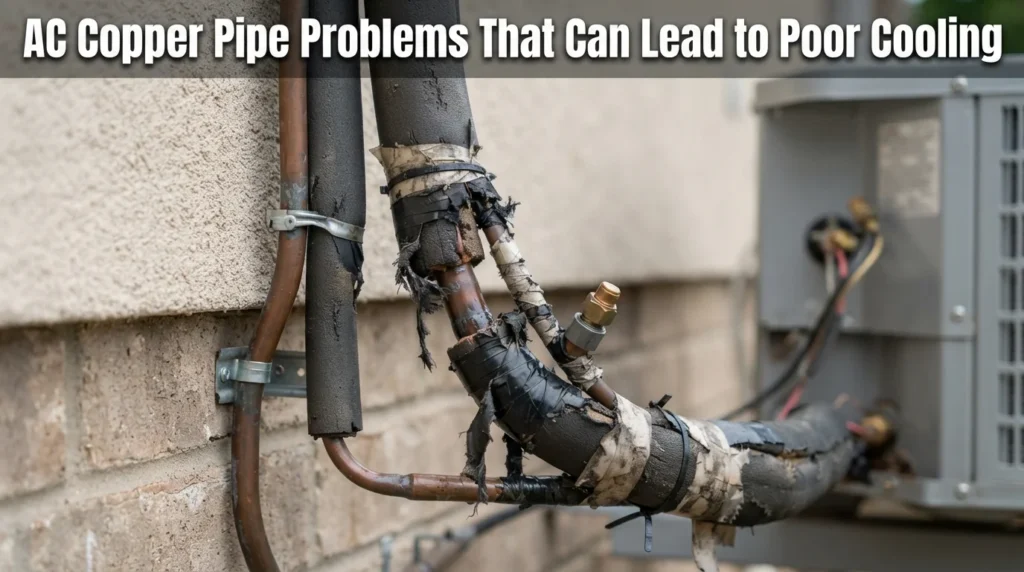
So the ac copper pipe insulation is there to prevent the suction line from sucking heat from the surrounding air before that cold refrigerant reaches the compressor. If this insulation gets thin, or cracks, or peels off in places, the line begins to sweat highly where the warm air contacts the cold copper surface.
But this condensation is more than a nuisance. It is a loss of cooling efficiency because the system now has to make up for heat gain in the line itself. If not it causes moisture problems in the vicinity. The signs of insulation failure are:
- Wet spots or drips around the line entry point into the indoor unit.
- Growth of mold or mildew developing near the copper line.
- Energy bills gradually rising with no change in usage habits.
How Extreme Dubai Heat and High Humidity Strain Copper Lines
The higher the ambient temperature, the higher the differential pressure of the refrigerant in the whole line set. Outdoor temperatures rise well above normal operating conditions the pressure differential between the suction line and liquid line increases. This added stress increases wear at joints, bends and connection points.
Humidity adds a second layer of stress. The humidity in the air promotes condensation on uncovered or poorly insulated areas, and this constant wet/dry cycle gradually reduces the insulation material faster than it would in a drier climate. Much of the typical line set is routed through ceiling spaces, which trap even more heat and humidity, creating conditions that wear down both copper and insulation.
AC Maintenance UAE technicians often talk about how systems that are not installed with the right thickness of insulation for the climate are more likely to developing these problems in a couple of summers than the several years it may take in other locations.
Maximum Copper Pipe Length Limits for Split AC Units
All split systems have a maximum copper pipe length for split ac installation that is specified by the manufacturer based on the capacity of the compressor to push refrigerant that far. Going past that limit causes real problems, not just a bit of lost efficiency.
- The compressor finds it hard to maintain pressure over the additional length and the refrigerant capacity drops.
- Long horizontal runs are more likely to trap oil, which prevents the compressor of proper lubrication.
- Total cooling output is reduced due to pressure drop through the extended line.
- Refrigerant charge often needs to be recalculated for longer than standard runs, which many installers overlook.
Checking AC Copper Pipe Price and Replacement Standards
Ac copper pipe price is mainly dependent on diameter and wall thickness and the current market rates of copper which change throughout the year. While thicker gage copper costs more initially, it offers more protection against punctures and corrosion over time, making it a worthwhile investment for systems in harsh outdoor environments.
For a mid-size residential setup, the 1.5 ton split ac copper pipe price is generally moderate compared to smaller or larger tonnage lines. But, labor for proper brazing and pressure testing often comprises a larger portion of total replacement cost than the copper itself. Trying to save money up front by skipping on gauge thickness is a sure way to have early line failure.
When Should You Schedule Professional Line Inspection and Repair?
Some problems are safe for you to observe yourself, while others require professional AC repair from an experienced technician.
- Recurrent refrigerant leaks in the same area after a previous repair.
- Frost buildup that regenerates days after removal.
- Compressor short cycling: the unit cycles on and off more often than usual.
- A noticeable sudden decrease in the cooling without an obvious cause.
A service like AC Maintenance UAE is often used by property managers who have several units to maintain, to do line pressure testing and replacement. Proper gages are generally needed to diagnose pinhole leaks or subtle sizing issues, not guesswork.
Key Takeaways
A damaged or incorrect size ac copper pipe slows the velocity of the refrigerant, and it is this slowing down that causes evaporator frosting and a gradual reduction in cooling output. If refrigerant can’t flow through the line at the proper rate, the entire system has to work harder just to keep the same indoor temperature.
Fixing kinked parts, replacing thin or worn insulation, and checking that the pipe size is appropriate for the tonnage of your system all help prevent larger failures down the road such as compressor burnout. These are not hard fixes, but they do require catching the warning signs early. Regular visual checks, listening for odd noises and dealing with moisture or frost as soon as it appears will keep refrigerant lines running as they should, even through the toughest of Dubai summer heat.
FAQs
Q: When replacing an AC unit, do they replace the copper pipe?
Not always. If existing line is undamaged, of the proper size, and has no corrosion, technicians can reuse it. But most professionals recommend replacement when upgrading tonnage or after several years of service.
Q: What type of copper pipe is used for AC?
For air conditioner copper pipe installations, the copper tubing used is typically refrigeration grade copper tubing (or ACR copper). Inside it is cleaned and sealed to prevent contamination that could damage the compressor.
Q: What size copper pipe do I need for my air conditioner?
The pipe size is determined only by the tonnage of your system. Always refer to the manufacturer’s installation manual, as using the incorrect diameter will lead to pressure imbalances and reduced cooling performance over time.
Q: Does AC copper pipe need covering?
Yes, especially the suction line. The insulation keeps heat out and condensation from building up and protects the copper surface from environmental wear from direct sun and humidity exposure.
Q: How much does it cost to replace an AC copper pipe?
Cost is line length and diameter and labor for brazing and pressure testing. Longer runs and thicker gage copper will naturally increase the price over a short, standard replacement.
Q: How do you test an AC copper pipe for leaks?
The nitrogen pressure test or an electronic leak detector is usually used by technicians. Smaller leaks not easily seen can be revealed by soap-bubble tests of joints and connections.
Q: What causes ice buildup on an AC copper line?
Ice normally forms when the flow of refrigerant is restricted, such as from a kink, a clogged filter or low refrigerant charge. If the airflow across the evaporator coil is reduced, this can also happen.
Q: What is the correct bending technique for AC copper pipe?
An ac copper pipe bender keeps the inside diameter constant through the bend. Bending by hand without the proper tools usually causes kinks that will restrict the flow of refrigerant at that location.
Q: What is the standard copper pipe size in mm for split AC units?
While sizes vary by tonnage, for all the common residential split system categories, suction lines are expected to be larger in diameter than liquid lines and are very close to the manufacturer specs.
Q: How does Dubai’s heat affect AC copper pipe performance?
The extreme heat increases the pressure differentials across refrigerant lines and the high humidity accelerates insulation breakdown and condensation. In milder climates, these conditions result in accelerated wear.

AC Maintenance UAE Team
Welcome to AC Maintenance UAE, your reliable partner for complete air conditioning repair and maintenance services in Dubai, Sharjah, and Abu Dhabi. We are strongly dedicated to excellence and deliver efficient and reliable services to keep your cooling systems performing at their best.