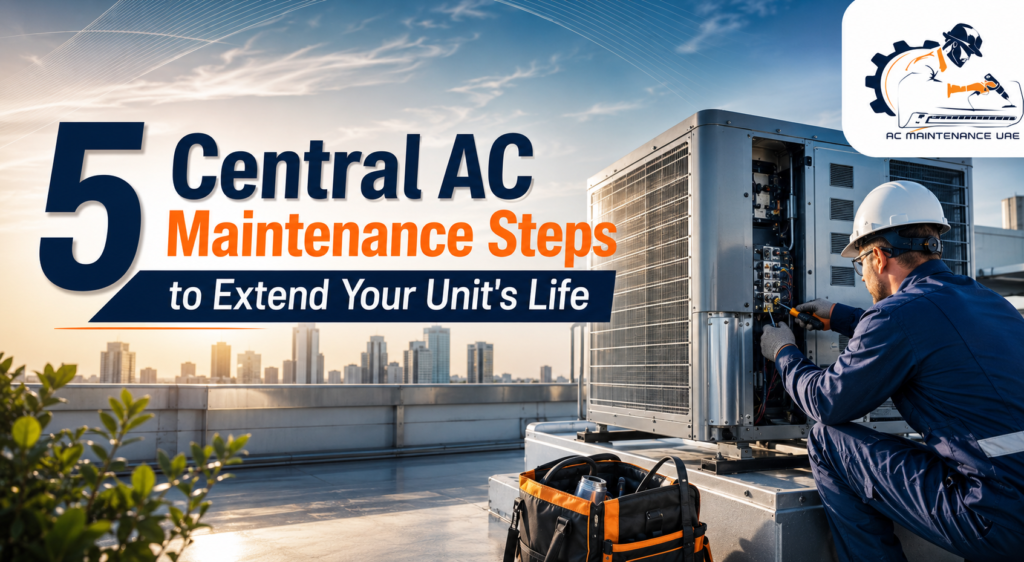
Most people call a technician only when the AC stops working completely. By then, the damage is already done, and the repair bill reflects it. In Dubai’s heat, that kind of neglect catches up fast. Regular central AC maintenance is what keeps your unit running well, your bills reasonable, and your home actually cool when it matters most. This guide walks you through 5 practical steps every homeowner should follow, whether you’re handling things yourself or leaving it to a professional.
Why Your AC System Loses Efficiency Over Time
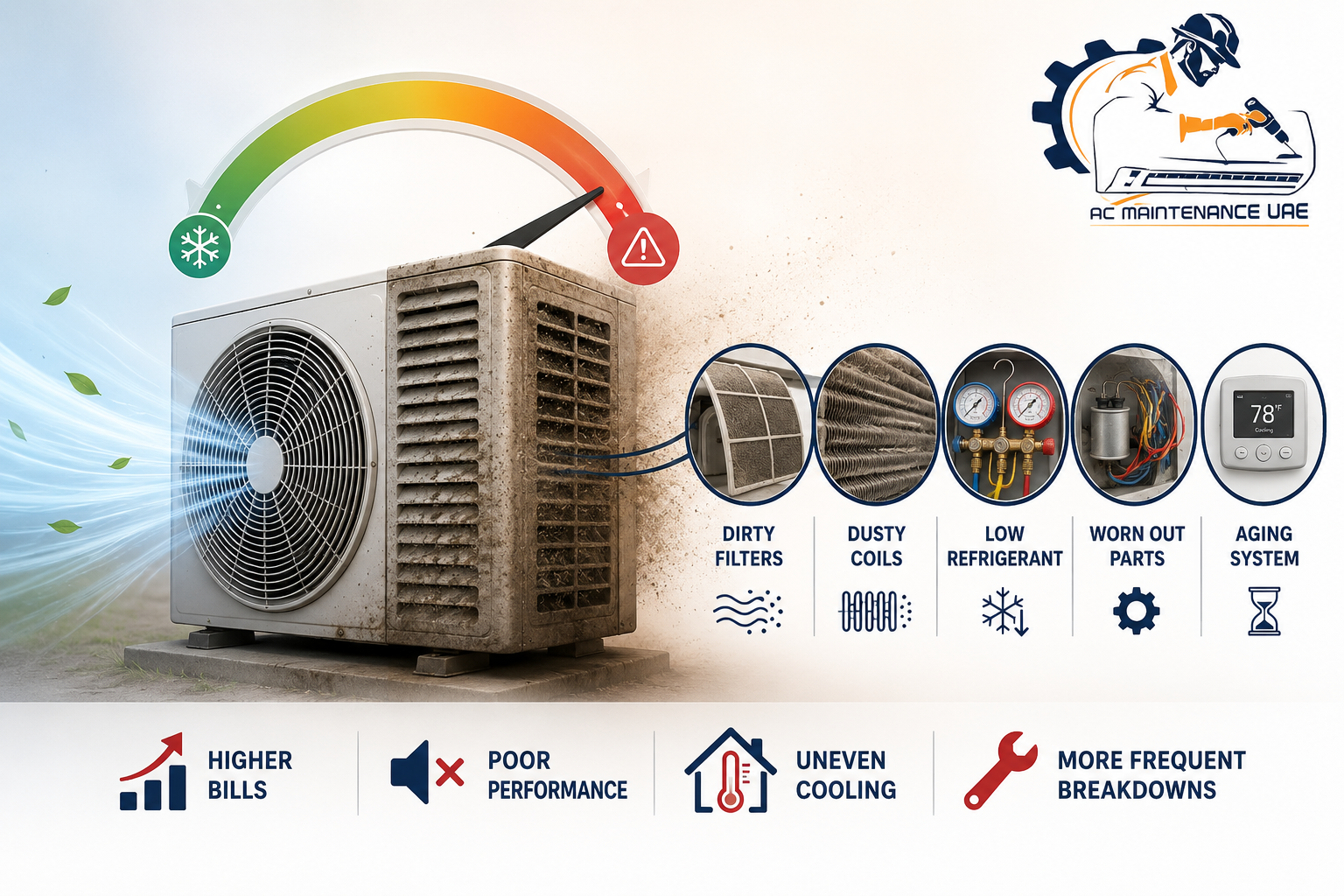
Sand gets everywhere. That’s not an exaggeration; it’s the single biggest reason HVAC system maintenance gets overlooked until something breaks. Dust coats the coils, clogs the filters, and slowly chokes the system. Humidity speeds up corrosion on metal parts. Heat keeps the compressor running at its limit almost year-round. Put those three together, and you’ve got a machine that’s aging fast without showing obvious signs.
The frustrating part is how quietly it happens. Your electricity bill climbs a little each month. The rooms take longer to cool. You adjust the thermostat lower, which pushes the system harder. By the time warm air is blowing from the vents, the damage is already done. Experienced technicians say the same root causes show up again and again during callouts: blocked filters, dirty coils, and neglected drain lines. Knowing how to maintain a central AC unit consistently is what separates a 10-year unit from one that lasts 20.
Step 1: Clean or Replace Your Air Filters Without Delay
Think of the filter as your AC’s lungs. When it’s blocked, nothing works right. Dust-clogged air can’t move freely through the system, so the unit compensates by running longer and harder. Your central ac unit ends up consuming more electricity to do less cooling. That’s a bad trade-off every single month.
In Dubai, check your filter every 30 days during peak summer. In slightly cooler months, every 45 to 60 days is fine. It takes two minutes and costs almost nothing. Skipping it costs a lot more.
How a Blocked Filter Affects Your Central AC System
Here’s what actually happens inside your central ac system when the filter gets ignored. Restricted airflow causes the evaporator coil temperature to drop below freezing. Ice builds up on the coil. The coil can’t absorb heat from the air anymore, so warm air blows into your rooms instead of cold. The compressor keeps running, trying to fix what it can’t fix and slowly burns itself out.
Technicians find frozen coils constantly during service visits. Almost every time, it traces back to a filter that was last changed several months ago. You can test yours right now, hold it against a light. If you can’t see light through it clearly, it needs replacing today.
Step 2: Inspect and Clean the Condenser Coils Properly
Your outdoor unit is doing heavy work in direct sun, surrounded by dusty air. The condenser coils inside it release heat pulled from your home, but only if they’re clean enough to do that job. Cleaning central AC unit coils in Dubai isn’t optional maintenance. It’s something the climate demands more often than most people realize.
Sand and fine dust pack into the coil fins quickly. A light rinse with a garden hose on low pressure can clear surface buildup. Cut the power before you touch anything, use gentle water pressure, and never prod the fins with anything sharp. They bend easily, and bent fins block airflow just like dust does. For deeper buildup, professional cleaning uses chemical solutions that break down grime without causing damage. That’s a different level of clean than a garden hose achieves, and it matters for long-term central ac maintenance performance.
Warning Signs That Your Coils Are Overdue for Cleaning
If warm air is coming from your vents despite a low thermostat setting, it likely means the coils can’t release heat the way they should. If the outdoor unit runs in longer cycles and your rooms still don’t reach temperature, that’s another sign. Visible grime or packed debris around the fins is obvious when you look. Ice forming on the unit during operation is a serious signal; cleaning the central AC unit components at that point needs to happen without delay.
Step 3: Clear the Condensate Drain Line Before It Backs Up
Every time your AC cools the air, it pulls moisture out of it. That water needs somewhere to go, and the condensate drain line is what moves it out. When algae or debris clogs that line, water backs up into the unit. From there, it can leak into your ceiling, walls, or floors. Water damage from a blocked drain line is surprisingly common and completely avoidable.
The DIY fix is simple. Find the drain access point near your indoor unit. Pour a mix of diluted white vinegar and warm water down the line. Give it 30 minutes to break down any biological growth, then flush with clean water. Do this every 3 months as part of your regular central ac maintenance routine, more frequently during the humid summer months.
Most people skip this step because there’s no visible warning until water is already dripping somewhere it shouldn’t be. That’s exactly the problem. Knowing how to maintain a central AC unit means handling this before it becomes a water damage repair job.
Step 4: Test Your Thermostat and Check Refrigerant Levels
These two checks don’t always get attention together, but they’re both about one thing: whether your central ac system is actually delivering the temperature you’re asking for. If something feels off with your cooling, start here.
Thermostat calibration is easy to test yourself. Set a target temperature and compare it to a standalone thermometer in the same room. A gap of more than two degrees consistently means the thermostat is reading incorrectly. Recalibration or a replacement unit fixes it, and it’s often the reason a home never quite feels cool enough.
Refrigerant is not a DIY job. Low refrigerant in your central ac unit means there’s a leak, not just a top-up needed. Adding more without sealing the leak first is money wasted. UAE regulations require licensed professionals to handle refrigerant for good reason. A certified technician finds the leak, repairs it properly, and then recharges the system. That’s the only sequence that actually works.
Step 5: Book a Professional HVAC Inspection at Least Once a Year
There’s a limit to what you can check without training and equipment. Electrical connections, capacitor wear, fan motor condition, and duct integrity aren’t things a visual inspection from a homeowner catches. A proper HVAC system maintenance visit covers ground you simply can’t cover on your own.
Here’s what a professional service visit actually includes:
- Electrical connections checked and tightened across all components
- Condenser and evaporator coils cleaned with professional-grade solutions
- Refrigerant pressure tested and leaks identified
- Fan motor amperage is measured and compared against the safe operating range
- Duct system checked for leakage or blockage, reducing airflow
- Condensate drain flushed and confirmed flowing properly
At AC Maintenance UAE, we handle dependable central ac maintenance across the UAE, with experienced technicians covering everything from standard annual visits to more complex repairs. Once a year is the floor. In Dubai’s climate, twice a year is the smarter call.
What Technicians Actually Check During a Service Visit
A proper visit goes deeper than most homeowners expect. Duct leakage testing catches cooled air escaping before it reaches your rooms, a common efficiency drain that’s invisible otherwise. Capacitor condition matters because a failing capacitor is usually what causes a compressor not to start. Fan motor amperage readings catch motors drawing too much power before they fail.
Coil condition, drain line flow, and thermostat accuracy all get verified during solid HVAC system maintenance practice. Technicians who follow this process as part of how to maintain central AC unit standards catch the small problems before they compound. A good inspection visit either confirms everything is fine or gives you a clear picture of what needs fixing before it becomes a crisis.
FAQs
Q1) How often should central AC maintenance be done in Dubai?
Twice a year works best, given Dubai’s heat and dust. Filters need monthly checks, and the drain line should be flushed every three months. Annual professional servicing is the bare minimum for keeping the system in good shape.
Q2) What signs tell me my central AC unit needs attention?
Warm air from vents, longer cooling cycles, unexplained bill increases, strange noises, or ice on the outdoor unit mean your central ac unit needs a proper check before the problem gets worse.
Q3) Can I handle central AC system cleaning myself?
Some of it, yes. Changing filters, flushing the drain line, and rinsing the outdoor coils are manageable at home. Anything involving refrigerant, electrical components, or deep coil treatment needs a licensed technician.
Q4) Why does my AC run constantly without cooling the room properly?
Usually it’s a blocked filter, grimy condenser coils, a refrigerant leak, or a thermostat reading the wrong temperature. Each one makes the system work harder while delivering less, and the fix is almost always straightforward.
Q5) Is low refrigerant something I can top up myself?
No. Low refrigerant means there’s a leak somewhere in the system. Topping it up without sealing the leak first just delays the problem. UAE regulations require certified professionals to handle refrigerant; this one always needs a technician.
Q6) What does a professional HVAC system maintenance visit actually cover?
Electrical connections, coil condition, refrigerant pressure, fan motor performance, duct leakage, thermostat calibration, and drain line flow. A proper visit checks every component that directly affects how well and how long your system runs.
Q7) Does regular maintenance actually make a cost difference?
Yes, noticeably. A service visit is a small cost compared to an emergency repair or full unit replacement. In a climate like Dubai’s, skipping maintenance is usually what turns a minor issue into an expensive one.
Q8) How long can a central AC unit last with regular upkeep?
With consistent care, 15 to 20 years is realistic. Without it, especially in Dubai’s demanding climate, that drops significantly. The difference between a unit that lasts and one that doesn’t is almost always maintenance history.
Keep Your AC Running Strong and Your Bills Under Control
Five steps, done consistently, add real years to your unit and take the sting out of your electricity bill. Comfort stays consistent. Breakdowns stay rare. And you’re not caught off guard when the hottest week of summer arrives. Central ac maintenance isn’t a big ask; it’s just a regular habit. When the job calls for a professional, AC Maintenance UAE is a reliable option for central ac maintenance across the UAE. Take care of your central ac unit now, on your schedule, before the heat forces the decision for you.