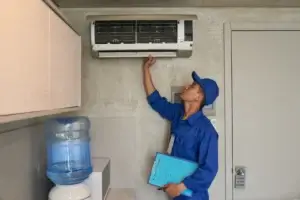
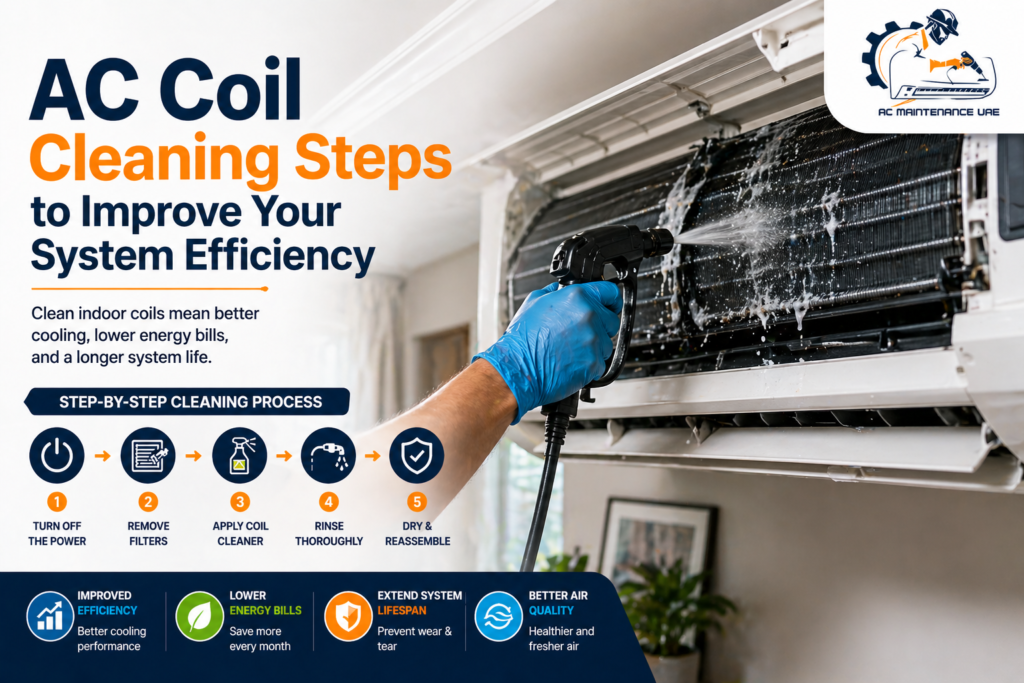
Your AC is running, but the room still feels warm. Sound familiar? Dirty coils are usually the reason, and most homeowners don’t even know it. AC coil cleaning is one of the most skipped maintenance tasks, yet it directly affects how well your system cools and what you pay every month.
This blog walks you through the exact steps, the right tools, the correct chemicals, and the schedule you need to keep your system running the way it should. No fluff, just what actually works.
Why Dirty AC Coils Hurt Your Cooling and Efficiency
Dirt doesn’t just sit there. It builds up on your coils slowly, layer by layer, until your system can barely do its job. The result? Your air conditioner is not cooling properly, even though it’s running all day long. Dust and debris coat the coil surface and block heat transfer completely. The system then runs longer cycles trying to reach your set temperature, components overheat faster, and your electricity bill climbs without any change in comfort.
Cooling capacity drops by an estimated 30% with heavily soiled coils, and energy use goes up by nearly 40% compared to a clean system. You’re paying nearly half as much extra just because the coils haven’t been cleaned. Air conditioner not cooling issues don’t fix themselves, and waiting only makes the damage worse over time.
Tools and Materials You Need Before You Start
Before you touch anything, gather your tools. Going in unprepared usually means stopping halfway through, and that’s when mistakes happen. The right setup makes the whole process faster and safer from the very beginning.
Here’s what you’ll need:
- AC coil cleaning brush with soft bristles only, never metal or wire
- Safety goggles and rubber gloves to protect skin and eyes
- A flathead and Phillips screwdriver for panel removal
- Fin comb to straighten any bent aluminum fins
- Compressed air can be used for loosening surface-level dust
- Spray bottle for rinsing or applying cleaner evenly
Turn the power off at the breaker before anything else. Not at the thermostat but at the breaker. Skip the pressure washer entirely because it bends fins, and your AC coil cleaning brush handles the job far better with far less risk.
Choosing the Right AC Coil Cleaning Chemical
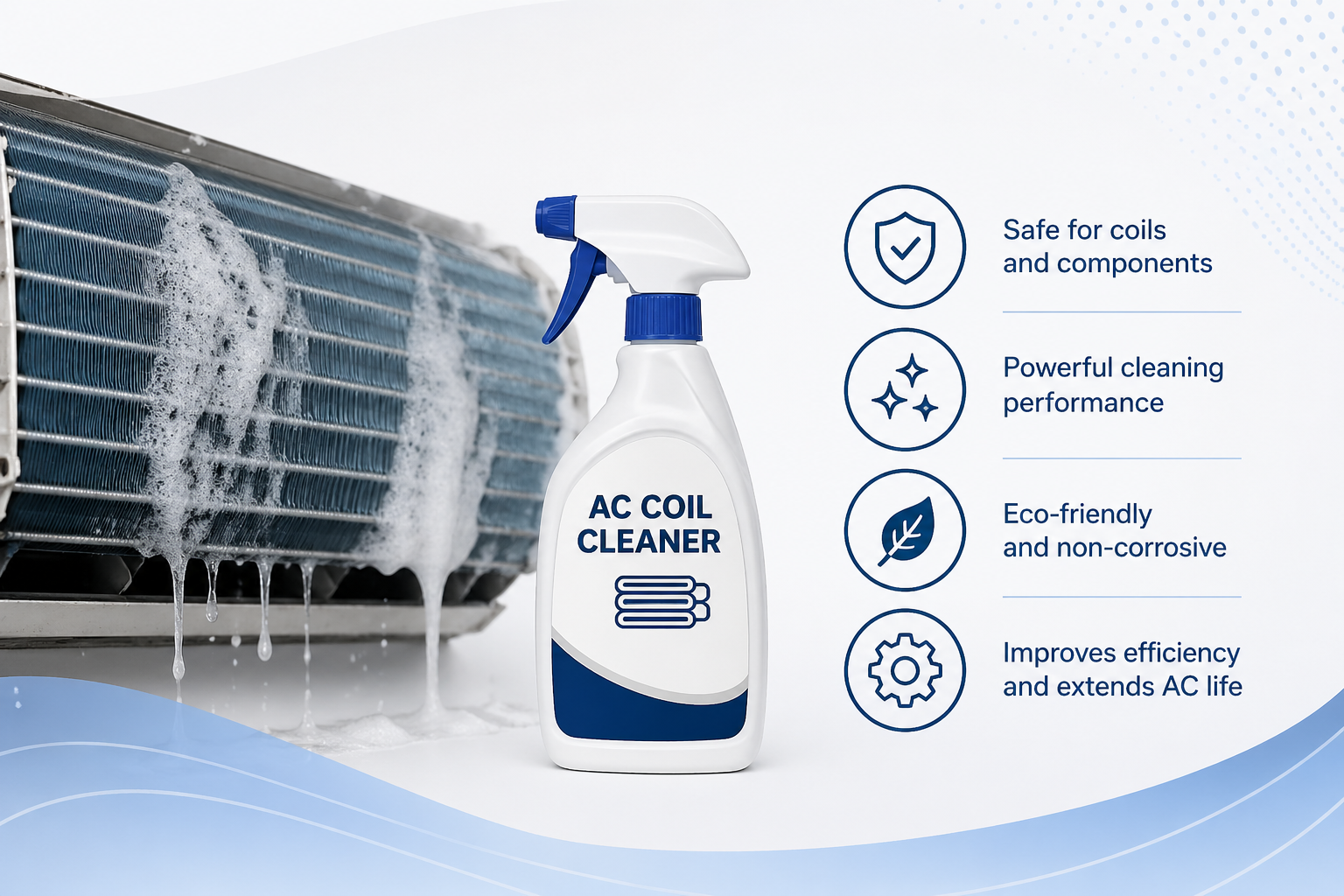
Walk into any hardware store, and you’ll find a shelf full of options. Foaming sprays, concentrated liquids, and no rinse formulas. It can feel overwhelming, but the choice actually comes down to a few simple rules. A safe AC coil cleaning chemical should always be pH neutral and aluminum safe. Foaming cleaners cling to the coil surface and lift dirt without heavy scrubbing, while no rinse formulas work best for indoor units where water control is tricky.
Avoid bleach, ammonia, and any acid-based solution because they corrode fins fast and cause more damage than the dirt itself. But if your coils haven’t been cleaned in over a year, a proper foaming AC coil cleaning chemical is the right call because it penetrates deeper and does the heavy lifting for you. Warm water with mild dish soap works only for very light surface dust, nothing more.
Step-by-Step Process for Cleaning AC Coils Inside Your Home
AC coil cleaning done right means working carefully on the indoor evaporator coil. Cleaning AC coils inside requires patience, the right products, and a proper step-by-step approach to protect those delicate fins throughout the entire process.
How to Clean the Indoor Evaporator Coil
The evaporator coil sits inside your air handler behind an access panel. It gets dirtier faster because it constantly pulls humid air across its surface every single day.
Step 1: Turn Off the Power at the Breaker
Don’t just hit the thermostat off button and call it safe. Go to your breaker panel and flip the switch that controls your HVAC system. This cuts all electrical flow to the unit and keeps you protected while working inside the air handler.
Step 2: Remove the Access Panel
The access panel is usually held by two to four screws on the side of your air handler. Unscrew them carefully and set the panel aside where it won’t get bent. Some panels have tape around the edges, so peel it back slowly without tearing it away completely.
Step 3: Inspect the Coil Before Touching It
Before you spray anything, take a good look at the coil condition first. Light dust means a quick clean is enough. Heavy grey buildup or visible mold means you need a stronger approach. Knowing what you’re dealing with saves you from under-cleaning or completely overdoing it.
Step 4: Apply the AC Coil Cleaning Chemical
Shake your AC coil cleaning chemical well and spray it evenly across the fin surface. Work from top to bottom in slow, steady passes. Even coverage is what pulls dirt out properly without damaging the aluminum fins underneath the surface layer.
Step 5: Let It Sit and Work
This is the step most people rush through. Give the cleaner 5 to 10 minutes to foam up and break down the grime sitting between the fins. You’ll actually see it bubbling and lifting dirt off the surface. Fight the urge to wipe it immediately because the foam needs time to work properly.
Step 6: Brush Gently Along the Fin Lines
Take your AC coil cleaning brush and run it softly along the fins in a straight up and down motion. Never scrub sideways because fins are thin aluminum and bend very easily under even light pressure. The cleaner has already loosened most of the dirt, so let the brush finish the job gently.
Step 7: Rinse or Let It Drain Naturally
If you used a no-rinse formula, condensation from running the AC later will flush it away naturally on its own. If rinsing is needed, use a spray bottle with plain water and mist lightly across the surface. Keep water well away from any wiring or insulation around the coil area.
Step 8: Reassemble and Restore Power
Put the access panel back and tighten all screws evenly. Reseal any tape you removed because gaps let warm air in and hurt efficiency fast. Go back to the breaker, switch the system on, and give it 10 minutes before checking the airflow output.
How Often Should You Schedule HVAC Maintenance for Coil Cleaning
Honestly, most people only think about this after something breaks. Clean your coils at least once a year before the cooling season kicks in. If you’re in a dusty or humid area, bump that up to every three months during peak use. Watch for ice buildup, musty smells, or a sudden jump in your bills because those are signs your air conditioner’s not cooling issue is already costing you.
Ask your technician to include coil cleaning during every HVAC maintenance visit. AC coil cleaning paired with regular HVAC maintenance isn’t a luxury; it’s just smart ownership. Here at AC Maintenance UAE, we’ve seen small, ignored efficiency drops turn into full compressor failures. Don’t let that be your story.
Frequently Asked Questions
Q1) How much does it cost to clean AC coils?
Professional AC coil cleaning in the UAE typically costs between AED 150 and AED 500, depending on the unit type and how badly the coils are clogged. A basic DIY cleaning kit runs around AED 40 to AED 100 from most hardware stores.
Q2) How to clean AC coils at home?
Turn off the power, remove the access panel, apply a coil cleaner, use a soft brush on the fins, and let it drain or rinse lightly. Never rush the sitting time because the cleaner needs those full minutes to properly work through the buildup.
Q3) How to clean the evaporator coil?
Spray an AC coil cleaning chemical evenly across the fins, let it foam and loosen the dirt, brush gently with soft bristles, then allow it to drain naturally. Never use high-pressure water or harsh chemicals anywhere near the evaporator coil surface.
Q4) How to clean condenser coils?
Shut the outdoor unit off, remove debris around it, apply cleaner from inside out, then rinse with a low-pressure garden hose at a 45-degree angle. Work all four sides carefully and let it dry fully before restoring power to the unit.
Q5) How do I know if my coils need cleaning right now?
If your air conditioner is not cooling properly, your bills have jumped without reason, or there’s a musty smell coming from the vents, those are your clear signals. Ice forming on the coil means it’s already under real strain and needs attention immediately.
Q6) How long does AC coil cleaning take?
A basic DIY clean takes 30 to 60 minutes for the indoor coil. Professional HVAC maintenance visits that include coil cleaning usually wrap up in under 90 minutes from start to finish with no disruption to your day.
Keep Your System Running at Its Best
Your AC works hard every single day, and clean coils are what make that possible without burning extra energy or money. AC coil cleaning done on a proper schedule protects your investment, keeps cooling consistent, and cuts those monthly bills in a real and noticeable way. The steps are straightforward, the tools are affordable, and the results show up fast. Pair it with a solid HVAC maintenance routine, and your system will handle even the hottest months without breaking a sweat. Start now, stay consistent, and your AC will thank you for years to come.
At AC Maintenance UAE, we handle coil cleaning and full system servicing across the region every single day. If the DIY route ever feels like too much, our team steps in and gets your unit running properly again.