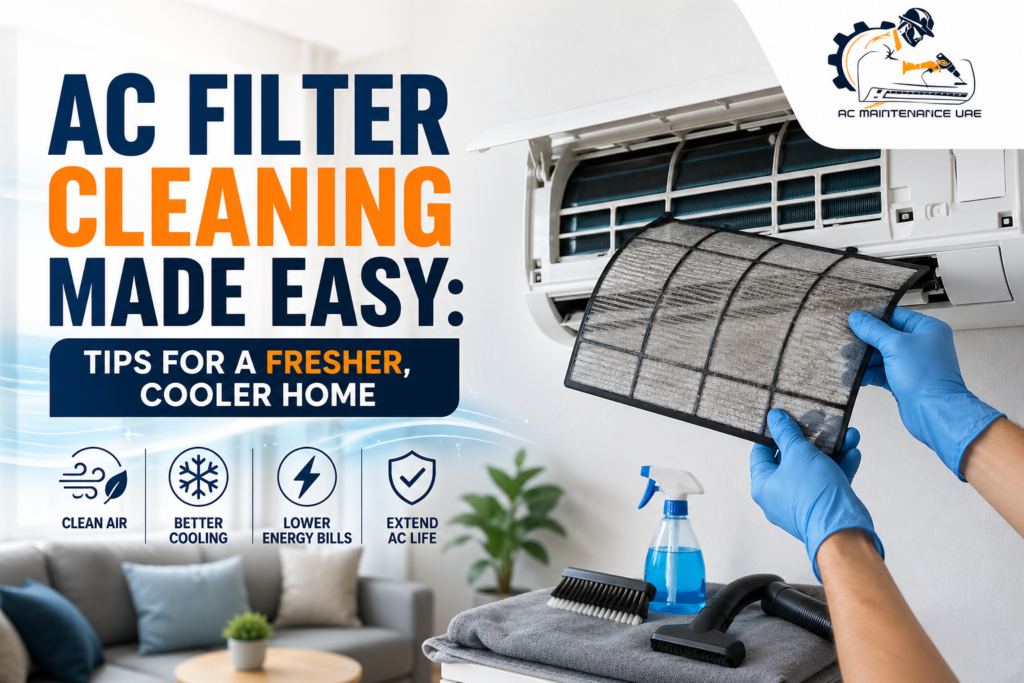
Your AC runs all day, but the room still feels stuffy. Sound familiar? Most homeowners never think about their filter until the dirty AC filter’s effects on cooling become impossible to ignore. Warm rooms, strange smells, and bills that keep climbing are all signs of a neglected filter. The good news is that regular AC filter cleaning takes less than 30 minutes and costs nothing but a little effort. This blog walks you through the warning signs, a simple cleaning method, how often to act, and how to choose the right filter for your home and budget.
Why a dirty AC filter is silently hurting your home
Most people assume the AC is broken when the cooling drops. Before calling a technician, check the filter first. A blocked filter is behind more cooling problems than people realise, and the effects of a dirty AC filter on cooling show up faster than you would expect.
When airflow gets restricted, the unit works twice as hard to push air through. That extra strain does not just hurt performance. It quietly shortens the life of your entire AC system over time.
- Your room doesn’t get cold even when the AC is turned up
- Allergens, dust and mould spores are blown back into the room
- Your AC unit’s motor may wear out sooner
- You pay more for power even though you’re using the AC less
- Dust and allergens accumulate, which is especially bad if someone in the household has allergies or asthma
- The AC unit will start to cycle more frequently as it tries to keep up
How often and when to clean your AC filter
There is no single answer that works for every home. The right schedule depends on your environment, your habits, and the type of filter you have. Following the right AC filter cleaning tips from the start saves you from bigger problems later.
Warning signs your filter needs immediate attention
Your filter will tell you when it is struggling. You just need to know what to look for. These AC filter cleaning tips apply whether you have a split unit, a window unit, or a central system.
- Visible grey or brown dust coating sitting thick on the filter surface
- Noticeably reduced airflow from vents, even when the AC runs at full power
- A musty or stale smell the moment the unit switches on
- The AC is turning on and off more frequently than it used to
- Allergy symptoms are getting worse indoors, such as sneezing, itchy eyes, or a blocked nose
- The room takes much longer to cool down than it normally would
Recommended cleaning and replacement schedule
A washable filter should be cleaned every two to four weeks during heavy summer use. A disposable filter needs replacing every one to three months, depending on your home conditions. If pets, smokers, or allergy sufferers are in the household, move to the shorter end of both schedules.
A simple visual check works well. Hold the filter up to a light source. If light barely passes through, it is time to act. For an AC air filter replacement, the same rule applies. When the filter looks grey and heavy with dust, do not wait for the next scheduled date. Write the last cleaning date on the filter frame so you never lose track.
Step-by-step AC filter cleaning guide
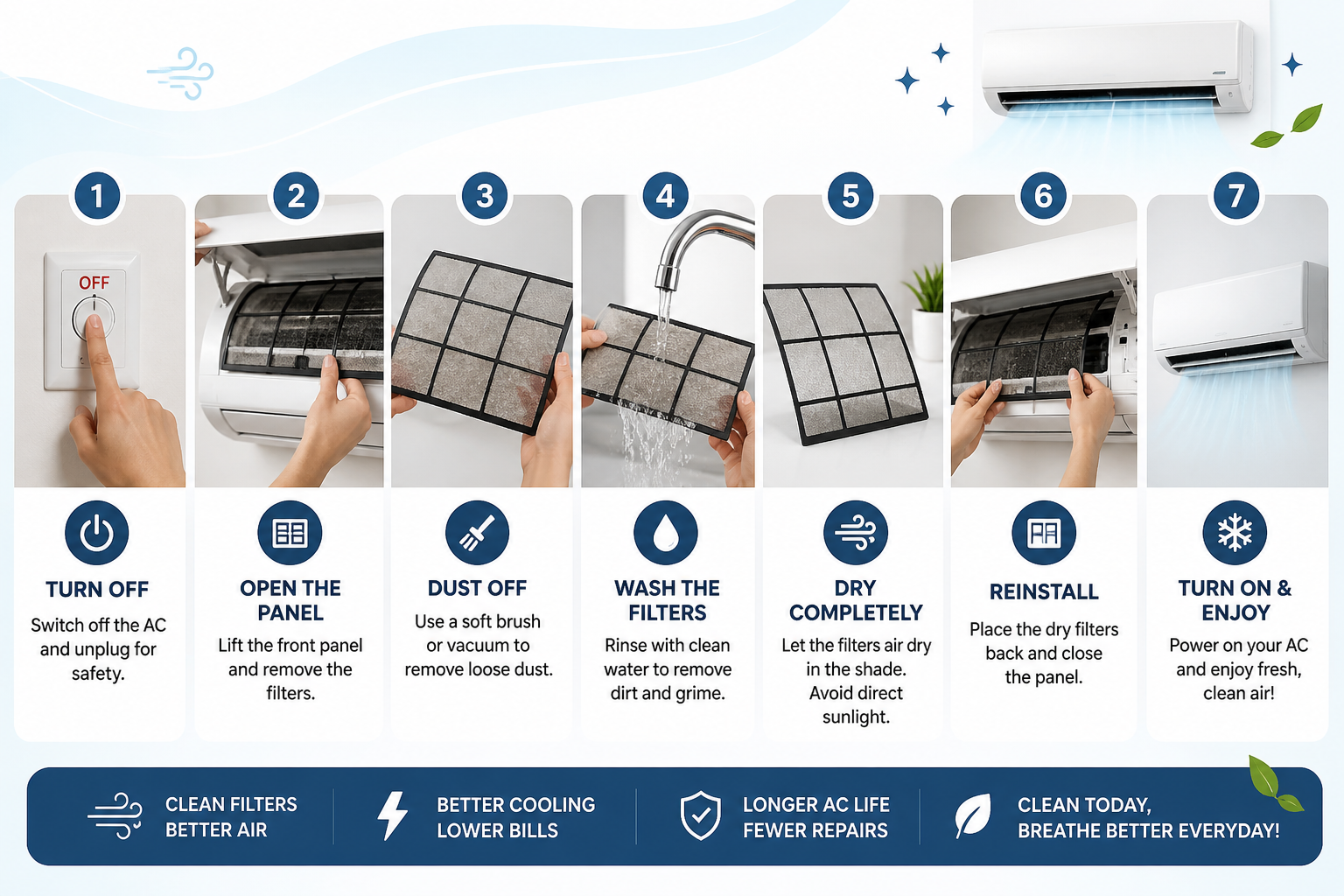
Cleaning a filter is genuinely simple once you do it once. The method depends on whether your filter is washable or one that should only be vacuumed. Two different approaches are needed here, so the steps below are split accordingly.
Cleaning a washable or reusable filter
This is the most common type in homes across the UAE. Proper AC filter cleaning here means water, a little soap, patience, and a full dry before the filter goes back in. Rushing the drying step causes more damage than the dirt ever did.
- Switch off the AC at both the unit and the thermostat completely
- Remove the filter gently and carry it outside before shaking off loose dust
- Rinse it under lukewarm running water because high pressure tears the filter fibres
- Work a soft brush with mild dish soap across stubborn grey patches
- Rinse again until the water runs completely clear underneath the filter
- Leave it flat to air dry for at least 20 to 30 minutes before reinstalling
Never put a damp filter back in. Moisture inside the unit leads to mould, and that is a much harder problem to fix than a dirty filter.
When to vacuum instead of washing
Not every filter is washable. Fibreglass filters and standard HEPA filters should never get wet. Water destroys the fibres and makes them useless. For these types, a vacuum with a brush attachment on low suction is all you need.
Run the brush gently across the surface. Do not press hard. The goal is to lift the loose dust, not push it deeper into the material. For washable types, a quick vacuum monthly and a full wash every two to three months is a solid habit to build.
Choosing the right ac unit filter and the best AC filters for your home
The filter you choose matters as much as how often you clean it. There are two decisions to make: filter type and MERV rating. Getting both right means your AC runs well and your air stays clean without putting extra strain on the system.
Washable vs disposable: which ac unit filter suits your home
Washable filters cost more upfront but pay for themselves over time. They are also the better environmental choice since you are not throwing one away every few months. Disposable filters are cheaper to buy initially, but add up quickly if you replace them as often as you should.
- Washable types suit homes with pets or high-dust environments
- Disposable types work well for low-use spaces or rental properties
- Always check the AC manual before switching from one type to the other
- Washable filters need to be dried fully each time, or mould becomes a risk
- Disposable filters should never be washed because the fibres collapse and stop filtering
- Both types need regular attention, regardless of which one you choose
Understanding MERV ratings and the best AC filters for homes
MERV stands for Minimum Efficiency Reporting Value. The scale runs from 1 to 16. A higher number means the filter captures finer particles, but it also means less airflow, which stresses the motor. Most residential homes do well with MERV 8 to 11.
For allergy sufferers, MERV 11 is worth the slight airflow trade-off. Electrostatic filters sit among the best AC filters for long-term home use because they capture particles using a static charge and can be washed repeatedly. Avoid anything above MERV 13 in a standard home unit because it restricts air movement more than most residential systems can handle.
At AC Maintenance UAE, we often see homeowners using filters that are far too dense for their system. It is one of the most common reasons a well-maintained AC still struggles to cool a room properly.
FAQs
Q1) How often should you clean an AC filter?
Clean a washable filter every two to four weeks during heavy use. Homes with pets or allergy sufferers should lean toward the shorter end of that range to keep airflow and air quality at their best.
Q2) How do I clean an AC filter at home?
Remove the filter and shake off loose dust outside. Rinse it with lukewarm water, scrub lightly with mild soap, rinse again thoroughly, and air dry it completely for at least 20 to 30 minutes before putting it back.
Q3) When should you change an AC filter instead of cleaning it?
Change it when the filter looks visibly damaged, has tears, or stays grey after a thorough wash. For disposable types, ac air filter replacement is due every one to three months or sooner in dusty conditions.
Q4) Can a dirty filter damage my AC unit?
Yes, it can. Dirty AC filter effects on cooling include motor strain, frozen coils, and poor airflow throughout the home. Left too long without attention, this leads to costly repairs that a regular cleaning would have easily prevented.
Q5) What MERV rating should I choose for my home?
MERV 8 to 11 works well for most residential homes. It filters particles well without restricting airflow too much. The best AC filters for allergy-prone households are MERV 11 for the right balance of protection and performance.
Q6) Is vacuuming an AC filter as good as washing it?
For light dust build-up, vacuuming works well and gets the job done quickly. For heavier grime, a full wash gives better results. Fibreglass and HEPA types should only ever be vacuumed because water ruins the fibres completely.
Q7) What happens if I put a damp filter back in the AC?
Moisture trapped inside the unit encourages mould growth on internal components over time. Always allow a minimum of 20 to 30 minutes of air drying time before reinstalling any washed ac unit filter back into your system.
Q8) How do I know if my AC filter is the right size?
Check the frame of your existing filter because the dimensions are printed clearly on the edge. Always match the size exactly. A loose-fitting filter lets unfiltered air bypass it entirely, which defeats the whole purpose of having one.
Keep your home cool and your air clean
Regular AC filter cleaning is one of the simplest things you can do for your home. It costs almost nothing. It takes less than 30 minutes. And the difference it makes to your comfort, your air quality, and your energy bills is genuinely noticeable. A clean filter means your AC does less work, lasts longer, and keeps every room feeling the way it should.
Do not wait for the room to feel warm before you act. Check your filter today. If it looks grey, dusty, or blocked, clean it now. When we at AC Maintenance UAE help homeowners get on a regular maintenance schedule, the change in system performance is immediate. Small habits like this one protect a large investment and make your home a genuinely better place to be in every season.