Ever had your AC just quit on the hottest day of the year? It happens more than you’d think, and it’s rarely bad luck. Poor Air Con Maintenance habits are almost always the real reason units fail early, and most homeowners don’t realize the damage until the compressor’s already gone. A blocked filter here, an ignored coil there, and small mistakes pile up quietly over months until the system just can’t keep up anymore.
The good news is that none of this is complicated to fix once you know what to look for. This post walks through the habits quietly shortening your unit’s lifespan, plus the AC maintenance checklist steps that actually prevent breakdowns before they happen.
Skipping Filters Is the Fastest Way to Wreck Efficiency
A dirty filter chokes airflow and forces the compressor to work overtime. Most homeowners forget filters exist until the unit starts blowing warm air, which is already too late.
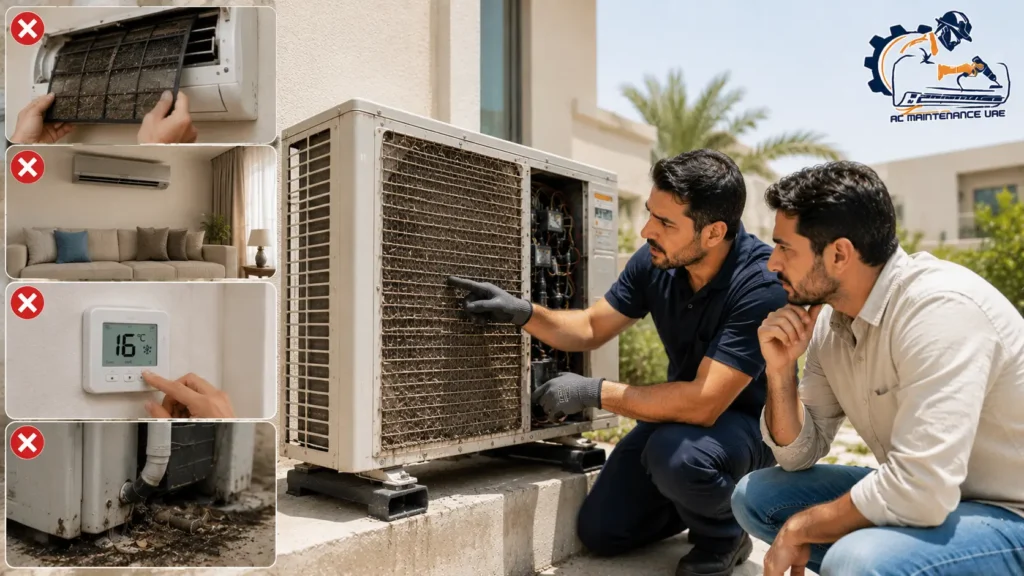
Here’s the thing: filters aren’t a “check it once a year” item. Dust, pet hair, and Dubai’s outdoor grit clog them fast, especially during peak summer months. Left unchecked, a blocked filter can spike your energy bill by 15% or more within weeks.
Building this into your AC maintenance checklist isn’t complicated:
- Inspect the filter every 2-3 weeks during heavy use.
- Rinse washable filters with lukewarm water and let them dry fully.
- Replace disposable filters every 60-90 days.
- Note the date on a sticky label so you’re not guessing later.
Ignoring Coil Buildup Until It’s a Real Problem
AC coil cleaning rarely gets the attention it deserves, and that’s a mistake. Grime on the evaporator or condenser coils acts like insulation, blocking the heat exchange your system depends on.
You won’t notice it happening. It’s gradual: a few extra minutes of runtime here, a slightly warmer room there, until one day the unit just can’t keep up anymore. AC coil cleaning should honestly sit right alongside filter checks on your priority list, not as an afterthought you get to eventually.
Dust and biological growth on coils also drag down indoor air quality, which matters more than people realize until someone in the house starts sneezing constantly.
Treating AC Servicing as Optional
A lot of people only call for ac servicing once something’s already broken. That’s backwards. Preventative visits catch small issues, like a loose connection, a slow refrigerant leak, or a worn belt, before they turn into a dead compressor.
At AC Maintenance UAE, this pattern shows up constantly: units inspected twice a year rarely fail mid-summer. Neglected ones almost always do, usually at the worst possible time. It’s not complicated math, but people skip it anyway because everything seems fine until it isn’t.
Ac preventative maintenance doesn’t need to be expensive or frequent. Two professional visits a year, timed before peak summer and again before winter, cover most of what actually goes wrong.
DIY Fixes That Do More Harm Than Good
YouTube tutorials make refrigerant top-ups and electrical fixes look simple. They’re not, and getting them wrong can void your warranty or damage the compressor outright.
A few things worth leaving to professionals:
- Refrigerant handling (it’s pressurized and genuinely hazardous)
- Electrical component repairs
- Thermostat recalibration on smart systems
- Ductwork sealing and insulation checks
- Compressor diagnostics
Air Con Maintenance isn’t the place to cut corners for the sake of saving a service fee. The math rarely works out in your favor once you factor in a botched repair.
Setting the Thermostat Wrong (Yes, This Counts)
Cranking the thermostat to the lowest setting doesn’t cool a room faster. It just makes the compressor run longer than necessary. Over months, that shortens component life significantly.
Small air conditioner maintenance tips like this get overlooked because they feel too basic to matter. But consistent temperature settings, ideally between 22-24°C, put far less strain on the system than constant adjustments.
Delaying Repairs Until the Unit Fully Fails
Strange noises, weak airflow, or a slight chemical smell are early warning signs, not things to “keep an eye on for now.” Waiting almost always turns a $150 fix into a $1,500 replacement.
Building a habit around ac servicing appointments means these signs get caught by someone who actually knows what they’re looking at, which is exactly what we check for on every visit, rather than ignored until the unit gives out completely.
Frequently Asked Questions
1. How often should I really do Air Con Maintenance?
Twice a year works for most homes, once before summer, once before winter. Heavy-use households might need quarterly checks instead.
2. Can I clean AC coils myself?
Light dusting, sure. But deep AC coil cleaning involves chemicals and disassembly that’s best left to a trained technician.
3. What’s included in a standard AC maintenance checklist?
Filter checks, coil cleaning, refrigerant level checks, drain line inspection, and electrical connection tests, roughly in that order.
4. Does skipping maintenance actually void my warranty?
Often, yes. Most manufacturers require documented ac preventative maintenance to honor warranty claims.
5. Why does my AC smell musty after I turn it on?
That’s usually mold or mildew buildup in the coils or drain line. It needs professional cleaning, not just an air freshener.
6. Is professional servicing worth the cost for a newer unit?
Yes, honestly. New units still accumulate dust and wear the same way; catching issues early is what keeps them new-feeling longer.
Final Thoughts on Air Con Maintenance
Most AC failures aren’t sudden events. They’re the slow result of small habits skipped over months, not one big mistake. Dirty filters, neglected coils, and delayed ac servicing all chip away at unit life more than people expect. The fixes aren’t expensive or time-consuming once they become routine. Two seasonal check-ups and a bit of attention between them cover most of what actually goes wrong with these systems.
Now that you know how to spot the mistakes that shorten AC life, ready to book a proper Air Con Maintenance check before the next heatwave hits? A quick inspection now costs far less than a replacement later.