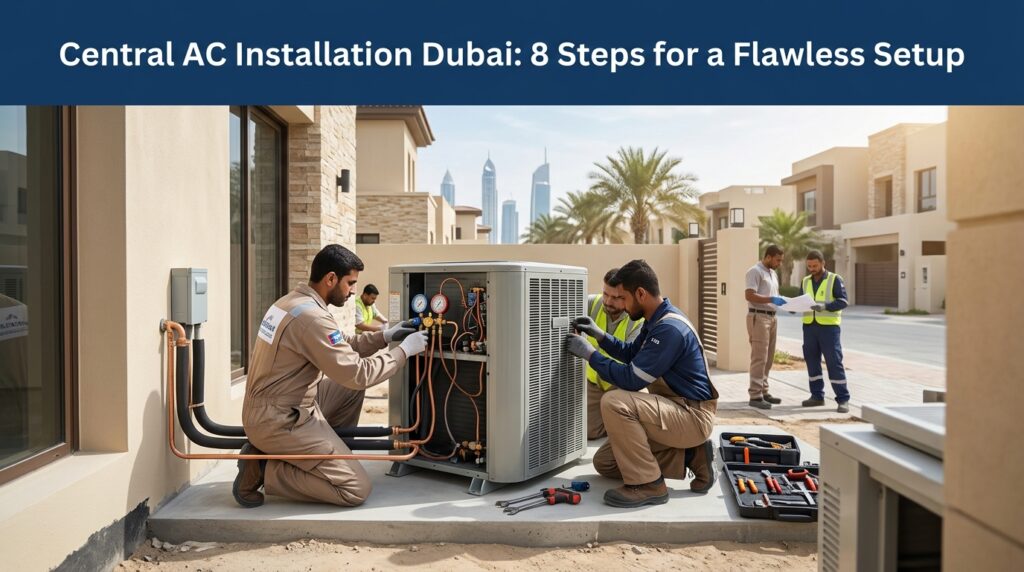
Dubai’s summers push cooling systems hard, and most property owners only notice installation quality once the heat sets in. Central AC Installation shapes how evenly a home or office cools, how much power it draws, and how long the unit lasts before repairs start piling up. A rushed install rarely shows problems on day one. They tend to surface a season later, once ducts leak or the compressor starts working overtime.
This guide covers eight steps behind a solid Central AC Installation Dubai project, from sizing the system correctly to testing it before handover. Villa owners, landlords, and office managers planning new cooling can also check our Central AC Installation Dubai page, and will find each stage below explained in plain terms, with a few checkpoints worth keeping handy.
Why Central AC Installation Matters in Dubai
Central AC Installation affects airflow, how evenly rooms cool, power use, noise, and how long the equipment holds up. Get it wrong and Dubai’s long hot months expose every shortcut fast: rooms stay warmer than the thermostat says, bills creep up, and the compressor wears down sooner than it should. Getting the basics right at the start protects comfort and the budget.
Step 1: Work Out the Cooling Load First
Before anyone starts a Central AC Installation, the property needs a proper load calculation, not a guess based on floor area. Room size, ceiling height, window placement, sun exposure, and how many people use the space all factor into the right tonnage. Skipping this step is one of the more common installation mistakes, and it usually shows up as rooms that never quite reach a comfortable temperature. A villa with big west-facing windows needs more capacity than a similar-sized property with smaller, shaded rooms, even if the square footage looks identical on paper.
Step 2: Pick a System That Fits the Property
Villas, apartments, and offices all place different demands on a central ac system installation. A residential central ac installation usually focuses on quiet, even comfort room by room, while commercial ac installation dubai projects often need more capacity and zoning for separate work areas. Ducted setups suit larger homes with the ceiling space to route ductwork properly; smaller apartments may manage with less of it. Matching capacity to the load worked out in Step 1, rather than copying a neighbour’s setup, keeps the whole project on track.
Step 3: Plan Where the Equipment Goes
Placement decides a lot before installation even starts. The indoor air handler needs a central spot that keeps duct runs short, and the outdoor condenser needs open space to release heat, which matters more in Dubai than most places given how hard the sun bakes exposed walls. Cramming the outdoor unit into a tight, shaded gap restricts airflow and forces the compressor to strain. It also pays to leave room for a technician to reach refrigerant lines and filters later, rather than boxing everything in for looks.
Step 4: Get the Ductwork Right
Ductwork is where a lot of Central AC Installation projects quietly go wrong. Supply and return air paths need to be balanced, joints sealed, and ducts insulated so cool air doesn’t warm up crossing a hot ceiling space before it reaches the room. A leaky or poorly insulated run is one of the biggest reasons for uneven cooling and higher bills after the crew has already left. Testing airflow at each vent before ceilings get closed up catches sizing or sealing problems while they’re still cheap to fix.
Step 5: Check Refrigerant Lines, Drainage, and Wiring

These three elements need a qualified technician, not a shortcut. Refrigerant lines have to be sized, insulated, and connected correctly, or cooling capacity drops even if everything else is installed well. Condensate drainage needs a proper slope so water doesn’t back up and cause leaks or damage over time. Wiring has to match the system’s load and sit behind a correctly rated circuit breaker; undersized wiring is a fire risk, not just an inconvenience.
Step 6: Set Up the Thermostat Properly
Thermostat placement sounds minor until it isn’t. A unit stuck near a window, doorway, or kitchen reads the room wrong and throws off the whole system’s timing, cooling some areas too much while others stay warm. An interior wall away from drafts and heat sources usually works best.
Step 7: Test Everything Before Handover
owering the unit on isn’t the same as finishing the job. Before the crew packs up, someone needs to walk the property and actually check that cooling reaches every room, the airflow feels right at each vent, drainage isn’t backing up, and the thermostat responds the way it should. Skip this and the property owner ends up finding the problems themselves, usually a few weeks in, and fixing it then costs more than catching it now. A short walk-through before sign-off should cover:
- Cooling reaches the set temperature in every room
- Airflow feels steady from each vent
- Drainage runs freely with no leaks
- Thermostat and any zoning respond correctly
- No unusual noise or vibration from either unit
Step 8: Plan Maintenance From Day One
Installation isn’t really the end point, it’s closer to the beginning. Dubai’s dust builds up fast, so filters clog sooner here than they would somewhere drier, which means the cleaning routine should start early rather than waiting for a problem to show up.
Frequently Asked Questions About Central AC Installation
How long does central AC installation take?
It depends on property size, existing ductwork, and whether it is a new install or a replacement. A straightforward villa might take a few days; larger properties with more complex ductwork take longer.
How much does central AC installation cost in Dubai?
Cost depends on cooling capacity, property size, ductwork needs, and the state of the existing electrical setup. A site assessment gives a far more accurate figure than any general estimate.
What size central AC do I need for my villa?
The right size comes from a cooling-load calculation, not floor area alone. Ceiling height, window area, sun exposure, and room use all factor into the final number.
Can central AC be installed in an existing property?
Usually, yes. It starts with assessing existing ductwork, ceiling space, and electrical capacity, since older properties sometimes need modifications before a new system fits properly.
How often should a newly installed central AC be serviced?
Maintenance should start soon after installation and follow a regular schedule based on the manufacturer’s guidance. Dubai’s dust and heavy summer use often call for more frequent filter checks.
What happens if central AC is installed incorrectly?
Uneven cooling, weak airflow, drainage leaks, and higher energy bills are the most common results. Components also tend to wear out faster, which usually means an earlier call to AC Repair Dubai than the system should ever need.
Conclusion
Central AC Installation comes down to more than picking a unit and switching it on. Correct sizing, sensible equipment placement, sealed ductwork, safe electrical work, proper drainage, and a full test before handover all shape how the system performs for years afterward. Skip any one of these and it tends to show up later as uneven cooling or a higher power bill.
For Dubai properties running cooling most of the year, getting these steps right from the start matters more than the brand on the unit. AC Maintenance UAE supports Dubai properties with installation planning and the maintenance that follows once the system is running.