
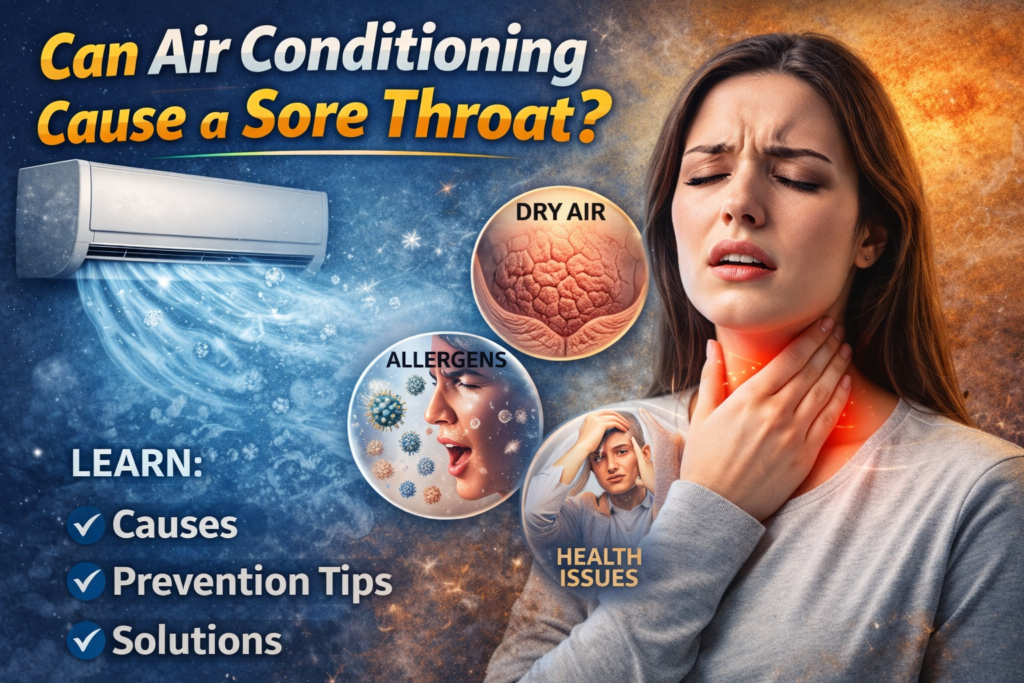
Introduction — Can Air Conditioning Cause Health Issues?
Air conditioning is common in residential, commercial, and automotive settings. In addition to providing indoor cooling comfort, many users also report negative health effects when used for an extended period of time. Typical complaints include sore throat, irritation, and dryness caused by frequent use of air conditioning systems.
As more individuals become informed on the relationship between air conditioning and health problems, they have noticed that there are a variety of minor health-related discomforts caused by improper usage. Dry air, imbalanced temperature, accumulated dust, and inadequate maintenance are common causes of these issues. By better understanding the correlation between air conditioning use and health-related problems you can enjoy the benefits of cooling without suffering the associated discomfort.
This blog post will examine if AC systems can lead to a sore throat and other health-related issues, the causes of those issues, and ways to protect yourself against these effects.
Can Air Conditioning Cause a Sore Throat?

Many people do not realize that sore throats can be caused by the use of air conditioning (AC) systems. Cold air does not provide sufficient moisture in the throat and nasal passages, leading to irritation and inflammation. As the relative humidity of air drops, moisture is lost from the protective mucus lining of the throat, making the surrounding tissues more susceptible to irritation and infection.
In addition, some factors associated with air conditioning systems, such as poor airflow, dirty filters, and bacteria accumulation, may be contributory to the discomfort felt by the individual who has had their throat irritated. It is common for people who are allergic, asthmatic, or have weakened immune systems to suffer from sore throats attributed to air conditioning systems, although they do not create illnesses nor do they re-circulate pathogens causing illness. Instead, the term air conditioning cause refers to the drying of sensitive tissues and the circulation of allergens.
How Cold Air Dries and Irritates the Throat
It is important to note that dry air can weaken the throat’s normal protective barrier, which leads to sensitivity of the throat to irritants such as talking, breathing, dust or allergens. Ultimately, a dry throat can lead to soreness, cough, hoarseness, and pain. Individuals who are frequently exposed to air conditioning (especially those who spend many hours sleeping in air-conditioned environments) are more likely to experience repeated occurrences of sore throats. To decrease the likelihood of developing a sore throat, one should remain adequately hydrated and keep air conditioning from blowing onto their face.
Scientific Explanation Behind AC-Related Throat Problems
Evidence from peer-reviewed journals indicates that exposure to excessively cold and dry air conditions (from air conditioners) for extended periods is harmful to the protective mucosal membranes lining the throat and nasal passages. These membranes require moisture to retain contaminants such as dust and bacteria. Insufficient moisture results in decreased ability for the throat to defend against inflammatory and infectious processes. The association of air conditioning cause sore throat occurs more often during summer months when indoor air is dry relative to outside air and ventilation of indoor spaces is limited.
Who Is Most at Risk of Sore Throat from AC Use
Humidity level plays an important role in the prevention of irritation and maintenance of respiratory wellness in the home environment; therefore, it is critical that indoor humidity remains within a healthy range for optimal respiratory system function. Certain groups of individuals demonstrate higher levels of sensitivity towards artificially conditioned air than do other groups of people.
These groups include: Young children, Older adults, People with allergies, People who have asthma or sinus problems, Teachers and call-center representatives, and Anyone who has less-than-optimal hydration or sleeps underneath direct air flow from an air conditioning unit may also experience the negative effects of conditioned air at greater levels than the average person.
How Air Conditioning Causes Dry Throat

Dry throat is a symptom of being dehydrated because of lack of humidity in the indoor environment. AC systems pull moisture from indoor air to create cooler environments leading to dehydration of throat tissue over time resulting in discomfort, cough, and/or sore throat pain symptoms. Additionally, other environmental factors that may contribute to developing dry throats are related to excessive use of air conditioning in conjunction with low water consumption habits and directing air conditioner airflow on the face. Since the act of using an air conditioner removes hydration from indoor environments, it is important to maintain humidity levels at healthy ranges to ensure optimal respiratory system function.
Role of Dry Indoor Air in Throat Irritation
Dry indoor air is caused by air conditioning (AC) and is detrimental to the health and comfort of the throat. The throat will dry out before there is time for it to moisten itself. When the throat has dried out, it becomes irritable. It becomes difficult to swallow and you may cough. As the throat dries out, it loses the protective covering around the throat making it more sensitive to any airborne irritants. The use of an AC unit for a long time creates an environment that is too dry, especially in bedrooms and offices. This is why you should try to put moisture in your home by either using humidifiers or growing house plants.
Reduced Humidity and Moisture Loss in Airways
As I mentioned earlier, low humidity levels cause the nasal and throat passages to dry out more quickly. This causes irritation and decreases the natural defenses of the respiratory system. There is a study that indicates the air conditioning cause dry throat when humidity levels drop below a certain level. The study also shows that if you can maintain indoor humidity levels between 40%-60%, you will help protect your airway from dryness and help make your breathing easier while you are in cooled locations.
Other Health Problems Caused by Air Conditioning

In addition to having a dry throat, being exposed to AC can lead to fatigue, headaches, and cold-like symptoms, and can cause stress on your immune system. There is an immediate shock to your body when you go from the extreme heat outside to the cool air inside, and you put a huge amount of strain on the body’s natural defenses.
In an un-serviced and poorly maintained air conditioning system, you have a lot of dirt, dust, bacteria, and allergens in the breathing system which can create major problems for those who are already experiencing respiratory and sinus problems. In many cases, there is a cause for health discomfort associated with AC usage, especially if it is not being serviced and/or when it is running at low temperatures.
How Air Conditioning Causes Fatigue and Weakness
Prolonged exposure to cold temperatures indoors reduces the circulation of blood and increases the amount of work required for the body to keep warm. Increased effort results in fatigue, poor performance, and stiff muscles. Office workers who spend long hours in air-conditioned offices often feel fatigued because they are not moving around enough and are experiencing cold stress. Some people will say that air conditioning cause fatigue because of their disrupted circadian rhythms and decreased energy levels because of cold stress.
How Air Conditioning Causes Cold and Flu-Like Symptoms
Air conditioning does not directly cause viral infections, but the sudden temperature change may reduce an individual’s ability to fight off infection and, therefore, increase susceptibility to developing the illness. Going from a hot outdoor environment to a cold indoor environment is a shock to the system; this shock produces symptoms such as sneezing, sore throat, stuffiness, and chills. Many people believe that air conditioning cause cold, while in reality, this is caused by the immune system being stressed due to the change in environmental conditions.
How Air Conditioning Causes Headache and Sinus Pressure
Cold air can irritate the nasal cavity, which causes swelling and pressure around the forehead and the nose. A decrease in the amount of water in the body also contributes to headaches. Other factors, such as poor airflow or dirty air conditioning filters, can exacerbate the symptoms of sinus irritation by blowing dirt and allergens around the room. Studies have demonstrated that air conditioning cause headache due to either direct airflow impacting a person’s head or low humidity in the air-conditioned environment. To alleviate this discomfort, proper direction and moisture are crucial.
Can Air Conditioning Cause Allergies?

Air conditioning systems can produce allergies in some people. This is due to the filtering system that collects dust, mold spores, pet dander and pollen. This collection of allergens builds up in air ducts and eventually gathers inside the air conditioning unit. Therefore, the circulating air in many homes with infrequent service and maintenance causes allergies.
Dust, Mold, and Allergen Build-Up in AC Systems
Dust, mold spores, pet dander and pollen accumulate in the filters and air ducts of air conditioning systems and circulate throughout indoor spaces where they cause allergic reactions in sensitive individuals. The accumulation of these types of contaminants as well as the circulating air in homes that do not have regular service and maintenance cause allergies in these homes.
How Air Conditioning Causes Dry Eyes

Additionally, cold air causes quicker tear evaporation, resulting in dry eyes and irritation. Individuals that are employed at large companies or work extended hours in an office where air conditioning is in place are especially susceptible to dry eye symptoms caused by the colder indoor environment compared to other work environments. Blinking less often when staring at a computer screen and being in an air conditioned area with low moisture increases the rate of dehydration for the eyes.
Impact of Cold Air on Eye Moisture Levels
Dry air causes discomfort and eye redness through decreased stability of the tear film.
Symptoms and Prevention of AC-Related Eye Dryness
Experts state air conditioning causes dry eyes, and suggest using Eye Drops, Humidifiers, and Averting any direct air flow upon Your face.
Signs That Air Conditioning Is Affecting Your Health
To mitigate long-term discomfort, Learning to Recognize Symptoms as they Occur is critical. Many health problems induced by A/C arise slowly over time, due to repeated exposure over time, and these issues include but are not limited to: dry throat, headaches, chronic fatigue (often mischaracterized as ‘drowsiness’), nasal congestion, dry eyes, and difficulty Breathing. As the body’s reaction to air conditioning causes’ is gradual, recognizing these reactions will enable you to adjust your environment as soon as possible.
Common Symptoms Linked to AC Exposure
People frequently complain of: Dry Throat, Sinus Pressure, Coughing, Itchy or Watery Eyes (or both), Chronic Fatigue, Aches and Pains. If you experience persistent and excessive symptoms (lasting over one week), a Medical Evaluation is appropriate.
When to Take Health Concerns Seriously
To prevent such issues you should maintain a standard range of Temperature, Hydrate regularly, Clean Your A/C Ventilation System frequently, and manage the direction of the airflow. Setting the Air Conditioning Unit to Extremely Low Temperatures (such as freezing) creates more moisture loss from Your Eyes and increases Your risk for the other associated health problems.
How to Prevent AC-Related Throat and Health Problems

To help preserve the Health of Your Throat, Maintain the level of Humidity inside of Your House, while avoiding placing Yourself directly underneath a vent. Another way to decrease the health risks associated with air conditioning cause is to decrease the incidence of Every Sudden Change in Temperature that Your Body Experiences due to an excessive temperature differential between the inside and outside of Your Home.
Best Temperature Settings for Healthy AC Use
Expert Opinions Recommend keeping the Temperature of the Air Conditioning System between 23-26 °C as an optimal range for Comfort and Safety. Using a Humidifier will help maintain Your Moisture Levels, and alleviate irritation from Dry Air.
Importance of Humidity Control in Air-Conditioned Spaces
Make sure to drink plenty of water, and if you do need to use Nasal Sprays, to use them as necessary, and avoid Sitting underneath direct Air Conditioning Vents.
Role of AC Maintenance in Preventing Health Issues

Air Conditioning has the potential to be a safer and cleaner space when well maintained. A well maintained unit will provide cleaner air, reduce the number of allergenic particles in the air and improve the unit’s ability to cool effectively. A unit that isn’t maintained regularly will allow for an accumulation of dust, bacteria and other pollutants that will eventually lead to health concerns that are directly related to the use of an AC unit.
It is important to regularly maintain your AC systems to decrease the associated health concerns of having a dirty AC unit. When AC units are not properly cleaned they are at a greater risk to the development of respiratory issues and allergies.
How Regular Cleaning Improves Air Quality
There are many benefits to cleaning and maintaining your AC system on a regular basis, including the following: Providing a clean, safe, and fresh place to breathe; Providing comfort to the user when it comes to breathing; Decreasing the health risks associated with dirty filters; Decreasing the buildup of odor; Maintaining the efficiency of the AC’s ability to cool.
Why Dirty AC Systems Increase Health Risks
Air Conditioning units that are dirty can potentially cause the user to become ill, as dirty air filters can contain pollutants and/or mold spores. Contaminated filters can make it harder for the user to breathe and worsen their allergy symptoms or respiratory problems. Not cleaning and maintaining an AC unit increases the likelihood of infections and chronic discomfort. Proper AC maintenance will help keep exposure to airborne contaminants to a minimum and help keep the air in the home a healthy environment for the users.
When to See a Doctor for AC-Related Health Symptoms
If cold air continues to bother you after increasing humidity or hydration levels, see a doctor. Chronic sore neck or back, shortness of breath, or persistent (or recurring) severe allergies need a medical diagnosis. Symptoms that people attribute to air conditioners may instead be caused by underlying respiratory problems or infections. Knowing that Ac conditioning causes these irritation-type symptoms will help provide proper treatment when diagnosed.
Warning Signs That Require Medical Attention
You should consult a medical professional for severe sore throats, fevers, asthma attacks, and extreme fatigue that do not go away.
Difference Between AC Irritation and Real Illness
Humidity and hydration will help relieve irritation caused by an air conditioner; however, the air will continue to dry the throat and lungs out if it is infected.
Frequently Asked Questions
Q1. Can air conditioning cause sore throat long-term?
Long-term exposure to dry air can lead to chronic irritation. Air conditioners do not actually cause viruses; they simply weaken the body’s immune system due to fluctuations in temperature.
Q2. Does air conditioning worsen allergies?
Air conditioners can cause other parts of your body to become allergic (and/or irritated) to mildew, especially if there is a build-up of dirt & mildew on the filters.
Q3. How can I prevent dry throat from air conditioning?
Keep your humidity levels up, drink plenty of fluids, and limit your exposure to air conditioning with very cold airflow.
Q4. Is sleeping in AC harmful for health?
If the temperature and humidity are balanced correctly, then there is no risk of exposure to dangerous mold and mildew.
Conclusion — Safe Air Conditioning Use Without Health Risks
Timely and respectful use of an air conditioning system can be an excellent source of comfort. Health issues related to an air conditioning unit typically occur as a result of very cold temperatures, too little relative humidity, and poor upkeep on the unit. To alleviate many of these discomforts, make changes in temperature settings, drink plenty of water, and schedule recurring appointments for routine maintenance.
On many occasions when an air conditioning system is causing discomfort due to an underlying cause, the symptom can be solved rapidly with simple modifications. The best course of action for an individual experiencing discomfort due to air conditioning will generally involve a combination of obtaining appropriate care, maintaining humidity balance, and having the air conditioning system regularly maintained by a qualified AC Maintenance Professional. Proper use of air conditioning can provide additional comfort to an individual without causing any damage to their lungs, skin, or general health.

AC Maintenance UAE Team
Welcome to AC Maintenance UAE, your reliable partner for complete air conditioning repair and maintenance services in Dubai, Sharjah, and Abu Dhabi. We are strongly dedicated to excellence and deliver efficient and reliable services to keep your cooling systems performing at their best.