
If you’ve had your AC serviced once or twice, you’ve probably been asked whether you want to sign up for a maintenance contract instead of booking one-off visits. It sounds like an upsell, so it’s fair to be skeptical.
Sometimes it is a better deal. Sometimes it isn’t. It depends on how many units you have, how hard they run, and how often you’d actually book a technician yourself. Here’s how to work out which side you land on.
What an AMC Actually Is

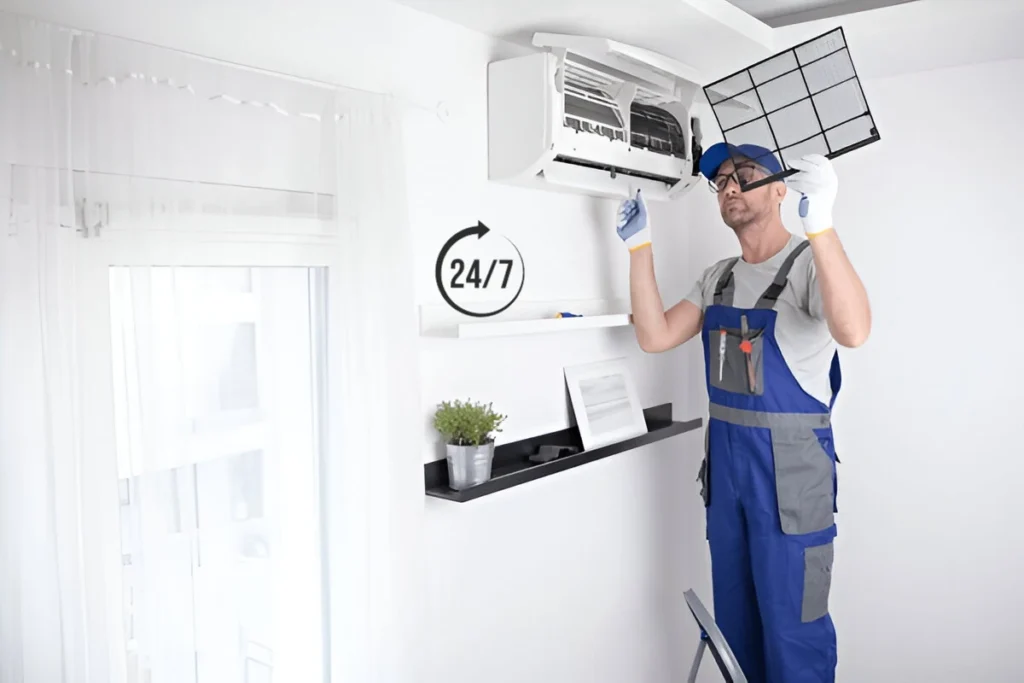
An AMC for AC maintenance is a yearly agreement in which a company handles your servicing on a fixed schedule, rather than you calling every time the unit needs attention. You agree on many visits upfront, usually two to four a year for a home, and the price is locked in regardless of what gets checked or cleaned during each visit.
Most plans also bundle in some form of priority support, so if something breaks between scheduled visits, you’re not competing with everyone else calling in during a summer heatwave.
Paying per visit is the opposite. You call when the unit needs a service, get a quote for that one job, and there’s no ongoing commitment. It’s simpler, but you’re relying on yourself to remember when the last service happened.
The Real Cost Comparison
This is where the decision usually gets made, so let’s run the numbers.
A single maintenance visit for a standard residential split unit typically costs somewhere in the AED 150 to 250 range, depending on the provider and how much the job needs. If you’re getting your AC serviced twice a year, which is the standard recommendation for Dubai’s climate, that’s roughly AED 300 to 500 annually paying per visit.
A basic AMC for AC maintenance covering the same two visits a year often prices out close to that same range, sometimes slightly less once you account for the bundled priority support. The savings aren’t usually dramatic on a single-unit home with light use. Where the math shifts is volume.
If you’ve got three or four AC units across a villa, or you’re running a small business with several split units, the per-visit pricing adds up fast, and an AMC covering multiple units at a flat annual rate tends to work out meaningfully cheaper than booking each one separately.
Where an AMC Pulls Ahead Beyond Price

The straight cost comparison only tells part of the story. A few other things tip the decision even when the price difference is small.
You stop forgetting. Paying per visit relies on you remembering to book a service every six months. In practice, a lot of people push it back until something starts going wrong, which defeats the point of preventive maintenance in the first place. An AMC schedules the visits for you.
Emergency response is faster. Most providers give AMC customers priority over one-off callers when something breaks during peak summer. If your AC dies in August, that priority slot can be the difference between a same-day fix and a two-day wait.
Pricing on extras is often locked in. Some AMC plans include discounted rates on parts or repairs discovered during a scheduled visit, so a minor issue caught early costs less to fix under the contract than it would as a standalone repair.
Where Paying Per Visit Still Makes Sense
An AMC isn’t automatically the better choice for everyone.
If you’ve got a single unit in a property you barely use, like a guest apartment or a seasonal home, committing to a fixed contract for visits you might not need doesn’t add up. You’re better off calling when the unit actually needs attention.
Same if you have a new AC under the manufacturer’s warranty. Some warranties already cover a certain amount of servicing, so stacking a maintenance contract on top can mean paying twice for overlapping coverage. Before signing anything, it’s worth checking what your warranty already covers.
And if you tend to move or change providers often, a multi-year contract can end up working against you if you’re not around to use the remaining visits.
How to Decide Which One Fits You

A few quick questions tend to settle it.
How many units do you have? One or two units with light use lean toward paying per visit. Three or more, or a mix of residential and commercial space, lean toward an AMC.
How reliably do you actually book maintenance on your own? If your last service was over a year ago and you only remembered because something started acting up, that’s a strong sign an AMC would keep you on track better than good intentions.
How much does downtime cost you? For a home, a broken AC for a day or two is uncomfortable. For a business, it can mean lost sales or an unusable space. If downtime is expensive, the priority support that comes with most AMC plans is worth more than the price difference suggests.
What a Decent AMC Should Include
Not every AMC for AC maintenance is built the same, so it’s worth checking what’s actually in the plan before comparing prices.
- A clear number of scheduled visits per year, not a vague “as needed” clause
- Coverage for both filter/coil cleaning and a full system check, not just a wipe-down
- Some form of priority response for breakdowns between visits
- Transparent pricing on parts or repairs found during a visit
- The option to scale up if you add units or move to a bigger property
If a plan is vague on any of these, ask before signing. A contract with unclear terms isn’t saving you anything if you end up disputing what’s covered later.
Combining Both Isn’t Unusual
Some property owners split the difference. They keep an AMC for the units that run constantly, like a main living area or a commercial space that can’t afford downtime, and pay per visit for a lightly used spare room or guest unit. No rule says every AC in a property has to be on the same plan.
Final Thoughts
For a single, lightly used unit, paying per visit is usually simpler and won’t cost you much more over a year. Once you’ve got multiple units, a system that runs hard year-round, or a track record of pushing maintenance off until something breaks, an AMC for AC maintenance tends to work out both cheaper and more reliable.
If you’re not sure which side you fall on, it’s worth asking your provider for a straight comparison based on your actual unit count and usage rather than a generic sales pitch. If an AMC ends up being the right fit, it’s worth setting up before the next peak season rather than after your AC has already given you a reason to regret waiting.
Frequently Asked Questions
- Is an AMC for AC maintenance actually cheaper than paying per visit?
For a single lightly used unit, the difference is usually small. For multiple units or heavy use, an AMC typically works out cheaper because the per-visit cost drops with volume and priority support is bundled in.
- How many visits are usually included in an AMC?
Most residential plans include two to four scheduled visits a year. Commercial or high-usage properties sometimes get more frequent servicing built into the plan.
- Does an AMC cover emergency repairs or just scheduled maintenance?
It depends on the plan. Most AMCs include priority response for breakdowns, but full repair costs may still be billed separately unless the plan specifically includes them.
- Is it worth getting an AMC for a single AC unit?
Usually not, unless that unit runs almost constantly or you know you won’t book maintenance on your own. For light use, paying per visit tends to be simpler and just as cost-effective.
- Can I cancel an AMC partway through the contract?
This will depend on the terms of the provider. Some allow you to cancel for a pro rata refund, others don’t, so it’s worth checking the detail in the contract before you sign rather than after.
- What’s the difference between a basic and premium AMC plan?
A basic plan usually covers standard scheduled visits for one or two units. Premium plans typically add more visits, faster emergency response, and coverage for larger properties or multiple systems.
- Does a new AC still need an AMC if it’s under warranty?
Not always. Some manufacturer warranties already include a set number of service visits, so it’s worth checking what’s covered before paying for an overlapping contract.
- How do I know if my AC use is heavy enough to justify an AMC?
If your system runs more than 8 to 10 hours a day for most of the year, like in a busy household or a commercial space, that level of use usually justifies the switch to a contract.
- Do AMC plans cover both residential and commercial properties?
Yes, most providers offer separate residential and commercial AMC tiers, since commercial systems typically need more frequent visits and faster response times.
- What should I check before signing an AMC contract?
Confirm the number of visits, what’s covered in each one, how emergency callouts are handled, and whether pricing on parts or repairs is fixed or billed separately.