Your AC is running. But the room still feels warm. Sound familiar? Dirty coils are one of the biggest reasons ACs stop cooling properly. Dust and grime build up over time. The system works harder. Your electricity bill goes up. And most people don’t even know where to start fixing it.
The good news? You have two options. You can grab an AC coil cleaner and handle it yourself. Or you can call in a professional. This blog breaks down both options honestly, so you can decide what actually makes sense for your situation.
What Do AC Coils Do and Why Should You Care?
Coils are the core of your AC’s cooling process. Without clean coils, the system can’t transfer heat properly, and everything suffers for it.
Your AC has two sets of coils. The evaporator coil sits inside and absorbs heat from the air. The condenser coil sits outside and releases that heat. When either one gets clogged with dust, the heat transfer slows down. The AC runs longer, cools less, and costs more to operate every single month.
What Is an AC Coil Cleaner and How Does It Work?
There are two types: liquid and spray. Both work differently and are best suited for different circumstances.
AC Coil Cleaner Liquid: What’s Inside the Bottle?
An AC coil cleaner liquid is a chemical solution that is used to dissolve the dirt, dust, and grease that accumulates on the fins of a coil. Most formulas are alkaline, foam, or self-rinsing.
The liquid soaks into the buildup and loosens it without scrubbing. Some products work well on light to moderate dirt. Others are strong enough for outdoor condenser coils that face direct exposure to wind and debris.
AC Coil Cleaner Spray: Quick and Convenient
An AC coil cleaner spray is essentially the same formula in an aerosol or pump bottle. It’s easier to apply in tight spaces and quicker for routine upkeep.
That said, spray formats aren’t always strong enough for heavy buildup. They work best as a maintenance tool, not a deep cleaning solution. If your coils haven’t been touched in over a year, a spray probably won’t cut it.
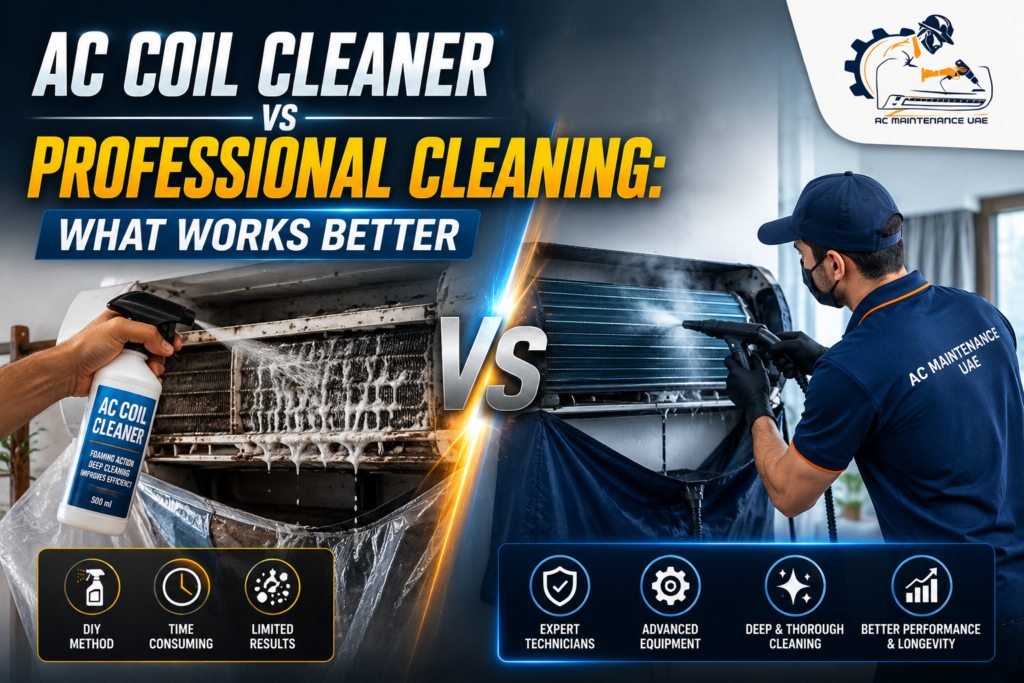
DIY AC Coil Cleaner vs Professional Cleaning: What Actually Works?
AC coil cleaner products work fine for light, regular maintenance. But they don’t replace a proper professional clean, especially in a hot and dusty climate like the UAE.
DIY cleaning has a real place in AC maintenance. If you’re consistent and careful, using a coil cleaner every few months can prevent major buildup. But there are limits to what a bottle and a brush can do.
Here are some of the most frequent cleaning service mistakes people make when doing their own cleaning:
- Using the wrong formula for the type of coil
- Placing excessive pressure and bending of fragile fins
- Skipping the deeper areas of the coil that require cleaning the most
- Failure to use a draining pan and to prevent mold growth.
- Not turning off the unit properly before starting
- Rinsing improperly and forcing dirt into the coil.
These are NOT unusual errors. They happen often. And some of them can cause more damage than doing nothing at all.
What Does a Professional AC Cleaning Actually Include?
Professionals don’t rely on spray and wipe. They have a correct sequence of procedures that involve the whole system, not just the visible parts.
The Equipment Makes a Real Difference
A hardware store won’t have the professional AC cleaning equipment. We’re talking about high-pressure coil washers, industrial-strength chemical cleaners, fin straighteners, and vacuum systems designed for AC units.
This equipment gets into parts of the coil that no spray or brush can reach. It pulls out compressed dust, removes mold from drain lines, and restores airflow in a way that genuinely changes how the unit performs afterward.
What AC Cleaning Professionals Actually Do
AC cleaning professionals follow a process, not just a checklist. They inspect the coil condition first. Then they apply the right chemical treatment based on what they find. After that comes the flush, the drain clean, and a full system check.
They’re also trained to spot problems you’d never notice. A refrigerant leak. A motor is running hot. A capacitor on its way out. Getting a professional clean isn’t just about clean coils. It’s a health check for your entire system.
Choosing the Right AC Coil Cleaner Product
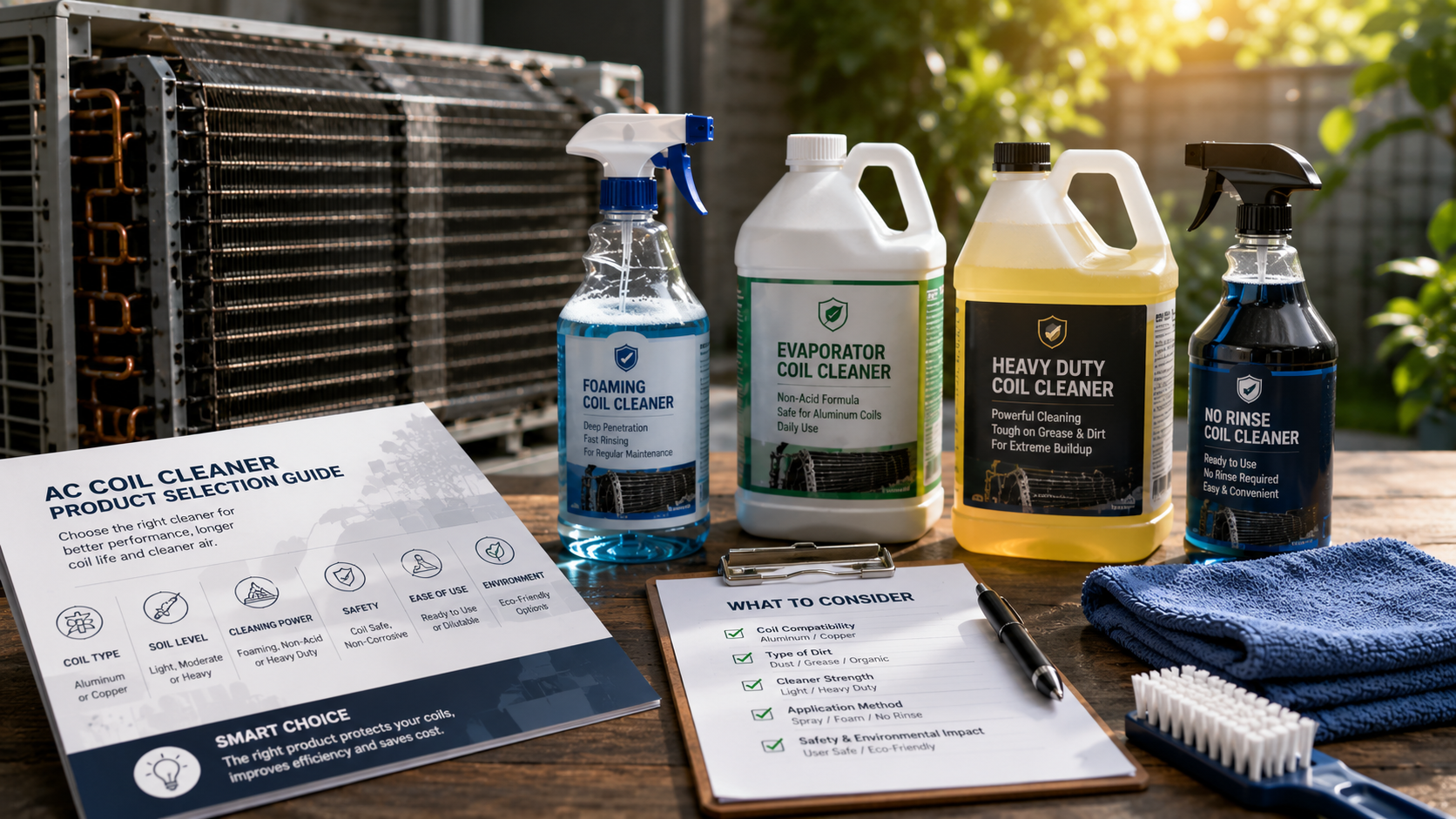
Picking the wrong product can damage your unit. The right formula depends on your coil type and how dirty things have actually gotten.
For indoor evaporator coils, you want a low-pH or neutral formula. Harsh alkaline cleaners can corrode the aluminum fins over time. For outdoor condenser coils and the AC compressor coil cleaner treatments used outside, a stronger alkaline formula usually works better because the dirt is heavier.
Things to check before buying any product:
- pH level listed on the label
- Whether it’s safe for aluminum fins
- Self-rinsing vs rinse-required formula
- Indoor or outdoor coil use
- Contact time before rinsing
- Whether it needs dilution before applying
AC coil cleaner liquid options vary widely in quality. Stick to brands that clearly state the coil type they’re designed for. Don’t just grab the cheapest option on the shelf.
When to Call a Professional AC Cleaning Company
Some signs are hard to ignore. If your AC is freezing up, smelling musty, blowing warm air, or your electricity bill jumped without explanation, it’s time to call someone.
A professional AC cleaning company has the tools, the training, and the experience to handle what you can’t. We at AC Maintenance UAE, one of the best full AC service providers in the region, handle exactly these situations every day. The service covers drain lines, filters, fan motors, and a complete system check, not just the coils.
How to Keep Your AC Coils Clean: Frequency and Maintenance Tips
Cleaning once and forgetting about it doesn’t work. Consistency is what actually keeps your AC running well through the year.
How Often Should You Actually Clean AC Coils?
Every three to six months is a good general rule. In the UAE, where dust storms and high humidity are part of daily life, leaning toward every three months makes more sense, especially for the outdoor unit.
The AC coil cleaner spray is great for in-between maintenance. A quick spray every month or two keeps light dust from hardening into a thick layer that’s much harder to remove later.
Habits That Actually Help Between Professional Visits
Changing your filters regularly is probably the single best thing you can do for your coils. A clogged filter pushes dirty air straight to the evaporator coil and speeds up buildup significantly.
Keep the outdoor unit clear of leaves, dust, and anything blocking airflow. The team at AC Maintenance UAE, known for the best full AC cleaning services in the area, recommends pairing that annual professional visit with monthly filter checks and a light coil spray every couple of months.
Is Getting a Professional Clean Actually Worth It?
Yes, and the value goes beyond just clean coils. You’re paying for performance, early problem detection, and a longer lifespan for your unit.
AC cleaning professionals often catch small issues before they become expensive ones. A cracked drain pan. A loose wire. Low refrigerant. None of these show up when you’re spraying a coil with a can. But a trained technician spots them immediately during a standard visit.
Professional AC cleaning equipment restores airflow in a way DIY methods simply can’t match. Your AC cools faster, runs shorter cycles, and uses less electricity. The AC compressor coil cleaner treatment professionals use on outdoor units removes years of compacted debris that a standard spray would never touch.
FAQs
Q1) Can I use any AC coil cleaner on both indoor and outdoor coils?
No, you shouldn’t use the same product for both. Indoor coils need a gentler, low-pH formula. Outdoor coils handle stronger alkaline cleaners. Using the wrong one risks corroding the fins or leaving residue that blocks airflow.
Q2) How often should I use an AC coil cleaner spray at home?
Once every one to two months works well for light upkeep. It stops dust from hardening between deeper cleaning sessions. In dusty areas like the UAE, monthly use makes more practical sense for most households.
Q3) What makes professional AC cleaning equipment better than DIY tools?
It reaches deep into the coil where sprays and brushes can’t. Industrial washers remove compacted buildup, flush drain lines, and straighten bent fins. The results are simply not possible with products available to regular consumers.
Q4) How do I know if my AC coils are dirty without opening the unit?
Warm air from vents, longer cooling cycles, higher electricity bills, and musty smells are the clearest signs. If two or more of these show up together, your coils almost certainly need attention right away.
Q5) Is AC coil cleaner liquid safe to use without a technician?
For light maintenance, yes. Read the label carefully before starting. Strong formulas need protective gear and proper rinsing. If the buildup looks heavy or you’re unsure about the formula strength, calling a professional is the safer option.
Q6) What does a professional AC cleaning company check beyond the coils?
A thorough visit covers the drain pan, air filters, fan motor, refrigerant levels, and electrical connections. It’s a full system check. Most people are surprised by how much gets inspected during a standard professional cleaning appointment.
Q7) Can dirty coils actually damage the AC compressor?
Yes, they can. Blocked coils force the compressor to overwork constantly. Over time, that extra strain leads to premature failure. Compressor replacement is one of the most expensive AC repairs, so regular coil cleaning genuinely protects your investment.
Q8) How long does a professional AC coil cleaning usually take?
Most standard units take between one and two hours. Heavily soiled units or larger systems may take a bit longer. The time depends on coil condition, drain line blockages, and whether any additional issues are found during inspection.
Which Cleaning Method Should You Choose?
They both play a part, and it’s truly the best of both worlds. Use AC coil cleaner products to help keep light dust at bay between visits. They are inexpensive, readily available, and simple to operate and use at home, with simple precautions. However, when it comes to deep cleaning and catching hidden issues, professional cleaning is in a class of its own.
Now that you know what actually works, set up a routine that fits your situation. Use a coil spray monthly. Book a professional visit before peak summer. That combination keeps most systems running well without surprises.