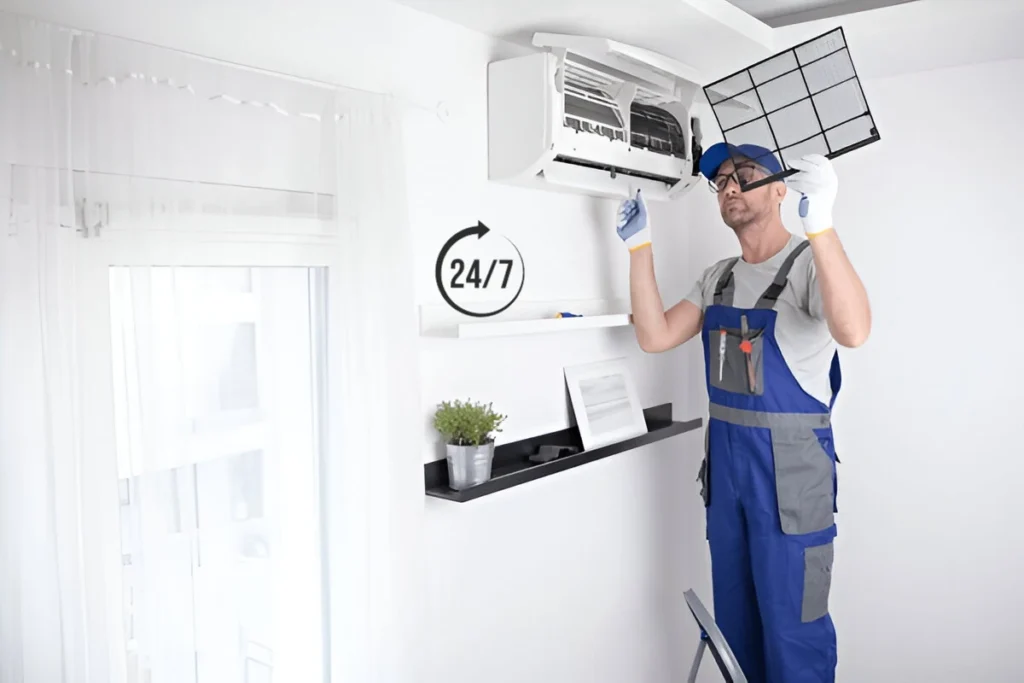

Most homeowners never think about their AC filter until something goes seriously wrong. A clogged filter silently pushes your energy bill higher every single month. It also forces your AC system to work much harder than it ever should. That extra strain can cut your unit’s lifespan from 15 years down to 10 or fewer.
Skipping a proper AC filter install does not just hurt your wallet over time. Dust, allergens, and debris start circulating freely through every room in your home. Your family ends up breathing air that a working filter would have already cleaned.
The good news is that fixing this takes less time than brewing your morning coffee. This complete step-by-step guide covers sizes, filter types, and correct airflow direction.
Why Getting Your AC Filter Install Right Actually Matters
A dirty filter does not just affect air quality. It quietly adds pressure to the entire system every single hour it runs. The motor pulls harder, the coils work overtime, and your bill creeps up while the cooling performance goes down.
What most people do not realize is that a wrongly placed filter causes just as much damage as a dirty one. Air finds the path of least resistance. If the filter is loose or flipped the wrong way, unfiltered air bypasses it completely and heads straight into the system. A proper AC filter install closes those gaps. The air goes where it should, the system breathes normally, and nothing wears out ahead of schedule.
How to Read AC Filter Sizes Before You Buy One
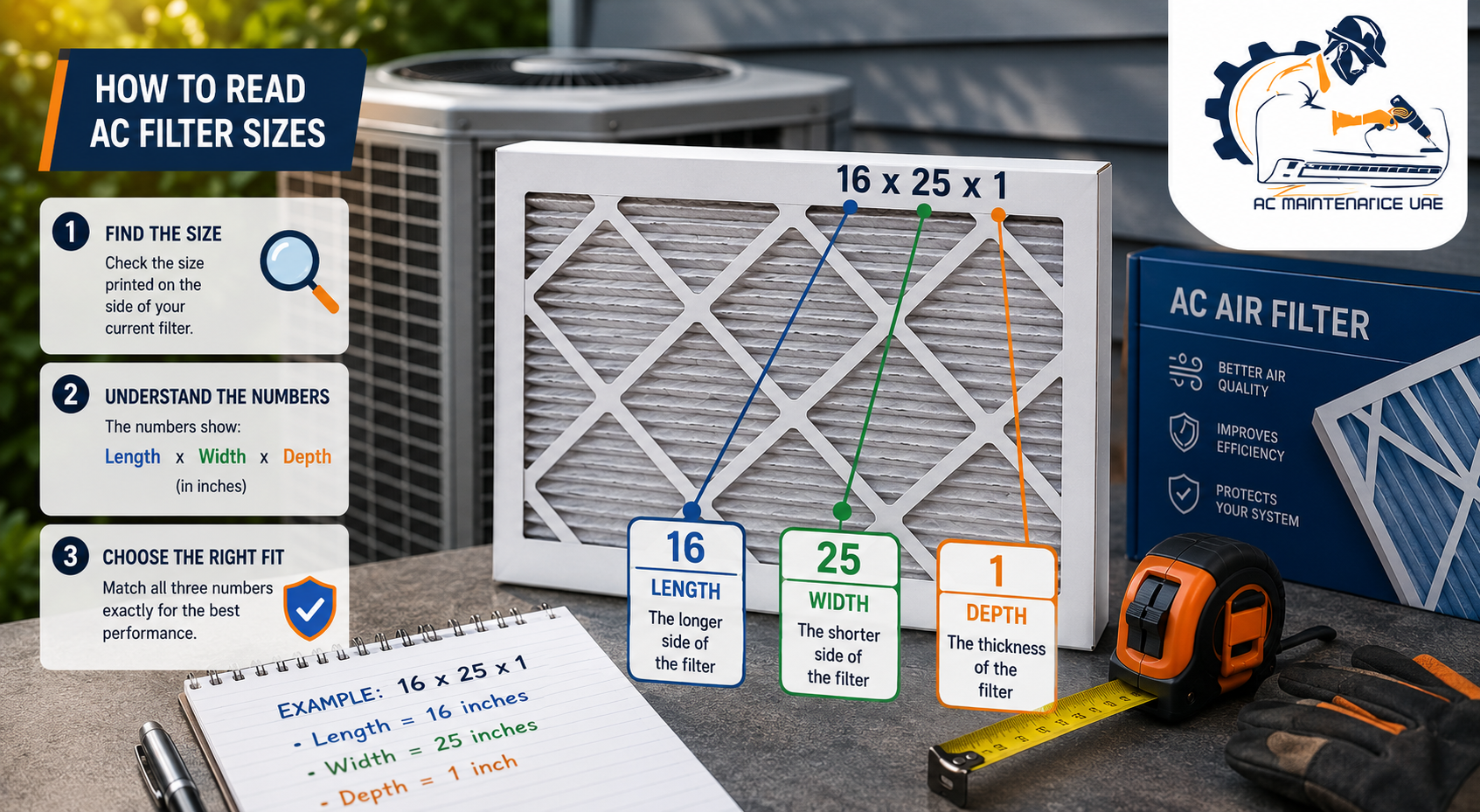
This part trips people up more than anything else. They head to the store, grab something that looks about right, and come home with the wrong filter. Here is how to avoid that. Your old filter has three numbers printed on the frame. Those numbers are the width, the length, and the thickness. They tell you exactly what to buy. Do not measure the slot yourself because the printed size and the actual size are often slightly different due to rounding.
Pull out the old filter, write down those numbers, and take them with you. Matching the exact AC filter sizes from the label means no gaps, no loose fit, and no unfiltered air sneaking past the edges.
Types of AC Filters and What Each One Does
Standing in the filter aisle feels a bit overwhelming the first time. There are rows of options at different prices, with different ratings and different claims on the packaging. Understanding the types of AC filters before you get there makes the decision much quicker. Two categories cover almost everything you will find.
Disposable Filters: Fiberglass and Pleated Options
Fiberglass filters are the flat, thin, grey ones that cost almost nothing. They do a basic job of stopping large dust particles, but miss smaller stuff entirely. If your main goal is protecting the unit rather than cleaning the air, they get the job done at the lowest possible cost.
Pleated filters are a step up and honestly worth the small price difference for most homes. They fold back and forth like an accordion, which gives them more surface area to catch particles. Their MERV rating usually lands between 8 and 13, meaning they handle pollen, dust mites, and fine debris without strangling the airflow. Among the common types of AC filters, pleated disposables sit in the sweet spot for most households that do not have specific air quality needs.
Washable and High-Efficiency Filter Options
Washable filters feel like a better deal on paper, and in many cases, they genuinely are. You pay more upfront, but stop spending on replacements month after month. The catch is that they need to be completely dry before going back in. A damp filter inside your unit is an invitation for mold.
HEPA and high-MERV filters go after the really fine stuff: mold spores, bacteria, and even some viruses. If someone in your home has asthma, chronic allergies, or a respiratory condition, these filters make a real difference to daily comfort. The one thing to watch is airflow restriction. A very dense filter in a system not rated for it will choke the blower. Check your unit’s manual before going high-MERV. Not every home benefits from the most expensive types of AC filters on the shelf.
How to Change AC Filter Safely: The Full Process
People rush this more than any other part. They turn the system off, yank the old filter out, push the new one in, and call it done. That approach misses a few things that actually matter. A clean AC filter install takes a little more care than that. Two parts to this prep: first, then the actual swap.
What to Prepare Before You Start
Think of this as the five minutes that make everything else easier. Good AC air filter replacement starts with not scrambling for things mid-job.
Here is what to have nearby before you open the panel:
- A screwdriver that matches your panel screws, flathead or Phillips
- A vacuum with a brush attachment to clear out the slot
- A permanent marker to date the new filter before it goes in
- Your replacement filter in the size you already confirmed
- A flashlight if your unit lives in a dark utility closet
- A sealed plastic bag to contain the old filter and its dust
Switch the unit off at the thermostat and wait a minute before opening anything. Pulling a filter while the fan is running sends a cloud of trapped dust straight into the blower. Find your filter compartment near the return air vent or inside the air handler cabinet, and you are ready.
The Step-by-Step Replacement Process
How to change AC filter the right way is mostly about order. Do things out of sequence, and you end up spreading more dust than you started with.
- Ease the old filter out slowly; jerking it creates a dust cloud
- Vacuum the slot walls and edges before the new filter goes anywhere near it
- Hold your new filter next to the slot and confirm all three dimensions match
- Slide it in with the printed arrow facing toward the air handler unit
- Write today’s date on the frame with your marker before closing up
- Snap the panel shut and turn the system back on
After the unit kicks back on, put your hand near a few vents. The airflow should feel consistent and strong across all of them. If one vent feels noticeably weaker, the filter may not be sitting flush. A correctly done install shows up immediately in how the air moves through the room.
Why AC Filter Air Flow Direction Is a Step You Cannot Skip
That little arrow on the filter frame confuses a surprising number of people. Some ignore it entirely. That is a mistake that ends up costing more than people expect. The arrow shows the direction air travels through the filter. It always points toward the air handler, away from the return duct. Your system pulls air in from the room, pushes it through the filter, and then sends it through the handler. The arrow tracks that same path.
Flip the filter around, and the denser filtering side ends up facing the wrong direction. The filter catches less, the blower works harder against increased resistance, and you get worse performance from a brand-new filter for no good reason. Correct AC filter air flow direction is one of those things that takes two seconds to check and saves real money over time. Before the panel closes, look at that arrow one more time. Confirming the AC filter air flow direction every single time is just a good habit worth keeping.
When the Job Is Bigger Than a Filter Change
A new filter solves most basic AC complaints. But sometimes the problem was never the filter to begin with, and a fresh AC filter install makes zero difference to how the system performs. Persistent weak airflow after a new filter usually means something is wrong inside the ducts, or the blower itself is struggling. A musty smell that does not clear up within a day or two of changing the filter points to mold somewhere deeper in the system. These are not DIY fixes.
When routine AC air filter replacement keeps producing the same disappointing results, the issue runs deeper than what any filter can address. That is the point where a professional needs to take a look at what is actually going on inside the unit. For anyone in the UAE dealing with that kind of ongoing frustration, at AC Maintenance UAE, we provide the best AC filter cleaning services in the UAE. They get into the parts of the system that a standard filter swap simply cannot reach.
Frequently Asked Questions
Q1) How often should I schedule an AC air filter replacement?
Most filters need replacing every 30 to 90 days. If you have pets, allergies, or live in a dusty area, changing it every 30 days keeps your air cleaner and your system running without unnecessary strain on the unit.
Q2) What happens if I ignore AC filter air flow direction when installing?
A backwards filter puts the weaker side against incoming air. This cuts down on how much dust gets caught and forces your blower to work harder, which leads to higher running costs and faster wear on the internal parts.
Q3) Where do I find the right AC filter sizes for my unit?
Pull out your current filter and read the three numbers printed on the cardboard frame. Those figures show the width, length, and depth. Match them exactly before buying a replacement to avoid gaps or a filter that fits too loosely.
Q4) Can I wash and reuse a standard disposable filter?
No, washing a disposable filter breaks down the inner fibers that trap dust and fine particles. Once those fibers get wet, the material stops working properly. Always replace disposable ones on schedule rather than attempting to rinse and reuse them.
Q5) Which types of AC filters work best for pet owners?
Pleated filters with a MERV rating between 10 and 13 capture pet dander and fine hair effectively. Washable filters also work well for pet owners as long as you clean and completely dry them at least once every single month.
Q6) How do I know if the how to change AC filter steps worked correctly?
Turn the system back on and check the airflow at a few different vents around your home. Strong and consistent airflow means everything is seated properly. Weak or uneven flow usually means the filter is not sitting fully flush inside the slot.
Q7) What tools do I need before starting a filter change at home?
Honestly, not much. A screwdriver for the panel, a vacuum to clean out the slot, a marker to write the install date, and the correctly sized replacement filter are all you need. That covers everything for a clean and proper job.
Q8) Is a higher MERV rating always the right choice for any AC unit?
Not always. Very dense high-MERV filters restrict airflow in systems that were not built to handle them. That puts strain on the blower and actually reduces cooling output. Check your unit manual and stay within the manufacturer’s recommended rating range.
Conclusion: The Real Benefits of a Correct AC Filter Installation
An AC filter install keeps your system running at its best. It improves air quality, lowers energy bills, and extends your unit’s overall life. You now know how to pick the right size, choose the correct filter type, and set the airflow direction properly. These small steps make a big difference over time. Regular AC air filter replacement also prevents costly breakdowns before they happen.
Do not wait for your system to struggle before you act. If you ever feel unsure or need expert support, AC Maintenance UAE offers the best AC filter cleaning services in the UAE. Take care of your filter today. Your AC, your air, and your wallet will all thank you for it.