Most homeowners don’t call for help until the AC stops working. That’s a costly mistake. By then, you’ve missed several signs that AC needs maintenance. Small issues build up quietly, and the repair bill shows up at the worst possible time. Regular AC system maintenance changes all of that. It keeps your unit running for years and lowers monthly electricity bills. Fewer emergency calls in summer? That’s the whole point. The effort required is smaller than most people think.
This blog gives you a practical AC maintenance checklist covering what to do each month and each season. It also covers exactly when to bring in a professional. By the end, you’ll know every step needed to protect your investment.
Why Your AC Unit Breaks Down Earlier Than It Should
The average air conditioner lifespan sits between 15 and 20 years. Most units don’t come close to that. They wear out faster because of problems that were completely avoidable with a bit of regular attention.
Here are the most common reasons AC units fail before their time:
- Filters left unchanged for months, restricting airflow across the whole system
- The outdoor condenser is blocked by shrubs or overgrown plants nearby
- Annual servicing is skipped until a major component gives out completely
- Thermostat pushed to extreme settings for long stretches at a time
- Dirty evaporator coils reduce the system’s ability to absorb heat properly
- Condensate drain left clogged, causing water damage inside the unit
Consistent AC system maintenance addresses every single one of these. It’s about doing simple things regularly before small issues grow into expensive ones. What you ignore today will cost far more tomorrow.
Signs AC Needs Maintenance You Should Never Ignore
The clearest signs AC needs maintenance are the ones most people brush off as normal. Weak airflow on a hot day isn’t just annoying. It’s your unit telling you something is wrong, and the longer you wait, the worse it gets.
Watch out for these warning signs before things escalate:
- Airflow feels weak or barely cool, even when the unit is on high
- Water pooling or dripping around the indoor unit
- Electricity bills rising without any change in your usage habits
- A musty or burning smell coming through the vents
- The unit running non-stop but the room staying warm
- Unusual rattling, buzzing, or grinding sounds during operation
Catching these early saves real money and protects your investment. Ignoring them cuts the air conditioner lifespan short. A unit that should last 18 years might only reach 10 when warning signs are consistently dismissed.
Your Complete AC Maintenance Checklist: DIY and Professional Tasks
A solid AC maintenance checklist has two clear parts. Some tasks are safe and simple enough to handle yourself. Others genuinely need a trained technician with the right tools. Knowing that difference is what good AC system maintenance is really about.
Monthly and Seasonal Tasks You Can Do Yourself
This part of the AC maintenance checklist covers everything you can handle without professional help. These are low risk tasks that take under 30 minutes total. Done consistently, they reduce the workload on every other part of the system.
- AC filter replacement is the most important monthly task on this list
- Clear leaves, grass, and debris from around the outdoor unit regularly
- Wipe down indoor vents and return grilles to prevent dust buildup
- Check the condensate drain pan for any standing water or moisture
- Verify thermostat settings and replace batteries when the display looks dim
These tasks cost almost nothing. But skipping them adds compounding strain to the system, and that strain builds until something breaks at the most inconvenient time.
How to Prepare Your AC Before Calling a Technician
Before you book an air conditioner tune-up, a bit of preparation helps the visit go much further. The more context you share upfront, the more time the technician focuses on actual work rather than gathering basics.
- Write down any unusual sounds, smells, or behaviours the unit has shown recently
- Note when filters were last changed and when the last service was done
- Have the unit’s model number and approximate age ready to share
- Clear at least two feet of space around both the indoor and outdoor units
- Make sure the power supply is easy to access before the technician arrives
Going in prepared makes a real difference. A technician who has proper context will always do a far more thorough job than one starting completely from scratch.
AC Filter Replacement: The Step Most Homeowners Skip
AC filter replacement should happen every one to three months. Dirty filters choke the airflow your unit needs to cool your home. When airflow drops, the motor compensates by working harder, and that extra effort costs you money every single month.
A visibly grey or clogged filter is also one of the easiest signs AC needs maintenance that any homeowner can check at home. Pull the filter out, hold it to the light, and you’ll see immediately whether it needs replacing.
Here’s a quick guide to the most common filter types and when to change them:
- Basic fibreglass filters: replace every 30 days, lowest filtration level available
- MERV-rated pleated filters: replace every 60 to 90 days, better particle capture
- HEPA filters: follow the manufacturer’s guide, highest filtration quality overall
- Electrostatic filters: washable and reusable, check them monthly during heavy use
- Carbon filters: designed to remove odours, replace every two to three months
- Washable foam filters: rinse monthly and allow to fully dry before reinserting
Homes with pets, dust, or high humidity need more frequent checks than average. Regular AC filter replacement is the cheapest maintenance step that delivers the most immediate and noticeable results.
How to Extend Your Air Conditioner Lifespan Beyond 15 Years
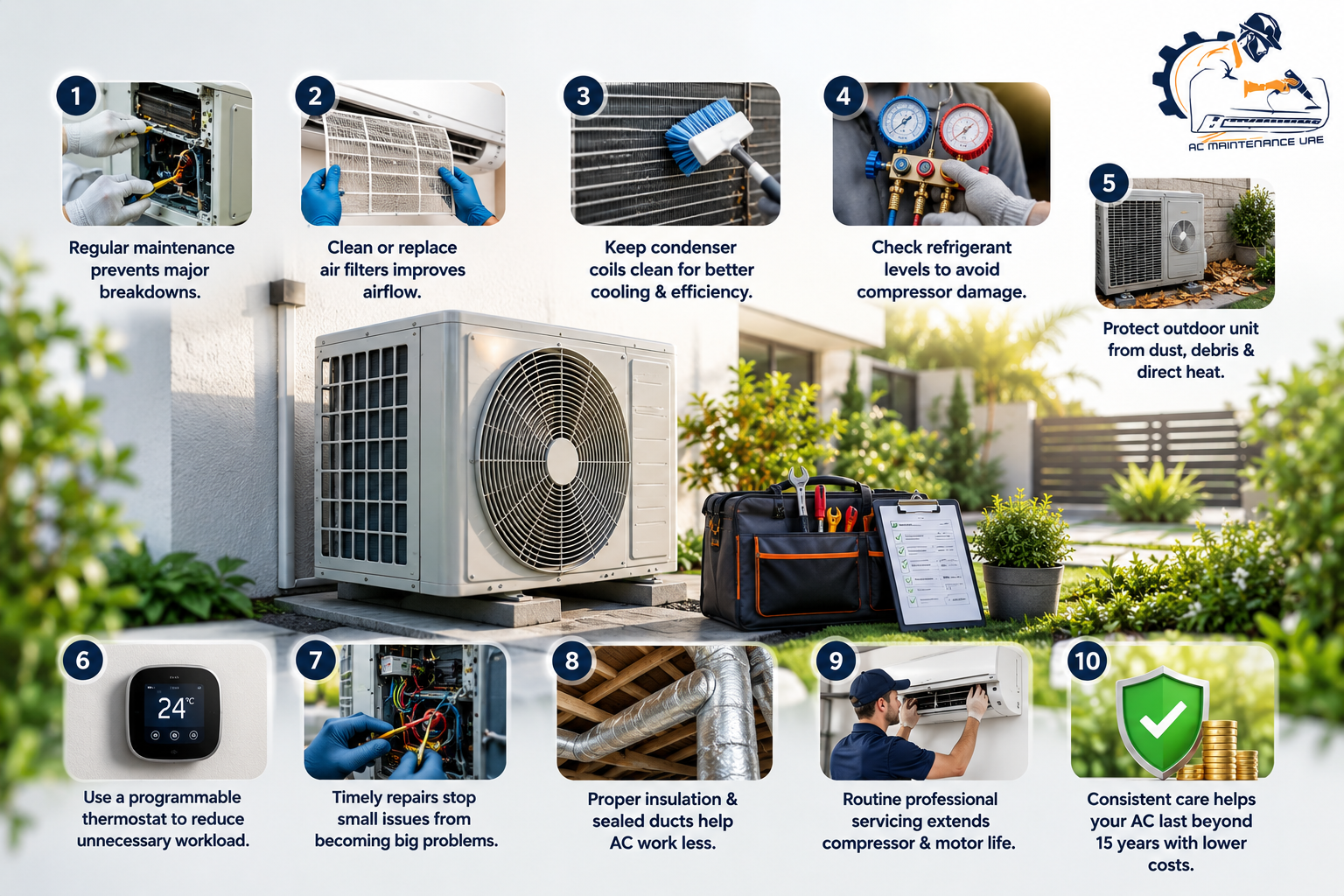
Pushing your air conditioner lifespan past 15 years comes down to two things. How you use the unit every day, and how you care for specific components. Good AC system maintenance covers both, and neither one is hard to get right.
Daily Usage Habits That Reduce Wear on Your Unit
Your daily habits directly affect how hard the compressor works. Small decisions, like how you set the thermostat or whether you use a ceiling fan, add up over time and keep cooling efficiency where it belongs.
- Set the thermostat to a consistent temperature and avoid constant adjustments
- Run ceiling fans alongside the AC to spread cool air with less unit strain
- Keep windows, curtains, and doors closed during the hottest part of the day
- Avoid pushing the unit to maximum cooling when it’s extremely hot outside
- Use a programmable thermostat to reduce cooling automatically when the home is empty
These habits cost nothing. But they make a measurable difference to how long the unit lasts and how much it costs to run each month.
Coil Cleaning and Drain Line Care That Prevent Breakdowns
The coils in your AC move heat out of your home. When they’re dirty, heat transfer breaks down. The unit runs longer cycles trying to hit the target temperature, and that extra running time wears components down faster than they should.
Flushing the condensate drain line every three months is a safe DIY task. Pour a diluted vinegar solution through the drain access point to clear any buildup before it causes a blockage. Coil deep cleaning is always included in a proper air conditioner tune-up, so leave that one to the professionals.
When to Stop DIY and Call a Professional AC Service
AC system maintenance has a clear limit. Some jobs need specialist tools, certifications, and experience that no DIY approach can replace. Knowing where that line is can save you from turning a minor problem into something far more serious and costly.
Call a professional immediately if you notice any of these:
- Refrigerant levels are low or you suspect there is a leak somewhere in the system
- The unit is short cycling, turning on and off every few minutes
- Ice forming on the evaporator coil during normal operation
- Electrical issues like tripped breakers or a burning smell from the unit
- The compressor is making loud grinding or unusual mechanical noises
- The unit won’t turn on at all, despite the power supply being active
An annual air conditioner tune-up from a licensed technician covers refrigerant testing, electrical checks, coil deep cleaning, and ductwork inspection. These are the tasks that keep your unit safe and running at full capacity.
For UAE homeowners, AC Maintenance UAE is one of the most trusted AC maintenance services providers in the region, offering consistent annual servicing and fast emergency support. Whether it’s a scheduled inspection or something more urgent, AC Maintenance UAE makes sure your unit gets the care it actually needs.
Frequently Asked Questions
Q1) What does AC system maintenance include?
AC system maintenance covers filter replacement, coil cleaning, drain line checks, refrigerant inspection, and electrical testing. Some tasks are safe to handle at home monthly. A full professional service should happen at least once a year before peak summer begins.
Q2) How often should I follow an AC maintenance checklist?
Go through your AC maintenance checklist every month for basic tasks like filter checks and vent cleaning. Book a full professional service once a year, ideally before summer, when the unit faces its heaviest workload for months at a stretch.
Q3) What are the clearest signs AC needs maintenance?
Common signs AC needs maintenance include weak airflow, strange noises, water leaking around the unit, rising electricity bills without extra usage, and the unit running constantly without cooling properly. Don’t wait for a complete breakdown before you take action.
Q4) How often should AC filter replacement happen?
AC filter replacement should happen every one to three months depending on filter type and home conditions. Homes with pets or heavy dust need more frequent changes. A clean filter is the simplest and most immediate way to keep performance consistent.
Q5) What does an air conditioner tune-up cover?
An air conditioner tune-up from a licensed technician includes refrigerant level checks, coil cleaning, electrical connection testing, drain line inspection, and a full system performance review. It catches small problems early before they turn into expensive repairs.
Q6) How long is the average air conditioner lifespan?
The average air conditioner lifespan is 15 to 20 years. Units that receive regular care tend to reach the higher end of that range. Neglected units often fail before the 12-year mark, making regular maintenance a genuinely cost-saving decision.
Q7) Can I handle AC maintenance myself without a technician?
Yes, many tasks are safe to do yourself. Filter changes, clearing debris from the outdoor unit, and flushing the drain line are all manageable. For refrigerant, electrical work, and coil cleaning, always use a licensed technician.
Q8) When should I call a professional instead of doing it myself?
Call a professional if the unit is short cycling, making grinding noises, leaking refrigerant, forming ice on the coils, or failing to turn on. These situations need specialist tools. DIY attempts on these issues can cause more damage than the original problem.
Keep Your AC Running Strong With the Right Maintenance Plan
Consistent AC system maintenance is what separates a unit that lasts 18 years from one that gives out at 10. Everything covered here, from filter care to coil cleaning to knowing exactly when to call a professional, works together to protect that investment.
The real benefits speak for themselves. Lower electricity bills. Fewer surprise repair costs. A longer unit life that delays the full expense of a replacement. Cleaner air moving through your home every single day. These are the outcomes regular maintenance actually delivers.
The unit works harder for you when you take care of it first. Start with one step today, whether that’s checking your filter or booking a service visit. The best time to protect your AC is before something goes wrong.