Your AC stops working on the hottest day of summer. No warning, no buildup, just silence. Most people blame the heat or a power issue. But in reality, the split AC compressor usually starts showing failure signs weeks before the complete breakdown happens.
Catching those signs early changes everything. A small repair caught at the right time costs far less than a full compressor replacement. This blog covers 5 critical failure signs every AC owner should know before summer turns their home into an oven.
How the Compressor Works and Why It Fails
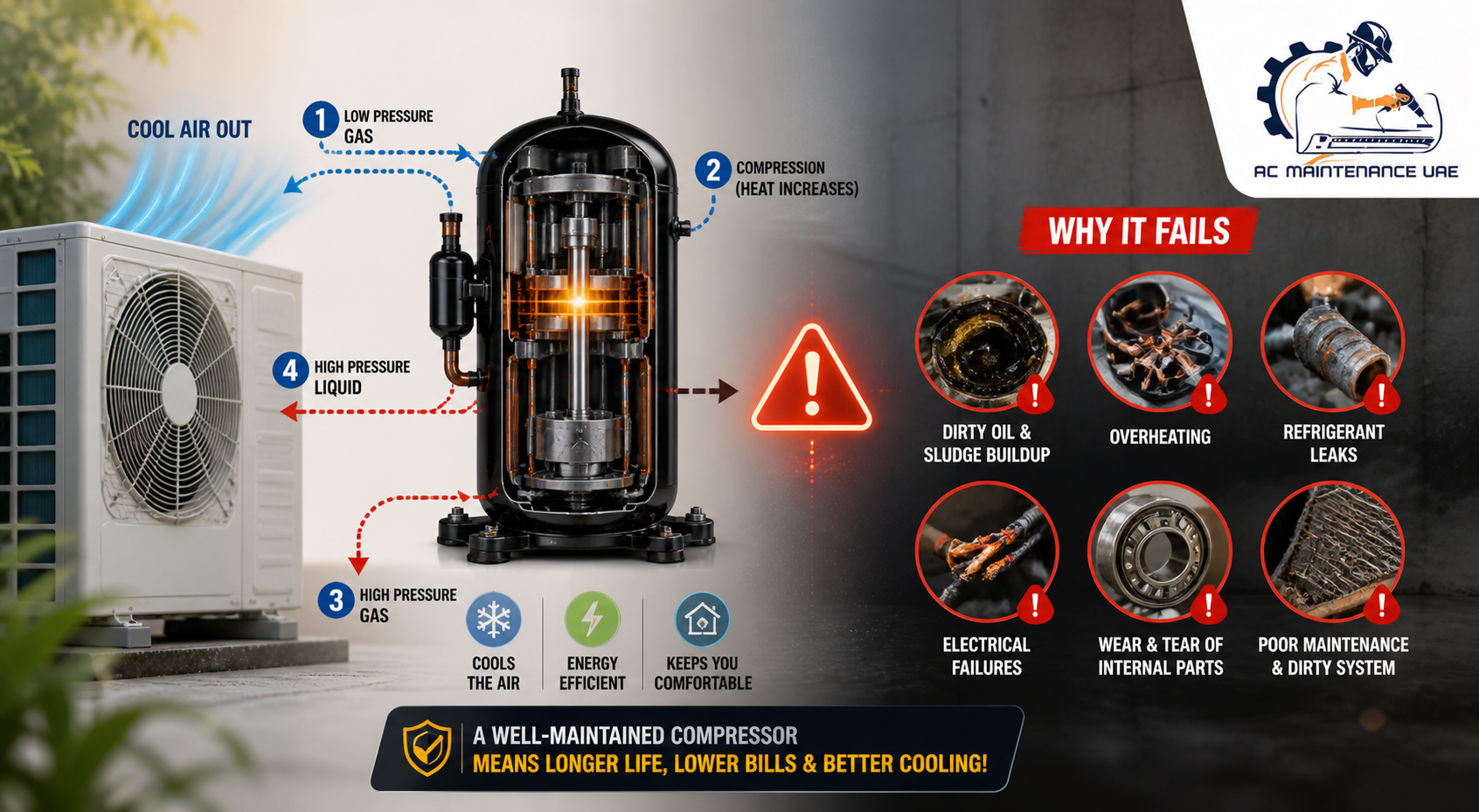
The split AC compressor pressurizes refrigerant and keeps it moving through the system to pull heat out of your room. Without it functioning correctly, the entire cooling cycle collapses, and your AC becomes nothing more than an expensive fan running all day.
Compressors fail due to dirty coils, low refrigerant, electrical faults, or years of skipped maintenance. These causes build up quietly over time. By the time the unit stops working completely, the damage has usually been developing for months without any obvious external indication.
Here Are the 5 Signs Your Compressor Is Failing
Most people only notice something is wrong after the AC stops working completely. These 5 signs appear well before that point and give you enough time to act before the damage gets expensive.
Sign 1: Strange Noises Coming From the Unit
Unusual sounds are your AC’s way of asking for help. Grinding, banging, or rattling from the outdoor unit almost always points to internal compressor damage or components that have physically come loose inside, and ignoring them rarely ends well.
If your split AC is not working properly and also comes with sounds you have never heard before, stop running the unit. A grinding noise usually means internal parts are wearing down fast. Banging often means something has already broken loose and is causing further damage with every cycle.
Sign 2: Warm Air Blowing Despite Cool Settings
Warm air from a unit set to cool is a frustrating and confusing experience. You check the thermostat, confirm the settings are right, and the air still feels like it came from outside rather than a functioning cooling system doing its actual job.
This happens because a failing split AC compressor can no longer complete the refrigeration cycle properly. Refrigerant stops circulating at the right pressure, heat extraction slows down, and the fan just pushes uncooled air into the room. You are running the unit, consuming electricity, and getting zero actual cooling out of it.
Sign 3: Water Leakage Around the Indoor Unit
A little condensation near the indoor unit is completely normal during heavy use. A visible puddle forming on the floor or water dripping down the wall is not normal and should not be left unaddressed for more than a day or two.
Split AC leaking water in larger amounts often connects back to compressor pressure problems. When refrigerant pressure becomes inconsistent, the evaporator coil temperature drops unevenly, causing it to freeze over. Once it thaws, excess water drips out beyond what the drain line can handle, creating visible leaks around the indoor unit.
Sign 4: Compressor Overheating and Shutting Off
What Causes Overheating
When the split AC compressor is overheating, it’s usually not an accident. There are a few problems that lead to the compressor overheating:
- Condenser coils are clogged, and the unit is not able to dissipate heat
- Insufficient refrigerant is causing the compressor to work longer
- Restricted air flow around the outdoor unit due to debris
- Continuously running the AC without breaks in the extreme heat
- Build-up of dust inside the unit is hampering internal heat dissipation
Any of these conditions alone stresses the compressor. When two or three of these problems occur, overheating is almost certain, and the consequences are more rapid than you think.
How to Identify If Shutdown Is Compressor-Related
Not every shutdown means a tripped breaker. A split AC compressor going into thermal shutdown follows a specific pattern that feels different from a standard electrical trip that stays off until you manually reset it at the breaker panel.
With a split AC compressor overheating, the unit shuts off mid-cycle, cools down on its own, restarts after some time, then cuts out again in the same short pattern. The breaker is fine. The unit just keeps cycling off repeatedly. That repeated pattern of short runtime followed by automatic shutdown is a strong indicator of thermal protection activating inside the compressor.
Sign 5: Electrical and Wiring Issues
Common Wiring Faults That Trigger Compressor Failure
Split AC compressor wiring faults are among the most overlooked causes of early compressor failure. Burnt wires, loose terminal connections, and weakened capacitors all force the compressor to work under stress every single time the unit starts up or runs through a full cooling cycle.
Faulty split AC compressor wiring generates heat inside the electrical components over time. That heat does not stay contained to the wires. It spreads, weakens insulation, stresses the compressor motor, and gradually shortens the entire unit’s working life well before the compressor should naturally reach the end of its expected lifespan.
Warning Signs Visible Without Opening the Unit
You do not need tools or technical knowledge to spot early electrical trouble. These signs show up from the outside:
- A burning or melted plastic smell near the outdoor unit
- The circuit breaker is tripping repeatedly without an obvious cause
- The AC unit is taking noticeably longer than usual to start up
- Flickering or delayed response when you switch it on
- The unit starts and shuts off within seconds repeatedly
If you notice any of these, stop using the unit immediately. A split AC compressor under electrical stress can move from a minor wiring fault to complete failure faster than most people expect, and continued operation only accelerates the damage already building up.
When to Call a Professional
Some AC issues are manageable at home. Cleaning filters, clearing the drain line, and keeping the outdoor unit free of debris are all things any homeowner can handle. But the 5 signs covered here are not in that category at all.
If your split AC not working situation involves warm air, unusual noises, and a tripping breaker happening at the same time, the compressor may already be in serious trouble. Split AC leaking water, combined with frequent shutdowns, is another combination that needs a technician immediately. Waiting on a failing split AC compressor almost always turns a repair into a full replacement.
How to Prevent Split AC Compressor Failure
Prevention is far simpler and cheaper than most people assume. Consistent basic care makes a real difference in how long your compressor lasts:
- Schedule professional servicing at least once every year before summer
- Clean or replace air filters every 4 to 6 weeks during peak use
- Keep the outdoor unit free of dust and debris to avoid the split AC compressor overheating
- Have refrigerant levels checked regularly, since low refrigerant is a silent compressor killer
- Inspect split AC compressor wiring annually for corrosion, loose connections, or heat damage
We at AC Maintenance UAE include coil cleaning and filter servicing as part of every maintenance visit, which directly reduces the heat load your compressor carries through the summer months. These are not complicated steps, but skipping them consistently is exactly how most compressors fail years before they should.
Keeping your unit away from a split AC not working situation is mostly about staying consistent. One service visit a year, clean filters, and clear airflow around the outdoor unit will do more for your compressor’s lifespan than any reactive repair ever could.
FAQs
Q1. What are the first signs that a split AC compressor is starting to fail?
Strange noises from the outdoor unit, warm air blowing despite cool settings, and the unit shutting off mid-cycle are the earliest signs. Catching even one of these early gives you a real chance at repair rather than full replacement.
Q2. Can a split AC compressor be repaired, or does it always need replacing?
It depends entirely on the type of damage present. Capacitor failure and wiring faults are repairable. Internal mechanical damage to the compressor motor itself usually makes full replacement the more practical and cost-effective option for homeowners.
Q3. Why does the split AC leaking water keep coming back after I clean the drain?
If the split AC is leaking water returns after drain cleaning, inconsistent refrigerant pressure is likely causing the evaporator coil to freeze and thaw repeatedly. This points toward a compressor pressure issue that drain cleaning alone will never permanently fix.
Q4. How do I know if my AC is shutting off because of overheating or a tripped breaker?
A tripped breaker stays off until you manually reset it. Split AC compressor overheating causes the unit to shut off, restart on its own after cooling, then cut out again in a repeated short-cycle pattern without any breaker involvement.
Q5. Is a burning smell from my AC always a wiring problem?
A burning smell near the outdoor unit almost always points to a split AC compressor wiring, overheating, or a failing capacitor. Stop using the unit immediately when you notice this smell and get a technician to inspect it before running it again.
Q6. How often should I service my AC to keep the compressor healthy?
Once a year, before summer is the minimum. Heavy users benefit from twice-yearly servicing. Regular maintenance directly prevents split AC not working situations from building up and keeps the compressor running within its safe operating range throughout peak months.
Q7. Can low refrigerant actually destroy the compressor over time?
Yes, absolutely. Low refrigerant forces the split AC compressor to work beyond its designed capacity to maintain pressure. This causes continuous overheating and excessive wear on internal parts, significantly shortening the compressor’s lifespan well before it should naturally fail.
Q8. What is the realistic lifespan of a well-maintained split AC compressor?
A properly maintained compressor typically lasts between 10 and 15 years. Poor maintenance, repeated overheating episodes, and unaddressed wiring faults can reduce that lifespan to 5 or 6 years, sometimes even less, depending on usage intensity.
Don’t Let Compressor Failure Catch You Off Guard
The 5 signs covered here, strange noises, warm air output, water leakage, repeated overheating shutdowns, and electrical warning signs, all point back to one component. Your split AC compressor is the part that makes everything else work, and it always gives warnings before it fully fails.
Early detection saves significant money and avoids the frustration of a complete breakdown mid-summer. Now that you know what to watch for, take a few minutes to check your unit. If anything looks, smells, or sounds off, call a qualified technician before the problem moves beyond repair into full replacement. Our team at AC Maintenance UAE is ready for inspections, filter cleaning, and full system checkups any time you need us.