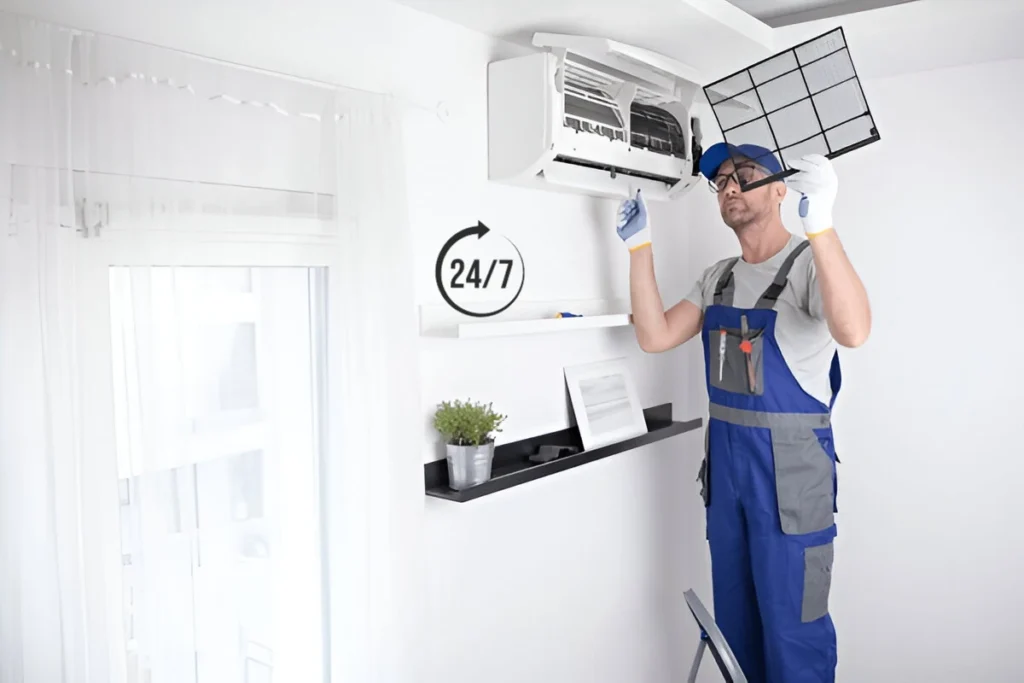
Nobody in Dubai gets a break from the heat. Not really. It starts early in the year and hangs around long after other cities have cooled off, which means your air conditioner is doing more work here than almost anywhere else. That’s exactly why an ac inspection isn’t something you can put off for “next month.”
Skip it long enough and you’ll notice weaker cooling, then a spike in your bill, then maybe a full breakdown on the one day you really needed the unit to work. This guide covers why ac inspection matters so much in this climate, what a technician is actually looking at when they show up, and the warning signs that tell you it’s time to book one instead of waiting it out.
Why Regular AC Inspection Matters in Dubai
Dust, heat, and near constant use wear parts down faster here than almost anywhere else. A regular ac inspection catches the small stuff early, before it turns into a July breakdown when every repair company in the city is already booked.
Dust is the real problem. Fine sand blows in from construction sites and open desert, and it settles into filters and coils faster than most homeowners expect. Once that buildup takes hold, your compressor has to work harder just to keep up. An air conditioner inspection catches this before it ever shows up as a strange number on your electricity bill.
And then there’s the sheer number of hours. Most homes here run their AC for ten hours a day or more from May through September, sometimes longer. That kind of continuous load puts real strain on motors, coils, and electrical connections, parts that were never designed to run nonstop. Fold a yearly ac maintenance dubai visit into your routine and that wear gets spread out instead of piling up all at once.
Here’s the part nobody wants to think about: compressors don’t usually fail on a quiet Tuesday. They fail on the hottest day of the year, when you need them the most. Scheduled inspection lowers that risk because a technician can spot a weak part while it’s still an easy fix, not an emergency one. It’s a small habit that saves you from a much bigger headache later.
What Happens During an AC Inspection?
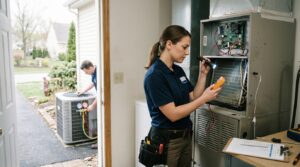
A typical ac inspection covers a visual check of the whole system, an airflow test, a temperature check, and a look at the wiring. Most single split units take under an hour to go through.
The technician starts by simply looking. Rust on the outdoor unit, a loose panel, damaged wiring, the kind of thing you’d probably walk right past. That visual pass often catches problems a homeowner would never spot on their own.
From there it’s airflow testing at each vent, followed by checking the temperature difference between the air going in and the air coming back out. A healthy split ac inspection usually shows a gap somewhere around fifteen to twenty degrees. Lower than that, and something’s off.
Electrical connections get checked too. Loose wiring causes more sudden AC failures than people realize. A central ac inspection goes a step further and includes the ductwork, checking for leaks or blockages that a split system simply doesn’t have.
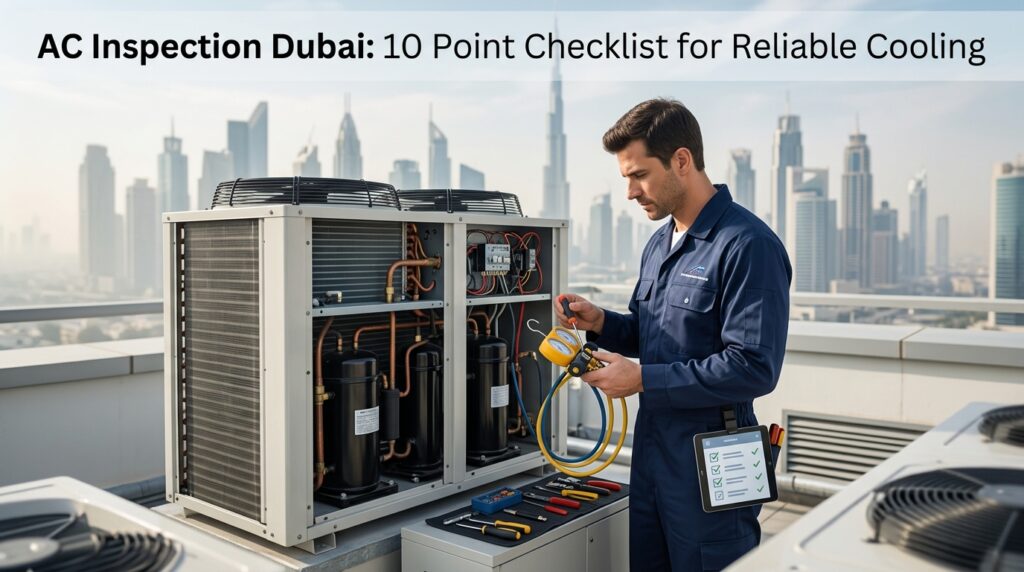
The 10 Point AC Inspection Checklist
A full ac inspection checklist runs through filters, coils, refrigerant, thermostat accuracy, wiring, drainage, the fan motor, vents, and a final performance test to confirm everything’s working together, not just in isolation.
| Checklist Item | What the Technician Checks |
| 1. Air filters | Checked for dust buildup and replaced if clogged |
| 2. Evaporator coil | Inspected for dirt, mold, or ice buildup |
| 3. Condenser coil | Cleaned of dust and debris from the outdoor unit |
| 4. Refrigerant level | Tested against manufacturer specifications |
| 5. Thermostat | Checked for accurate temperature readings |
| 6. Electrical connections | Inspected for loose wires or corrosion |
| 7. Drain line and pan | Cleared to prevent water leaks |
| 8. Fan motor and blades | Checked for wear, noise, or imbalance |
| 9. Airflow and vents | Tested at each room for consistent output |
| 10. Cooling performance | Final test comparing input and output temperature |
A checklist like this gives you something concrete instead of a vague “it’s fine” from whoever shows up on your ac maintenance dubai visit. This is what a proper ac service dubai visit should actually look like on paper, not just a quick glance and a goodbye. Ask for a written summary when it’s done, so you’ve got something to compare against next year.
Worth noting: a few of these points, the filters and coils especially, overlap with a normal ac cleaning dubai visit. But cleaning stops there. Inspection goes further and checks the electrical and mechanical side too.
Signs Your AC Needs an Inspection
Weak cooling, odd noises, water pooling somewhere it shouldn’t, bad smells, a bill that jumped for no reason. Any one of these on its own is worth a call. Two together usually means something’s already wrong.
- Weak cooling: rooms take forever to cool, or never quite hit the temperature you set.
- Strange noises: rattling, buzzing, grinding, anything that wasn’t there before.
- Water leaks: pooling near the indoor unit, or a steady drip from the unit outside.
- Bad odors: a musty or faintly burning smell right when the system kicks on.
- Higher electricity bills: costs creeping up with no real change in how you’re using the AC.
How Often Should Dubai Homes Schedule AC Inspection?
Once a year for most apartments, twice for villas because of the longer duct runs, a quarterly filter check for offices, and extra visits if you’re anywhere near a construction site.
- Apartments: once a year, ideally right before summer hits.
- Villas: twice a year, since longer duct runs and multiple units mean more places for things to go wrong.
- Offices: a filter check every three months, plus one full central ac inspection yearly.
- Homes near construction areas: an extra visit midsummer. The dust alone makes this worth it.
Common Problems Found During AC Inspection
Dirty filters, refrigerant leaks, blocked drains, worn electrical parts, dirty coils. That’s the shortlist, and every single one is cheap to fix early but expensive if it’s left to sit.
- Dirty filters restrict airflow and force the whole system to run longer than it should.
- Refrigerant leaks quietly reduce cooling power, and over time they can damage the compressor.
- Blocked drain pipes back water up, sometimes into walls or ceilings, a much bigger mess than the fix would have been.
- Worn electrical parts raise the odds of a sudden shutdown, or worse, a short circuit.
- Dirty coils just make the whole unit work harder for the same result you’d get from a clean one.
Frequently Asked Questions About AC Inspection
How often should an AC be inspected in Dubai?
Once a year is the baseline, timed before summer really kicks in. Villas often do better with a second check midyear, especially if the system covers a lot of ground.
What does an AC inspection include?
A standard ac service dubai visit runs through filters, coils, refrigerant level, wiring, drainage, and a final airflow and temperature test. Basically, everything that could quietly go wrong gets checked.
Can an inspection prevent expensive repairs?
Most of the time, yes. Big repairs almost always start as small faults, and those are exactly what a technician catches during a routine visit, long before they turn into a breakdown.
How long does an AC inspection take?
A single split ac inspection is usually done in under an hour. A full villa setup with several units will take longer, simply because there’s more to check.
Should a new AC also be inspected?
Yes, and this one surprises people. A first year check confirms the installation itself was done right, not just that the unit turns on and blows cold air.
Does inspection help lower electricity bills?
Usually, yes. A clean, properly tuned system uses less power to hit the same temperature, so a noticeable drop in the monthly bill isn’t unusual after a good inspection.
Conclusion
An air conditioner inspection is a small habit, honestly, but it saves real money over time. It catches the dirty filter, the weak refrigerant, the worn wire, before any of it turns into a breakdown in the middle of August.
Whether you’re in an apartment, a villa, or running an office, knowing what a technician actually checks means you can ask better questions and plan around your own schedule instead of scrambling for an emergency call when the heat is at its worst. Aacmaintenanceuae services mostly deal with filters and coils. Inspection covers that plus refrigerant, wiring, drainage, and overall performance, so it’s a bigger job