Most people never think about what’s living inside their AC vents. Dust, mold spores, pet dander, and bacteria quietly build up over months, and every time your system kicks on, that air moves straight into your lungs. It’s not a great thought, honestly. But here’s the thing: AC vent cleaning doesn’t require a professional visit or a cabinet full of expensive gear.
You probably already have most of what you need at home. This blog walks you through 5 practical cleaning methods, the right tools for the job, how often you should actually do this, and which approach suits your specific home type.
Is Your Home’s Air Making You Sick? Signs You Need AC Vent Cleaning
AC vent cleaning becomes necessary the moment your system starts working against your health instead of for it. Most homeowners don’t realize there’s a problem until the symptoms show up in their bodies, not their vents.
Watch for these warning signs:
- Visible dust rings around vent covers. If you see grey buildup framing your vents, debris is already circulating through your air.
- A musty or stale smell when the AC runs. That odor usually points to mold or bacteria sitting inside the vent shaft.
- Family members are sneezing more, dealing with itchy eyes, or struggling with asthma. Dirty vents are a classic, often overlooked trigger.
- Weak or uneven airflow from certain rooms. Blockages from accumulated debris will reduce how well air moves through the system.
That said, not every problem calls for a DIY fix. If you’re seeing black mold, persistent smells even after cleaning, or airflow that stays weak no matter what, it’s worth calling a professional. Some issues go deeper than the vent cover.
What You Need Before You Start: Tools and Supplies

You don’t need a lot, but having the right tools before you start makes the whole process faster and more effective. Searching for a screwdriver mid-clean is the kind of thing that turns a 20-minute job into an hour.
Here’s what to gather:
- Microfiber cloths (two or three)
- A vacuum with a hose and a narrow attachment
- A screwdriver (flathead or Phillips, depending on your vent screws)
- An AC vent cleaning brush: This is the most useful tool in the kit
The AC vent cleaning brush deserves its own mention. A standard cloth just pushes dust around. A brush with medium-stiff bristles actually loosens the debris packed into the slats and duct openings, so the vacuum can pull it out cleanly. Flexible, long-handled versions work best for reaching inside the shaft without straining.
Optional additions include rubber gloves, a dust mask (especially if mold is suspected), and a mild cleaning solution like dish soap diluted in warm water. You can find a decent AC vent cleaning brush at any hardware store or order one online.
5 Simple AC Vent Cleaning Methods That Actually Work
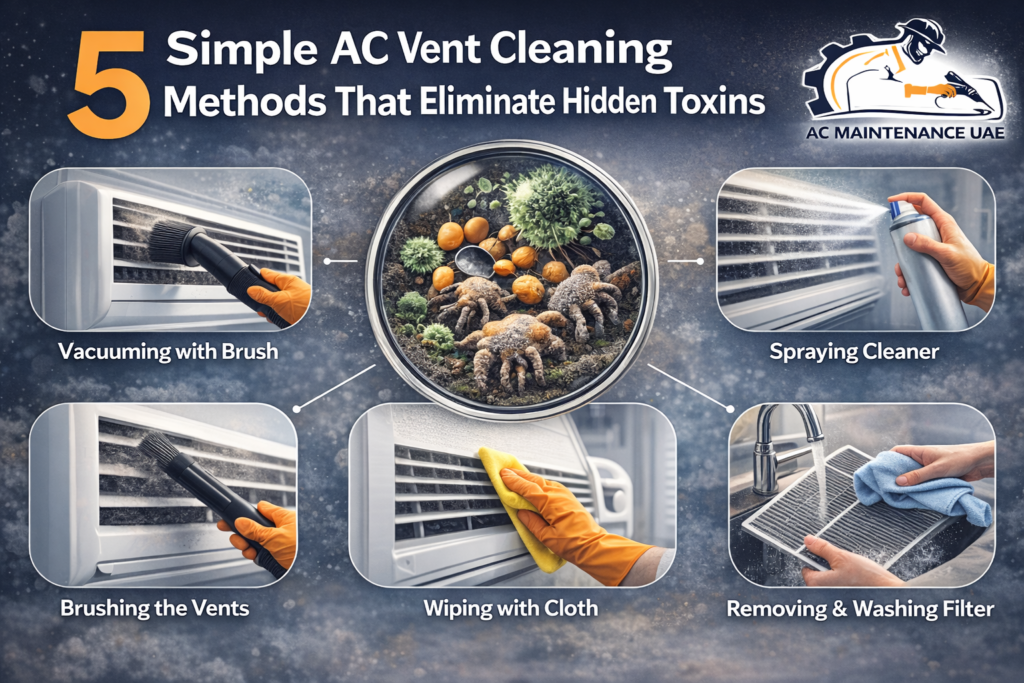
Keeping your AC vents clean does not have to be complicated. These 5 simple methods will help you remove dust, dirt, and hidden toxins from your vents quickly and effectively, improving your home’s air quality and keeping your AC system running at peak performance.
Method 1 to 3: Everyday Cleaning Techniques for All Vent Types
Knowing how to clean AC vents properly starts with matching the method to the mess. Light dust buildup needs a different approach than sticky kitchen grease or mold along the edges.
- Method 1: Vacuuming: Run the hose attachment directly over the vent cover without removing it. Use a narrow tip to get between slats. This is the fastest option for weekly or biweekly surface maintenance. It works well on wall and ceiling vents in bedrooms and living areas.
- Method 2: Brush and Wipe: Remove the vent cover with a screwdriver. Use your AC vent cleaning brush to loosen dust from both the cover and just inside the duct opening. Follow up with a dry microfiber cloth. This method works on every home type and is probably what most people should be doing monthly.
- Method 3: Soap and Water: Once the vent cover is off, soak it in warm water with a few drops of dish soap for 10 to 15 minutes. Scrub gently, rinse, and let it dry fully before putting it back. This is especially useful in kitchens and bathrooms where grease and humidity cause buildup to stick. Learning how to clean air vents in home spaces like these makes a real difference in odor control.
Methods 4 and 5: Deep Cleaning for Stubborn Buildup and Mold
- Method 4: Compressed Air: A can of compressed air blasts debris from deep inside the duct opening that vacuums can’t reach. Always point airflow inward and away from your face, and lay a cloth over the vent opening to catch what comes flying out. Wear a mask for this one. It’s a bit messy but genuinely effective for dislodging packed-in debris.
- Method 5: Disinfectant Spray: Mix equal parts water and white vinegar, or use a mild commercial disinfectant safe for HVAC use. Lightly spray the inside of the duct opening and the vent cover. Let it sit for five minutes, then wipe clean. This targets mold, bacteria, and the kind of hidden toxins that cause respiratory irritation.
A word of caution: don’t oversaturate the inside of the duct. Too much moisture in there creates the exact conditions mold loves. One light pass is enough. Deep cleaning like this should happen two to four times a year for most households, not every month.
How to Clean Central AC Vents: A Room-by-Room Approach
Central AC vent cleaning works best when you treat each room as its own zone rather than rushing through the whole house at once. A systematic approach means nothing gets missed and you’re not dragging dust from one room into the next.
Start with bedrooms, since that’s where people spend the most time breathing filtered air. Move to the living areas, then the bathrooms, and finish with the kitchen. Having a damp cloth in hand as you move room to room prevents you from spreading dust rather than removing it.
Cleaning Supply and Return Vents: What’s the Difference?
Supply vents push conditioned air out into the room. Return vents pull air back into the system to be filtered and recooled. Both need cleaning, but they need it differently.
Return vents tend to collect more dust because they’re constantly drawing air (and everything floating in it) toward the system. They should be wiped down more frequently, and the filter behind them should be checked every 30 days. Supply vents are smaller, easier to clean, and can usually be handled with a quick brush and vacuum pass. Removing a return vent cover to check the filter condition takes less than two minutes. It’s worth doing.
AC Vent and Duct Cleaning: When Vents Alone Are Not Enough
Here’s something most cleaning guides skip: if your ducts are dirty, cleaning the vents is only solving half the problem. Dust and debris sitting inside the duct system will just recontaminate the vents you just cleaned, usually within days.
AC vent and duct cleaning becomes necessary when you notice persistent dust even after cleaning vents, musty smells that don’t go away, or visible debris inside the duct opening. DIY duct inspection involves shining a flashlight into the return vent opening and checking for dust layers, debris, or dark staining that could indicate mold.
If you’re seeing any of that, it’s time for a professional. At AC Maintenance UAE, we handle full duct system assessments that go well beyond what a standard brush and vacuum can reach. The difference in air quality after a proper duct clean is something most homeowners notice within the first day.
How Often Should You Clean AC Vents in Your Home?
Most households do fine with a light cleaning once a month and a deeper clean every three to four months. That said, “most households” covers a lot of ground.
If you have pets, anyone in the home with allergies or asthma, or you live somewhere with high ambient dust (which is most of the UAE), you’ll want to clean more often. Monthly deep cleans rather than quarterly ones are reasonable in those cases.
A practical seasonal schedule:
- Before summer cooling season: Full clean of all vents, brush-out of accessible duct openings, filter replacement
- Mid-season check (around month two or three): Quick vacuum pass, visual inspection
- Before winter (if you use heating): Another full clean before switching modes
Quick monthly checks don’t need to take more than 10 minutes total for an average apartment. A quick wipe and vacuum pass across all visible vents keeps buildup from getting out of hand between deeper sessions.
FAQs
Q1. How do I clean AC vents without removing them?
Use a vacuum with a narrow hose attachment to pull dust from between the slats. For a slightly deeper clean without removal, an AC vent cleaning brush can loosen debris before vacuuming. It’s a solid option for weekly upkeep.
Q2. How often should AC vents be cleaned in a home?
For most homes, a light clean monthly and a full clean every three months works well. If you want to know how to clean air vents in home spaces with pets or allergy sufferers, lean toward monthly deep cleans instead.
Q3. What is the best brush for cleaning AC vents?
A flexible, long-handled AC vent cleaning brush with medium-stiff nylon bristles works best. It reaches into the duct opening without forcing the bristles, and it’s sturdy enough to dislodge packed-in dust from the slats.
Q4. What is the difference between AC vent and duct cleaning?
Vents are the visible covers on your walls or ceiling. Ducts are the internal channels carrying air through the home. AC vent and duct cleaning covers both, which matters because dirty ducts will quickly recontaminate freshly cleaned vents.
Q5. How do I clean central AC vents properly?
Central AC vent cleaning works best room by room. Remove each vent cover, brush it clean, vacuum inside the duct opening, wipe the cover with a damp cloth, and reinstall. Return vents need this treatment more frequently than supply vents.
Q6. Can dirty AC vents make you sick?
Yes, genuinely. Mold spores, dust mites, bacteria, and accumulated allergens inside vents circulate through your air every time the system runs. Over time, this contributes to respiratory issues, worsened allergies, and persistent fatigue.
Q7. What are the signs that AC vents need cleaning?
Visible dust around the vent frame, musty smells when the AC runs, reduced airflow in certain rooms, and increased allergy symptoms in the home are all clear indicators that it’s time to clean.
Q8. Can I use a vacuum cleaner to clean AC vents?
Yes, and it’s one of the best starting tools. A vacuum with a hose and a narrow attachment pulls surface dust quickly without spreading it. Pair it with a brush for better results on vents that haven’t been cleaned in a while.
Which AC Vent Cleaning Method Is Right for You?
Now that you know how an AC vent cleaning works, ready to actually breathe easier at home? Start simple. If it’s just dust, the vacuum and brush methods will handle it. If there’s grease, stuck-on grime, or that lingering smell, the soap and water plus disinfectant approach gets to it properly.
For central AC systems, the room-by-room approach keeps things organized and thorough. If mold is involved or the buildup has clearly moved beyond the vent into the duct system, that’s where AC Maintenance UAE steps in. Our team handles what brushes and vacuums can’t reach, and the results show in the air quality immediately.