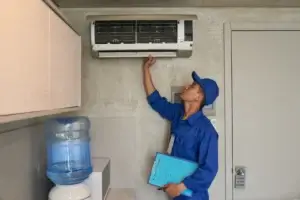
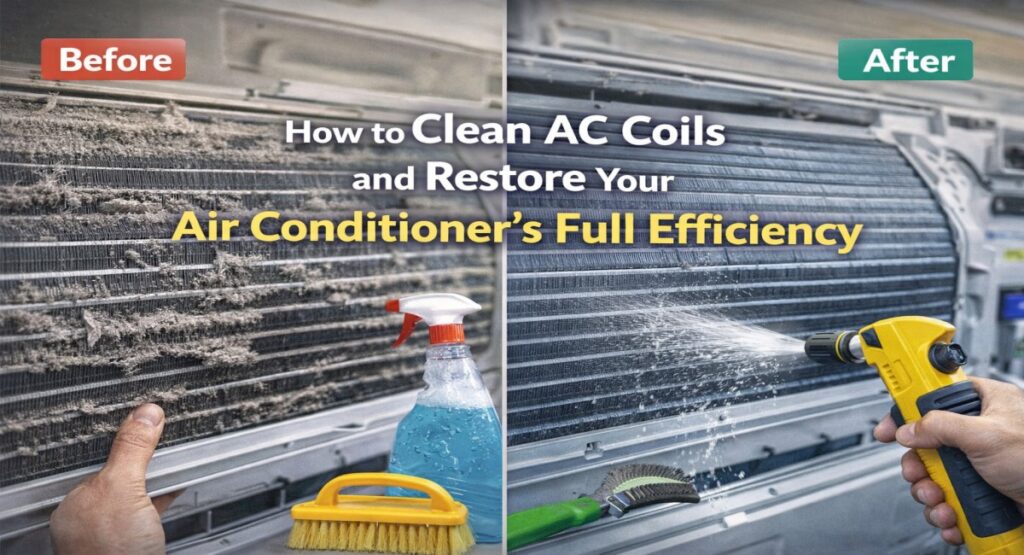
If your air conditioner is running longer than usual and your electricity bill keeps rising, dirty AC coils could be the hidden cause. In the UAE’s extreme heat, your AC system works harder than almost anywhere else in the world, and coil buildup is one of the fastest ways to sabotage its performance.
In this guide, you will learn exactly what AC coils do, why they get dirty, how to clean AC coils safely and effectively, what tools you need, and when it makes sense to call a professional. By the end, you will have a clear, actionable understanding of how to keep your system running efficiently all year long.
What are AC Coils and Why Do They Matter?
Your air conditioning system contains two sets of coils, each playing a critical role in the cooling process. The evaporator coil sits inside your indoor unit and absorbs heat from the air inside your home. The condenser coil is located in the outdoor unit and releases the absorbed heat into the outside air.
When either set of coils becomes coated with dust, dirt, or debris, it cannot transfer heat efficiently. The system has to work much harder to achieve the same result, consuming more energy and wearing out faster. In a country like the UAE, where temperatures regularly exceed 45 degrees Celsius in summer, this efficiency loss can be severe and costly.
According to the U.S. Department of Energy, dirty coils can reduce air conditioner efficiency by up to 30 percent. That means for every AED 1,000 you spend on cooling, AED 300 could be wasted simply because your coils have not been cleaned.
Signs You Have Dirty AC Coils
Recognizing the warning signs of dirty AC coils early can save you from expensive repairs. Watch out for these common indicators:
- Your AC runs continuously, but the room never feels cool enough.
- Your electricity bills have increased noticeably without a change in usage patterns.
- The air coming from your vents feels warmer or less cold than before.
- Ice or frost is forming on the indoor unit or refrigerant lines.
- There is a musty or unusual smell when the AC is running.
- The outdoor unit feels excessively hot to the touch.
- Your system shuts down unexpectedly due to overheating.
If you notice any of these signs, it is time to inspect and clean AC coils before the problem escalates into a full system failure, which is far more expensive to address.
Evaporator Coil vs Condenser Coil: Understanding the Difference
Evaporator Coil Cleaning
The evaporator coil is located inside your indoor unit, typically housed behind the air filter. Because it handles the cooled, humid air inside your home, it is prone to collecting fine dust and even developing mold if moisture is present. Air conditioner coil cleaning for the evaporator requires careful access to the indoor unit, a no-rinse coil cleaner, and a soft brush. This coil should be cleaned at least once a year in UAE conditions, and ideally twice, before and after peak summer.
AC Condenser Coil Cleaning
The condenser coil is in your outdoor unit and is exposed to the elements directly. In the UAE, this means it accumulates sand, dust, pollution particles, and debris from nearby construction sites. AC condenser coil cleaning is typically more physically demanding than evaporator coil cleaning, because the fins are more exposed and often more heavily soiled. A garden hose, a commercial coil cleaner, and a fin comb are standard tools for this task.
Coil Cleaning Tools You Will Need
Before you start any HVAC coil cleaning task, gather the right coil cleaning tools. Using improper tools can bend the delicate aluminum fins on your coils, reducing airflow and making the problem worse. Here is what you need:
- No-rinse evaporator coil cleaner spray (foaming type is preferred for indoor coils).
- Commercial AC condenser coil cleaner for outdoor units.
- A soft-bristle brush or paintbrush for light dust removal.
- A fin comb to straighten bent coil fins after cleaning.
- A garden hose with a gentle spray nozzle for rinsing the outdoor condenser.
- Safety gloves and protective eyewear.
- A screwdriver set to access the unit panels.
- Clean dry cloths or microfiber towels.
- A vacuum cleaner with a brush attachment for pre-cleaning loose debris.
Always turn off the power to your AC unit at the circuit breaker before you begin any cleaning. Safety is not optional when working with electrical and refrigerant systems.
How to Clean AC Coils: A Step-by-Step Process
Here is a practical, step-by-step approach on how to clean AC coils for both indoor and outdoor units:
Step 1: Power Off the System Completely
Switch off the air conditioner through the thermostat or remote, then turn off the circuit breaker for the AC unit. This prevents electric shock and protects the system while it is open. Wait at least 10 minutes before proceeding so any capacitors can discharge safely.
Step 2: Remove and Clean the Air Filter
Start with the air filter, which protects the evaporator coil from large dust particles. Remove it, wash it with mild soap and water, and let it dry fully before reinstalling. A clogged filter is often the first reason coils start getting dirty faster than they should.
Step 3: Access and Inspect the Evaporator Coil
Open the access panel on your indoor air handler unit. Use a flashlight to inspect the evaporator coil for dust buildup, mold, and debris. If you see light gray dust, a simple brush and coil spray will handle it. If you see dark, heavy buildup or mold, a deeper clean or professional service may be needed.
Step 4: Apply No-Rinse Evaporator Coil Cleaner
Spray a no-rinse evaporator coil cleaner evenly across the coil surface. This type of cleaner foams up, lifts the dirt, and then drains naturally through the condensate pan below the coil as the unit runs. There is no need to rinse it off, making it ideal for indoor use where water damage to surrounding components is a risk.
Step 5: Clean the Outdoor Condenser Coil
For the outdoor unit, remove any debris like leaves or sand from around and inside the cabinet first. Apply an outdoor-rated coil cleaner to the condenser fins, allow it to soak for several minutes, and then rinse from the inside out with a garden hose. Rinsing from the inside outward pushes dirt out through the fins rather than deeper into them. Use gentle water pressure to avoid bending the fins.
Step 6: Straighten Bent Fins with a Fin Comb
After rinsing, inspect the condenser fins for any that have been bent or crushed, which restricts airflow. Use a fin comb that matches the fin spacing of your unit to carefully straighten any damaged fins. This small step significantly improves airflow and overall efficiency.
Step 7: Reassemble and Test the System
Allow the unit to dry completely, typically 15 to 20 minutes. Reinstall all panels, restore power at the circuit breaker, and turn the AC on. Monitor the system for the next 30 minutes to ensure it cools effectively, does not produce unusual sounds, and the airflow feels strong and cold.
Why Coil Cleaning Matters More in the UAE than Most Countries
The UAE presents a uniquely harsh environment for air conditioning systems. Sandstorms deposit fine particulate matter into outdoor condensers at a rate far higher than in temperate climates. High humidity in coastal cities like Dubai and Abu Dhabi accelerates mold growth on evaporator coils. Construction dust from the country’s constant development adds additional strain on both filters and coils.
Most international guidelines recommend air conditioner coil cleaning once a year. In the UAE, twice a year is the more appropriate standard for residential units and quarterly cleaning for commercial and industrial HVAC systems. AC Maintenance UAE advises all clients to schedule professional inspections before and after the peak summer season to keep systems performing at their best.
Air Conditioner Efficiency Tips Beyond Coil Cleaning
Cleaning your coils is one of the most impactful things you can do, but it works best as part of a broader maintenance routine. These air conditioner efficiency tips will help you maximize the return on every dirham you spend on cooling:
- Replace or clean your air filter every 30 to 45 days during peak summer usage.
- Keep the area around your outdoor condenser unit clear of at least 60 centimeters on all sides.
- Use a programmable thermostat to reduce cooling during unoccupied hours.
- Seal gaps around windows and doors to prevent cool air from escaping.
- Install insulating window film to reduce heat gain through glass.
- Service the refrigerant levels annually to ensure proper cooling capacity.
- Have the condensate drain line flushed to prevent clogs and water damage.
- Inspect electrical connections and capacitors each year to prevent breakdowns.
Each of these steps, combined with regular HVAC coil cleaning, can reduce your annual cooling costs by 20 to 40 percent and extend the operational life of your unit by several years.
When to Call a Professional for AC Coil Cleaning
DIY coil cleaning is suitable for light to moderate buildup and for homeowners comfortable working around electrical equipment. However, there are situations where calling a professional HVAC technician is not just recommended, it is essential.
Contact a professional technician if any of the following apply to your situation:
- The coils are heavily coated with black mold or biological growth.
- There are refrigerant leaks, which require certified handling.
- Ice formation on the coils persists even after cleaning the filter.
- The unit is a commercial or industrial system with complex access.
- Your system is still under warranty, and DIY work would void it.
- You are uncomfortable working near electrical components.
- The unit is in an inaccessible location,n such as a ceiling-mounted cassette type.
AC Maintenance UAE provides professional HVAC coil cleaning services across Dubai, Abu Dhabi, Sharjah, and all major UAE emirates. Our certified technicians use industrial-grade equipment and EPA-approved cleaning solutions to restore your system to peak efficiency safely and thoroughly.
How Often Should You Clean AC Coils in the UAE?
The ideal frequency for cleaning AC coils in the UAE depends on your unit type, location, and usage intensity. As a general guideline:
- Residential split units: Clean coils every 6 months, with professional servicing annually.
- Villa central AC systems: Inspect and clean quarterly and professionally service twice a year.
- Commercial spaces, offices, and retail: Monthly filter maintenance with full HVAC coil cleaning every quarter.
- Industrial systems: Monthly inspections and monthly to bi-monthly coil cleaning depending on dust exposure.
- Properties near construction sites: Increase cleaning frequency by at least 50 percent due to heightened dust levels.
When in doubt, the team at AC Maintenance UAE recommends scheduling a free inspection so a qualified technician can assess your specific system and recommend the optimal cleaning schedule for your needs.
Frequently Asked Questions (FAQs)
1. How do I know if AC coils are dirty?
Signs include weak cooling, high bills, bad odor, ice buildup, and continuous running.
2. Can I clean AC coils myself?
Yes, for light cleaning, but heavy dirt or mold requires a professional.
3. What happens if coils aren’t cleaned?
It reduces efficiency, increases bills, and can damage the AC system.
4. How long does coil cleaning take?
DIY takes 45–90 minutes; professional cleaning takes 1–3 hours.
5. What cleaner should I use?
Use a no-rinse evaporator coil cleaner made for AC units.
6. Is coil cleaning part of AC servicing?
Yes, it’s one part of a full AC service that includes inspection and maintenance.
7. Can dirty coils affect health?
Yes, they can spread dust, mold, and allergens in the air.
8. What is the cost in the UAE?
Usually AED 150–400 per unit, depending on condition and type.
9. How often should coils be cleaned in Dubai?
Every 6 months, or more often in dusty areas.
10. Does coil cleaning save electricity?
Yes, it can reduce energy use by 15–30%.
Keep your Coils clean, keep your costs down.
Knowing how to clean AC coils is one of the most valuable pieces of knowledge any UAE homeowner or facility manager can have. Clean coils mean lower energy bills, fewer breakdowns, better air quality, and a longer-lasting system. In a climate as demanding as the UAE, this is not optional maintenance; it is essential upkeep.
Whether you choose to tackle light cleaning yourself using the steps and tools outlined in this guide, or you prefer to have a qualified team handle it for you, the important thing is that coil cleaning becomes a regular part of your AC maintenance schedule. Do not wait for your system to break down before taking action.